
The Biology Behind Slowing Progress
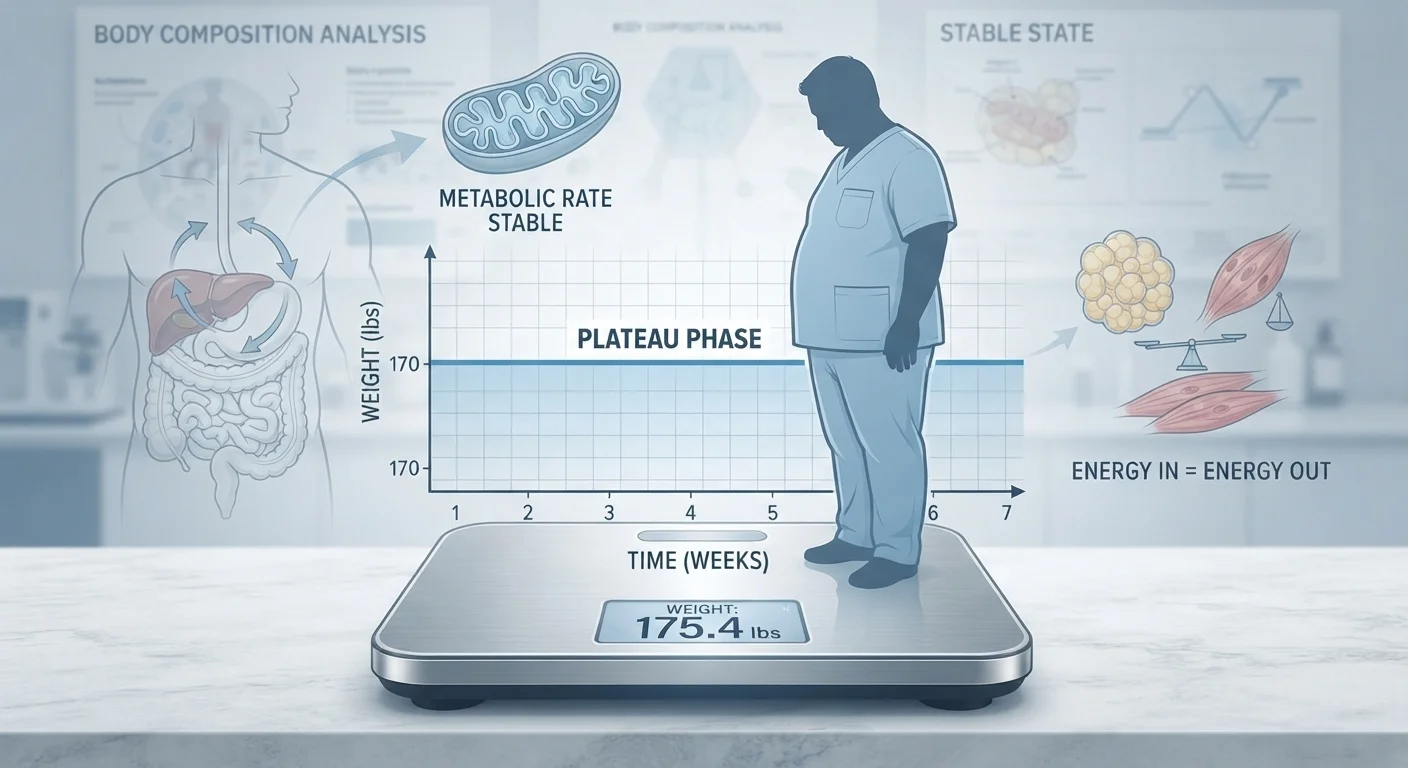
When a person reduces calorie intake and begins losing weight, the body doesn't respond passively. It activates a coordinated set of biological defenses designed — from an evolutionary standpoint — to resist starvation. Understanding these mechanisms helps explain why weight loss almost universally becomes harder over time, regardless of willpower or consistency.
The first and most straightforward factor is simple math: a smaller body requires less energy. A person weighing 180 pounds burns fewer calories at rest and during activity than when they weighed 220 pounds. This alone slows progress as weight declines.
But research shows a second, more powerful force at work: adaptive thermogenesis. Studies have documented that total energy expenditure drops more than body size reduction alone would predict. The body downregulates metabolism through multiple pathways — reducing the energy cost of movement, lowering body temperature slightly, and decreasing the energy burned during digestion. For a deeper look at how metabolic rate is characterized and measured, see our explainer on fast vs. slow metabolism.
Hormones: The Hidden Drivers of Plateaus
Metabolic adaptation isn't purely mechanical — it's heavily orchestrated by hormones. Two in particular have received significant research attention: leptin and ghrelin.
Leptin, produced by fat cells, signals satiety to the brain. As fat mass decreases during weight loss, leptin levels fall — reducing the brain's satiety signal and increasing the drive to eat. Ghrelin, often called the hunger hormone, rises with calorie restriction, amplifying appetite further. The net effect is a biological environment that makes eating less feel harder the longer a deficit is maintained.
Thyroid hormones, cortisol, and insulin also shift during prolonged calorie restriction, collectively contributing to reduced energy output and altered fuel metabolism. These are not dysfunction — they are the body working exactly as evolved, prioritizing survival over aesthetic goals.
~15%
Metabolic rate drop beyond expected from mass loss
Research, including studies of long-term weight loss maintainers, suggests total energy expenditure can fall roughly 10–15% more than body composition changes alone would predict, reflecting adaptive thermogenesis.
80%+
People who regain weight within 5 years
Multiple large-scale reviews have estimated that the majority of people who lose significant weight regain much of it within five years, highlighting the persistent biological pressure to return toward a defended weight range.
~300 kcal/day
Average adaptive thermogenesis in sustained deficit
Some controlled studies have estimated that adaptive thermogenesis can account for reductions of roughly 200–300 kcal per day in total energy expenditure beyond predicted levels during sustained calorie restriction.
This hormonal landscape is one reason that common metabolism myths persist — the experience of slowing progress feels like a broken system, when it is actually a highly functional one.
Set-Point Theory and What It Actually Means
Set-point theory proposes that each body has a preferred weight range it actively defends through hormonal and neurological feedback loops. When weight drops below that range, compensatory mechanisms increase hunger, reduce energy output, and shift fuel usage — all nudging the body back toward its defended range.
It's important to note that the set point is not immovable. Research suggests it can shift — gradually — with sustained behavioral change over months to years. It is better understood as a dynamic range than a fixed number. The implication for anyone managing their weight is significant: short-term efforts may produce initial results, but the body's defenses strengthen over time, which is why long-term strategies carry more weight in the research than short-term interventions.
This also helps explain why weight regain is so common after rapid loss. The body interprets rapid deficit as a threat and mounts a proportionally stronger defense. Slower, more moderate approaches tend to produce less severe adaptive responses, according to current evidence — though individual variation is substantial.
What Can Actually Help — and Realistic Expectations
Acknowledging metabolic adaptation doesn't mean accepting stalled progress indefinitely. Research points to several strategies that may help maintain momentum, with the caveat that no approach guarantees specific outcomes for any individual.
Preserving lean muscle mass is one of the most evidence-backed priorities. Muscle tissue is metabolically active, meaning it contributes meaningfully to resting calorie burn. Resistance training during a weight loss phase helps protect this tissue. Strength training for weight management covers this in detail, including realistic expectations for what resistance exercise can and cannot do.
Adequate protein intake also supports muscle retention during calorie restriction. And while it may feel counterintuitive, strategic breaks from aggressive deficits — sometimes called diet breaks in the research literature — have shown some promise in reducing the severity of adaptive thermogenesis, though the evidence base is still developing.
Most importantly, plateaus should be reframed. They are not failures — they are the body doing exactly what biology designed it to do. Recognizing this shifts the focus from frustration to informed, patient strategy. For broader context on how metabolism functions day to day, the Metabolism Basics hub is a useful starting point.
This article is for general informational and educational purposes only and does not constitute medical advice. Consult a qualified healthcare professional before making significant changes to your diet, exercise routine, or weight management approach.