
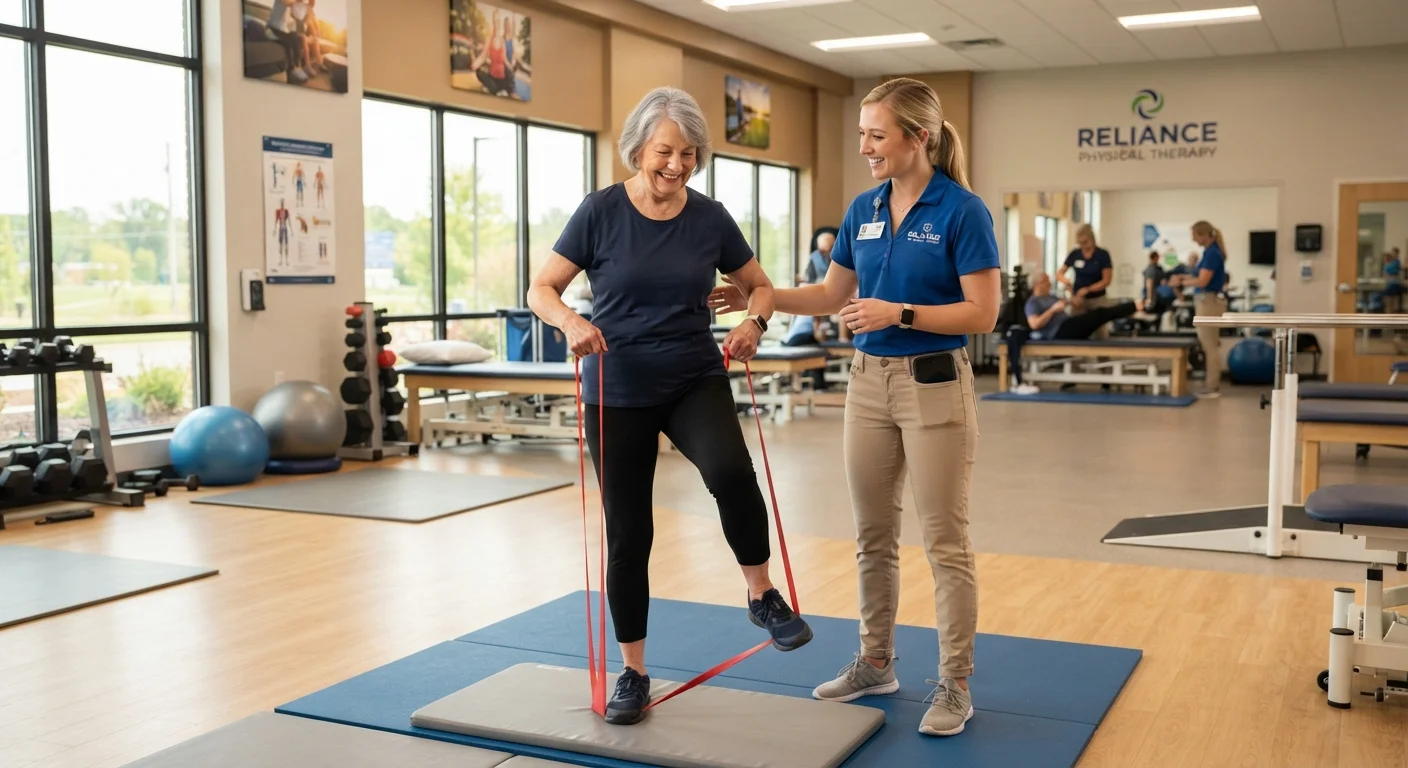
Surgery Is the Beginning, Not the End
A joint replacement — whether hip, knee, or shoulder — removes a damaged joint and replaces it with a prosthetic implant designed to restore pain-free movement. What surgery cannot do on its own is rebuild the strength, flexibility, and movement patterns that years of joint deterioration gradually eroded. That part depends on what happens in the weeks and months that follow.
Physical therapists who specialize in orthopedic rehabilitation consistently emphasize the same point: the surgical outcome is only as good as the recovery that follows it. For everyday Americans undergoing these increasingly common procedures, understanding what evidence-informed recovery looks like can make a meaningful difference in long-term function and independence. If you are newer to thinking about movement as medicine, building a more active life from the ground up provides a useful starting point.
Best Practices Physical Therapists Recommend
The following practices reflect broadly accepted principles in post-surgical rehabilitation. They are not a substitute for the individualized plan your care team provides, but they represent the kind of evidence-informed approach that shapes quality rehab programs nationwide.
Follow a structured physical therapy plan from day one of discharge
The early weeks after surgery establish the foundation for long-term function. Research consistently shows that patients who engage with a formal PT program regain range of motion and strength more effectively than those who rely on self-directed activity alone.
Prioritize range of motion before adding resistance or intensity
Scar tissue forms rapidly in the weeks following surgery. Restoring full or functional joint range of motion early prevents long-term stiffness that is much harder to address later. Therapists often describe this window as critical and time-sensitive.
Strengthen the muscles surrounding the replaced joint consistently
The replaced joint itself is an implant — the muscles and connective tissue around it are what ultimately determine how well it functions. Weak quadriceps after knee replacement, for example, increase stress on the implant and reduce stability during daily movement.
Choose low-impact activities for long-term maintenance
High-impact loading — such as running on hard surfaces or competitive court sports — generates forces that most implants are not designed to tolerate repeatedly over years. Low-impact alternatives deliver comparable cardiovascular and musculoskeletal benefits with substantially less implant stress.
Track progress with functional goals, not just pain levels
Pain alone is an unreliable guide to recovery. Some discomfort is expected during appropriate exercise, while pain-free rest does not mean rehabilitation is complete. Functional benchmarks — such as climbing stairs without a rail or walking a specific distance — give a clearer picture of real-world progress.
Maintain active daily movement habits beyond formal rehabilitation
Structured PT eventually ends, but the need for movement does not. Patients who build lasting everyday movement patterns — regular walks, stretching routines, household activity — preserve the gains made in rehab and slow the functional decline that can follow a sedentary lifestyle. Explore daily movement habits that support healthy aging for practical ideas.
This Is General Information, Not Medical Advice
The guidance in this article reflects general principles from physical therapy practice and is intended for educational purposes only. Every joint replacement patient has a unique recovery timeline, surgical approach, and health history. Always follow the specific instructions of your surgeon and physical therapist, and consult a qualified healthcare professional before changing or starting any exercise program.
Staying Active for the Long Haul
The period beyond formal rehabilitation — often beginning three to six months post-surgery — is where many patients lose momentum. Soreness fades, PT ends, and the structured accountability disappears. Physical therapists often describe this phase as the one that most determines a patient's five- and ten-year functional outcomes.
Building what researchers call habitual physical activity — movement woven into daily life rather than confined to exercise sessions — is a powerful buffer against this drift. This means more than a few walks per week. It encompasses the full spectrum of how you move through your day. Mobility training, in particular, helps joints maintain the range of motion earned during rehab; learn more about training for mobility and why it matters.
This article is for general informational and educational purposes only and does not constitute medical advice. Always consult your surgeon, physical therapist, or a qualified healthcare professional before making decisions about your post-surgical care or exercise program.