
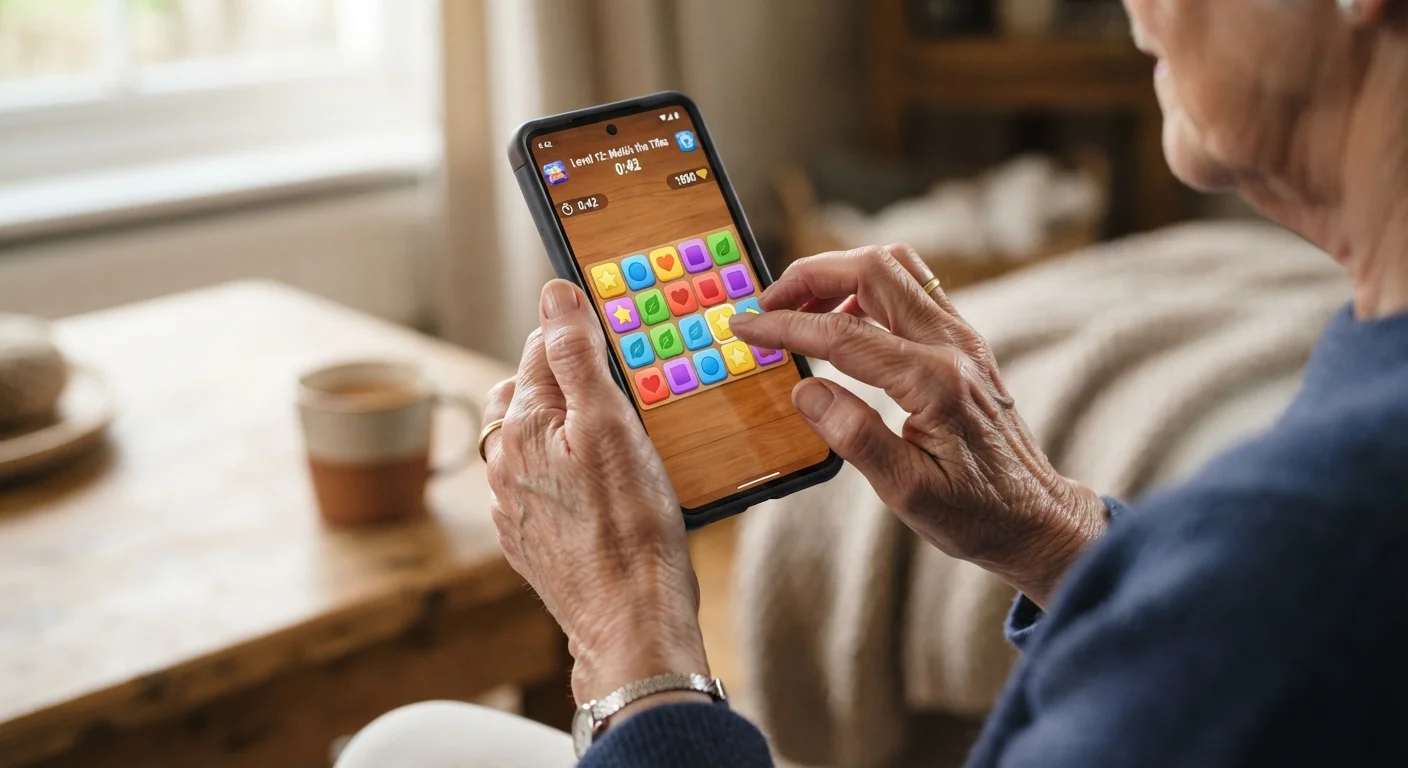
What Are Brain-Training Apps, and What Do They Claim?
Brain-training apps are digital programs designed to exercise specific cognitive abilities — including memory, attention, processing speed, and problem-solving — through structured, often game-like tasks. Marketed heavily to adults concerned about age-related cognitive decline, many of these platforms promise improvements that extend beyond the app itself into everyday mental performance.
For anyone new to thinking about long-term cognitive health, it helps to start with a clear foundation. This evidence-informed starting point explains what science currently understands about how the brain ages and what factors most reliably influence that process.
Understanding what these apps do — and what they don't — requires separating marketing claims from peer-reviewed evidence.
The Case For Brain-Training Apps
Supporters of brain-training programs point to a real, if specific, body of evidence in their favor.
Easy to access and use consistently
Apps are available on smartphones and tablets, making it straightforward to build a daily habit without special equipment or scheduling.
May improve specific trained skills
Research, including the ACTIVE trial, has found that certain computerized training programs can reliably improve the particular skill they target, such as processing speed.
Engaging format supports mental stimulation
Game-like design can make repetitive cognitive exercises more enjoyable, potentially increasing adherence compared to paper-based puzzles.
Low risk of physical harm
Unlike some interventions, using a well-designed app carries minimal direct risk, making it a low-stakes addition to a broader wellness routine.
For adults who find structured tasks motivating, consistent mental engagement — even through an app — may be preferable to passive screen time. Some research suggests that older adults who regularly challenge themselves with novel cognitive tasks maintain better processing speed over time, though causality is difficult to establish in observational studies.
The Case Against Brain-Training Apps
Skepticism about brain-training apps is well-founded, and it comes largely from researchers who study cognition professionally.
Limited evidence for real-world transfer
The central scientific criticism is that improvements on in-app tasks rarely translate into measurable gains in everyday cognitive functioning, a problem researchers call 'near transfer only.'
No proven protection against dementia
No brain-training app has demonstrated in rigorous, long-term clinical trials that it prevents or meaningfully delays the onset of Alzheimer's disease or other dementias.
Marketing frequently outpaces the evidence
Regulatory actions, including a 2016 FTC settlement with a major brain-training company, have found that some advertised claims lacked adequate scientific support.
May displace higher-value activities
Time spent on apps could crowd out activities with stronger evidence — such as exercise, social interaction, or adequate sleep — if users treat app use as equivalent.
Benefits may not persist over time
Some studies show that gains from cognitive training fade relatively quickly after training stops, raising questions about long-term value without ongoing use.
What 'Near Transfer' Means for You
Cognitive scientists use the term 'near transfer' to describe improvements limited to tasks very similar to the one practiced. 'Far transfer' — gains that show up in unrelated real-world skills — is what most users hope for but what research has struggled to demonstrate consistently. When evaluating any brain-training claim, asking whether evidence shows far transfer is a useful critical lens.
The most significant concern is the transfer problem: getting better at an in-app task does not reliably mean getting better at the real-world cognitive skill it is supposed to represent. A leading criticism from cognitive scientists is that these games primarily train you to perform those specific games more efficiently — not to think more clearly in general.
What the Research Actually Shows
The scientific literature on brain-training is genuinely mixed. A widely cited 2014 consensus statement signed by over 70 neuroscientists cautioned that claims made by brain-training companies outpaced the evidence. Subsequent large-scale studies, including the NIH-funded ACTIVE trial, found that certain computerized cognitive training can improve the specific skill being trained — but evidence for broader, lasting benefits to daily function is limited.
70+
Scientists who signed a 2014 caution statement
More than 70 neuroscientists and cognitive psychologists co-signed a 2014 consensus statement warning that brain-training marketing claims exceeded the available scientific evidence.
~26%
Reduction in dementia risk linked to physical activity
A meta-analysis published in the British Journal of Sports Medicine found that regular physical activity was associated with a roughly 26% lower risk of developing dementia, a benefit not established for brain-training apps.
Physical activity continues to show more consistent results. Aerobic and strength training each support brain health in distinct ways, and the mechanisms — including increased cerebral blood flow and reduced neuroinflammation — are better understood than those proposed for digital brain training.
How to Think About Apps Within a Broader Routine
Brain-training apps are best understood as one small, optional element of a much larger picture. The lifestyle habits with the strongest evidence for protecting cognition — quality sleep, cardiovascular exercise, social engagement, stress management, and a nutritious diet — are not delivered by any app.
Brain health priorities shift meaningfully across decades, and what you do in your 40s and 50s likely matters more than any single intervention later in life. If you want to take stock of where your habits currently stand, a structured self-audit can help identify gaps across the lifestyle factors most linked to cognitive aging.
If you enjoy brain-training apps and find them motivating, using them in addition to — not instead of — evidence-backed habits is a reasonable approach. Anyone noticing meaningful changes in their memory or thinking should speak with a qualified healthcare professional rather than rely on an app for reassurance.
This article is for general informational purposes only and does not constitute medical advice. Consult a qualified healthcare professional with any concerns about your cognitive health.