
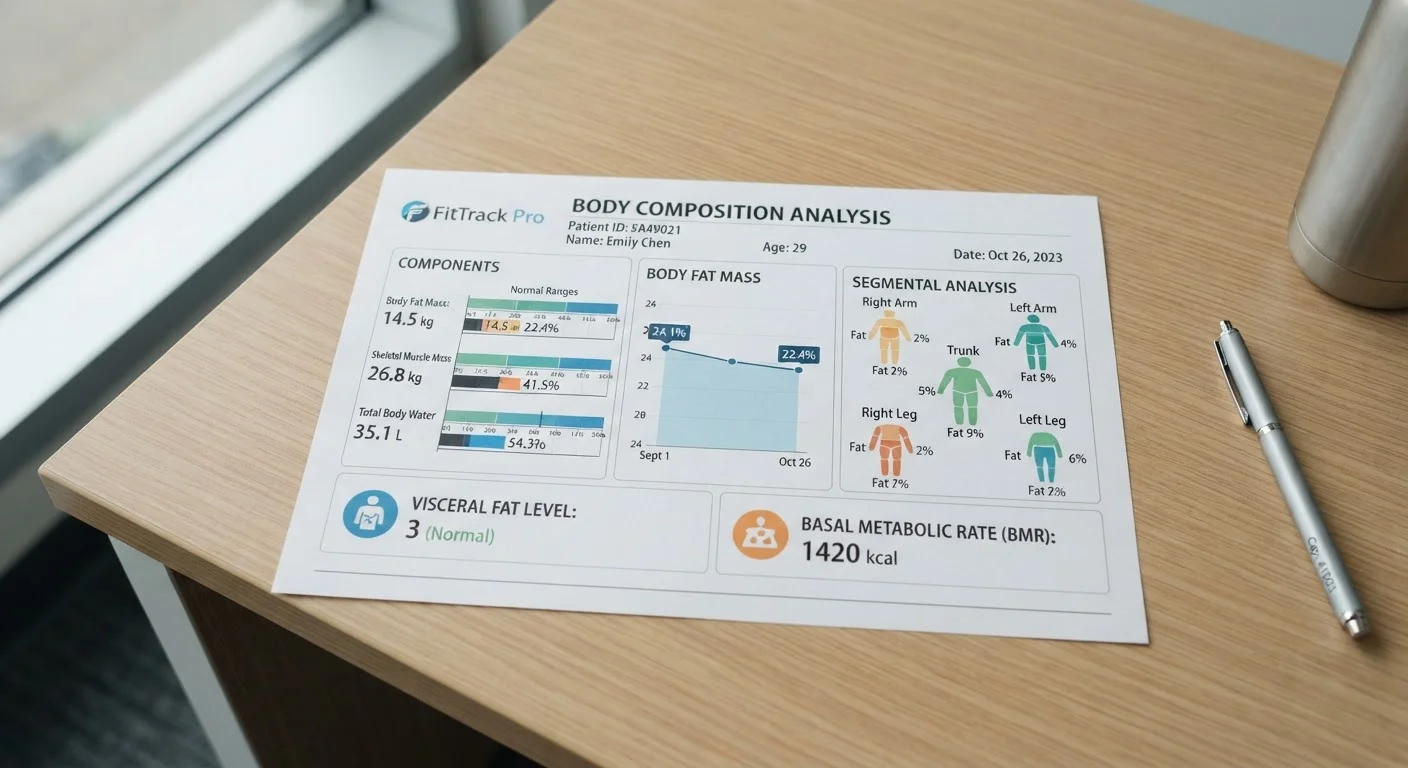
Why Body Composition Data Gets Misread So Often
Body composition metrics - body fat percentage, lean mass, visceral fat estimates - promise a more complete picture of health than weight alone. That promise is real, but the data comes with built-in limitations that most people aren't warned about at the time of testing. As a result, well-meaning efforts to optimize health can veer into frustration, misguided restriction, or misplaced satisfaction.
The core problem isn't the technology - it's interpretation. Consumer-grade and even clinical-grade body composition tools carry error margins that can dwarf the changes people are trying to measure. Understanding where misreadings most commonly occur is the first step toward using this data productively. If you're new to these metrics, body composition explained is a useful starting point before diving into the numbers.
Treating a single test result as a reliable baseline.
Why it happens: People often get tested once - at a gym assessment or health fair - and anchor all future decisions to that number, assuming it's precise and stable.
Comparing results from different measurement methods as if they're equivalent.
Why it happens: DEXA scans, bioelectrical impedance analysis (BIA), and skinfold calipers each use different assumptions and algorithms, yet people routinely compare numbers across them after switching devices or facilities.
Ignoring how daily variables distort readings.
Why it happens: Hydration status, recent exercise, food intake, and even menstrual cycle phase can shift BIA readings by several percentage points. Most people don't account for this and interpret normal fluctuation as real change.
Over-focusing on body fat percentage while ignoring lean mass.
Why it happens: Fat percentage is the most marketed metric, so it gets the most attention - even though losing muscle alongside fat can drive the number down without actually improving health or function.
Using population reference ranges as personal targets.
Why it happens: Charts listing "healthy" body fat ranges by age and sex are appealing because they offer a clear goal, but they're derived from population averages that don't account for individual variation in frame, genetics, or fitness history.
Making large dietary or training changes based on short-term data.
Why it happens: A single unfavorable reading can trigger drastic restriction or overtraining, driven by anxiety rather than evidence. This is especially common when people are new to tracking.
Getting More From Your Data: A Smarter Framework
The antidote to these misreadings isn't abandoning body composition tracking - it's applying a more disciplined framework to it. Consistency in method, timing, and conditions transforms noisy snapshots into a meaningful trend line. Pair that data with functional performance indicators (strength benchmarks, energy levels, lab values your clinician orders) and you get a picture that's far harder to misinterpret.
This Is Information, Not a Diagnosis
Body composition data is a general health tracking tool, not a clinical diagnostic measure. Numbers from consumer-grade or gym-level devices carry meaningful error margins. Always discuss significant health concerns with a qualified healthcare provider rather than acting solely on these readings.
It's also worth examining what you're optimizing for. Chasing a specific body fat number - especially one derived from a population chart - can crowd out more relevant goals like building functional strength or improving cardiovascular endurance. Those outcomes often improve body composition as a byproduct without requiring obsessive monitoring. For a broader look at how metabolic health connects to these numbers, metabolism misconceptions worth unlearning is a useful companion read.
Body composition data is most valuable when it informs, not drives, your decisions. Treat any single reading as a data point in a longer conversation - one that ideally includes a healthcare provider who can interpret results in the context of your full health picture.
This article is for general informational purposes only and does not constitute medical advice. Consult a qualified healthcare professional before making changes to your diet, exercise routine, or health management plan based on body composition data.