
What Thyroid Hormones Actually Do to Metabolism
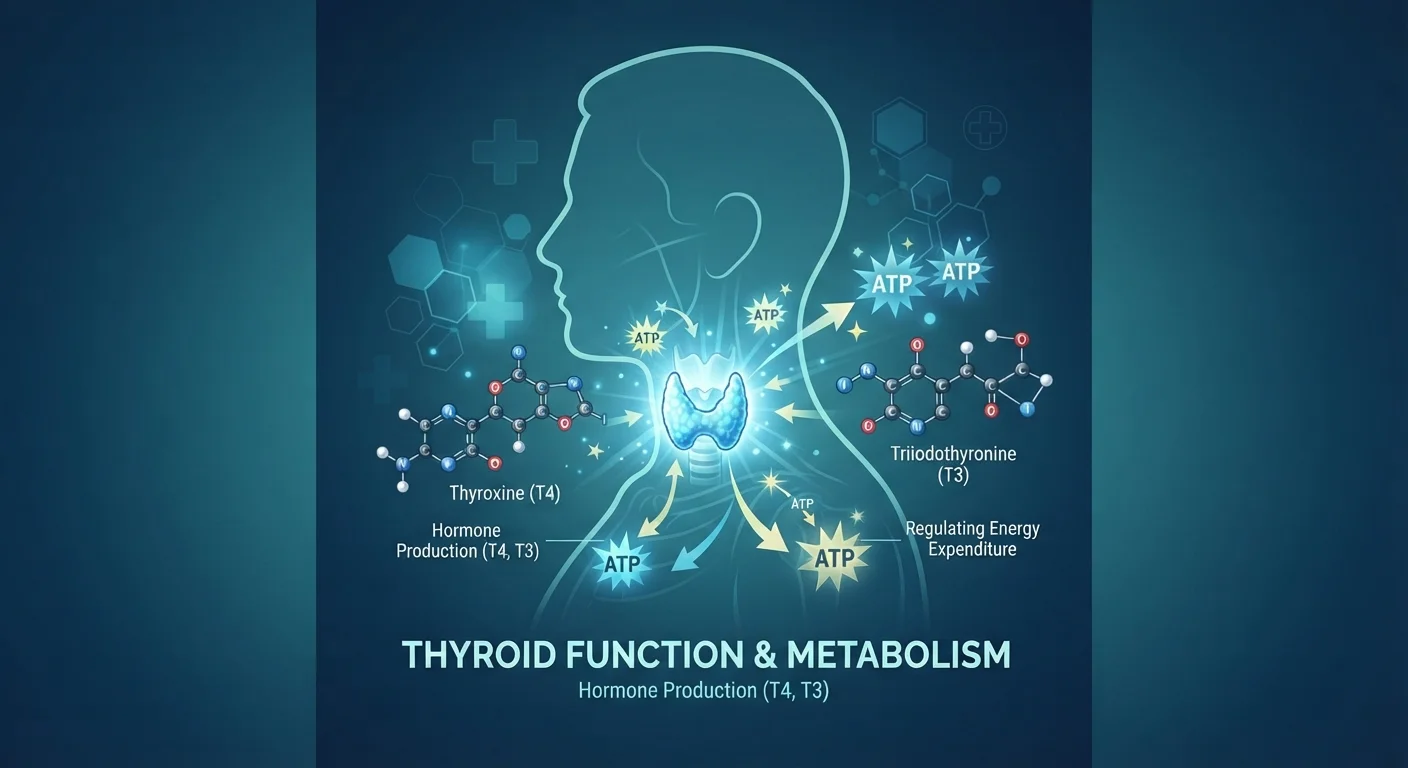
Of all the hormones that influence how your body uses energy, thyroid hormones have the most direct and well-documented effect. The thyroid gland, a butterfly-shaped structure in your neck, produces thyroxine (T4) and its more active form, triiodothyronine (T3). These hormones travel through the bloodstream and signal virtually every cell in the body to adjust its energy consumption.
When T3 levels are adequate, cells maintain a normal rate of energy use - this contributes to what researchers call the basal metabolic rate (BMR), the energy your body burns at complete rest. To understand the full picture of what metabolism actually encompasses, see our explanation of what metabolism actually is.
When thyroid output falls below normal (hypothyroidism), BMR decreases - the body burns less energy, body temperature may drop slightly, and fatigue commonly follows. The reverse is true with hyperthyroidism: excess thyroid hormone accelerates cellular activity, raising energy expenditure, heart rate, and heat production. Both are clinically diagnosable conditions confirmed through blood tests, not assumptions.
When to Ask Your Doctor About Thyroid Testing
If you're experiencing persistent unexplained fatigue, unexpected weight changes, cold or heat intolerance, or significant changes in heart rate or mood, mention these symptoms to your healthcare provider. A TSH blood test is a straightforward, widely available screening tool. Don't assume thyroid dysfunction - but don't dismiss symptoms that persist either.
Other Hormones: Real Effects, But More Complex
Beyond the thyroid, several other hormones interact with metabolic processes - though their mechanisms are less linear.
- Insulin regulates how cells absorb glucose from the bloodstream. In insulin resistance, cells respond poorly to insulin's signal, altering how energy is stored and used. This has significant long-term metabolic consequences, particularly for body composition, but it does not directly set BMR the way thyroid hormones do.
- Cortisol, released during stress, influences blood sugar, appetite, and fat distribution - especially visceral (abdominal) fat. Chronic elevation, as seen with ongoing psychological or physiological stress, may compound metabolic disruption over time. See how this connects with sleep and stress and metabolic health.
- Leptin is produced by fat cells and signals satiety to the brain. In leptin resistance - common in obesity - the brain stops reading this signal accurately, which can perpetuate overeating independent of conscious effort.
Each of these pathways is real and researched. But they operate through appetite, storage patterns, and cellular sensitivity - not as simple metabolic accelerators or brakes.
~5%
U.S. adults with diagnosed hypothyroidism
According to the American Thyroid Association, approximately 4.6% of the U.S. population aged 12 and older has hypothyroidism, most cases being mild.
~10-15%
BMR reduction in untreated hypothyroidism
Research published in endocrinology literature suggests untreated hypothyroidism may reduce basal metabolic rate by roughly 10-15%, a meaningful but often overstated effect.
1 in 3
U.S. adults estimated to have insulin resistance
The CDC estimates that roughly one-third of American adults have prediabetes, a condition closely associated with insulin resistance and altered metabolic regulation.
Where the Mythology Takes Over
A large portion of what circulates online about "hormones and metabolism" conflates established science with unverified claims. Attributing everyday fatigue, stubborn weight, or low energy universally to "hormonal imbalance" oversimplifies a complex system and can delay people from identifying other treatable causes.
For a broader look at which metabolic beliefs have outpaced their evidence, our article on metabolism myths that just won't die is a useful companion read.
True hormonal disorders - hypothyroidism, Cushing's syndrome, polycystic ovary syndrome (PCOS) - have measurable physiological signatures and appropriate medical treatments. They are not metaphors for feeling out of balance; they are diagnosable conditions. The risk of assuming a hormonal cause without testing is that genuinely effective interventions - changes in activity, sleep quality, or nutrition - may go unexplored.
PCOS and Metabolic Health
Polycystic ovary syndrome (PCOS) is a hormonal condition affecting roughly 6-12% of women of reproductive age, according to the CDC. It involves imbalances in androgens and insulin that can significantly affect metabolic function, weight regulation, and energy use. PCOS is a well-documented example of how hormonal conditions create real, measurable metabolic effects - and why proper diagnosis matters. Anyone concerned about PCOS should speak with a healthcare provider for evaluation.
Building a More Accurate Picture
Understanding that hormones influence but don't fully control metabolism is genuinely empowering. Factors including muscle mass, sleep quality, age, and physical activity contribute meaningfully to how your body regulates energy - and many are within reach of lifestyle influence. For a curated overview of what research identifies as genuine drivers, our piece on factors that genuinely influence your metabolic rate provides useful context.
If you suspect a hormonal issue is affecting your health, the right first step is a conversation with a qualified healthcare provider who can order appropriate blood panels and interpret them in the context of your full medical history. Self-diagnosing through symptoms alone - or relying on unvalidated tests marketed directly to consumers - is not a reliable path to answers.
For a structured way to take stock of what you actually know about your own metabolic health, consider working through the metabolism literacy checklist as a starting point for informed conversations with your care team.
This article is for informational and educational purposes only and does not constitute medical advice. Always consult a qualified healthcare professional regarding any health concerns, symptoms, or before making changes to your health regimen.