
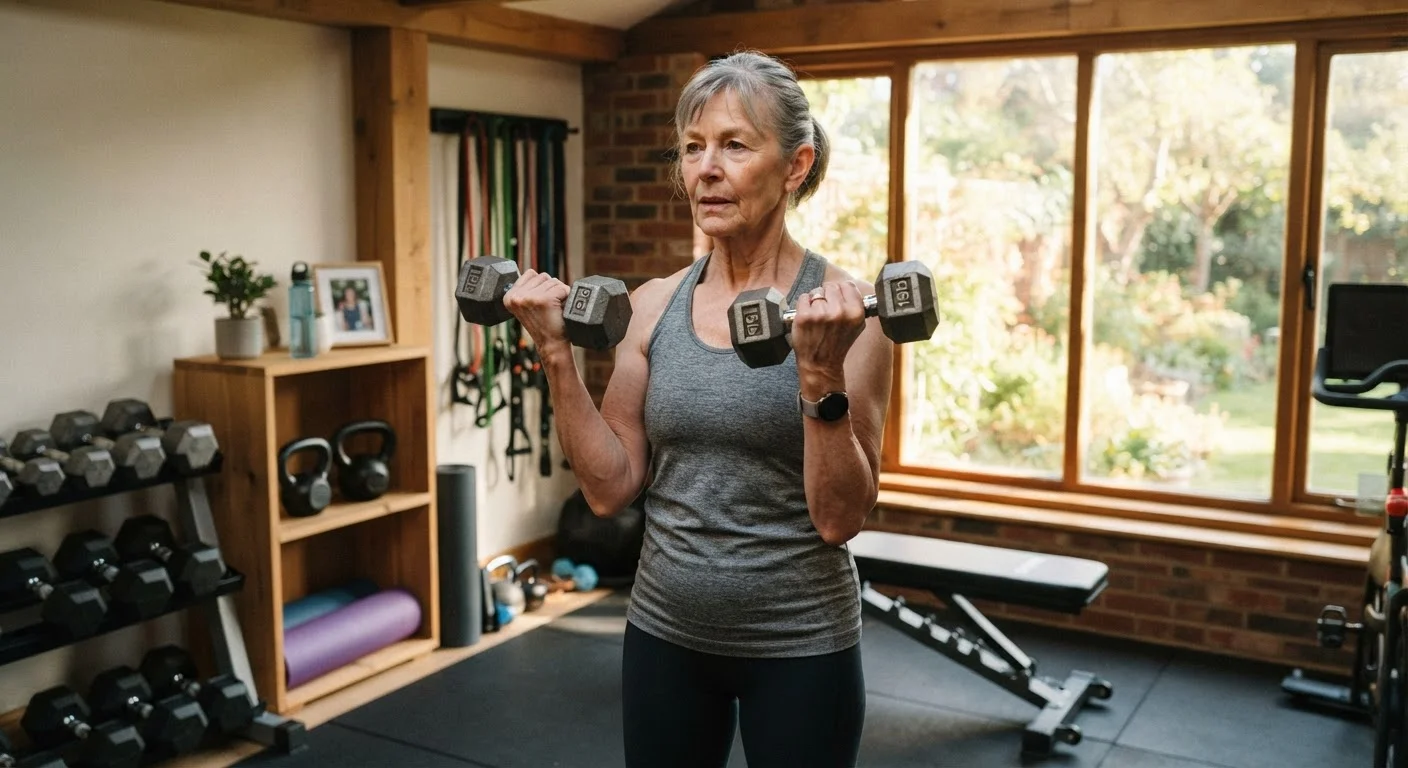
What Actually Changes After 60
Two physiological shifts make strength training in your 60s and 70s feel different from earlier decades. First, anabolic resistance — the reduced efficiency with which aging muscle responds to protein and exercise stimulus — means muscles require more input to generate the same adaptive signal. Second, motor neuron loss accelerates, affecting fast-twitch muscle fibers responsible for power and rapid movement. Together, these changes mean slower progress, not impossible progress.
Recovery is the other major variable. Micro-tears that might resolve in 24–48 hours for a 35-year-old can take 72 hours or longer to repair after 60. Ignoring this reality is the most common programming mistake older adults make — not lack of effort, but insufficient rest between sessions.
For a deeper look at why muscle preservation becomes so critical in this stage of life, see why muscle mass matters more after 50.
What Doesn't Change: The Core Principles
The fundamental rules of muscle adaptation remain intact across the lifespan. Muscles still respond to progressive overload — gradually increasing demand over time — whether you're 35 or 75. The neuromuscular system still strengthens through consistent practice. And compound, multi-joint movements still produce the greatest functional carry-over to everyday tasks like climbing stairs, carrying groceries, or getting up from a chair.
Importantly, research published in journals including the Journal of Strength and Conditioning Research has found that lower loads performed to or near muscular fatigue can stimulate muscle growth comparably to heavier loads in older populations. This has meaningful practical implications: you don't need to lift maximally to make real gains.
1–2%
Annual muscle mass loss starting in your 60s
Research estimates suggest muscle loss can accelerate to roughly 1–2% per year after age 60 without intervention, according to findings published in exercise physiology literature.
~30%
Strength improvement possible in older beginners
Studies have shown older adult beginners to resistance training can see strength gains of 25–30% or more within the first few months, reflecting significant neuromuscular adaptation.
2–3x
Weekly sessions recommended by major health guidelines
The American College of Sports Medicine recommends resistance training at least two days per week for older adults as part of a comprehensive physical activity plan.
For comparison on how these principles apply in the decade prior, strength training after 50 covers how to build a foundational routine.
Structuring a Realistic Program
A well-designed program for someone in their 60s or 70s typically prioritizes three things: movement quality, adequate recovery, and gradual progression. Two to three sessions per week — each targeting major muscle groups — is a widely supported starting framework. Sessions don't need to be long; 30–45 minutes of focused work is sufficient for most beginners and intermediate trainees.
Exercises that translate directly to functional independence are particularly valuable. Seated-to-standing movements (essentially a squat), pushing and pulling motions, and single-leg work that challenges balance all improve the physical capacities that protect independence. For readers interested in the balance component specifically, balance training for adults over 60 provides a practical foundation.
Nutrition also plays a supporting role. Protein intake influences how effectively muscles recover and adapt — and older adults generally need more per meal to stimulate the same anabolic response as younger people. The role of protein in preserving muscle function is worth understanding alongside any training plan. Always consult a healthcare provider before making significant dietary changes, particularly if you have existing health conditions.
Start with Movement Quality, Not Load
If you're new to strength training or returning after a long break, begin with bodyweight or very light resistance and focus entirely on form. Establishing movement patterns before adding load reduces injury risk and builds a stronger foundation for progression. Working with a certified trainer or physical therapist for even a few sessions can make a significant difference in safety and effectiveness.
This article is for informational purposes only and does not constitute medical advice. Before beginning or significantly modifying any exercise program, consult a qualified healthcare professional — especially if you have chronic conditions, joint issues, or cardiovascular concerns.