Why Breathing Affects Your Stress Response
When you feel stressed, your body activates its sympathetic nervous system — the so-called fight-or-flight response. Heart rate rises, muscles tense, and breathing becomes shallow and fast. What makes breathing unique among bodily functions is that you can control it consciously, and by doing so, you can influence the autonomic nervous system — the system that otherwise operates outside your awareness.
Slow, extended exhalations in particular stimulate the vagus nerve, a key pathway of the parasympathetic nervous system (often called the rest-and-digest system). Research published in peer-reviewed physiology and psychiatry journals consistently shows that deliberately slowing the breath — typically to around five to six breath cycles per minute — reduces heart rate, lowers blood pressure, and reduces self-reported anxiety. This physiological mechanism is why breathing exercises appear across mindfulness, clinical therapy, and performance contexts alike.
For a broader look at how mindfulness practices intersect with stress, see how different mindfulness approaches work.
What you will need
Four Evidence-Backed Techniques to Try
The following techniques each have varying degrees of research support. They are not cures, and individual responses differ — but they are safe, free, and worth exploring as part of a broader wellness routine. If you have a respiratory condition, heart condition, or clinical anxiety disorder, speak with a qualified healthcare provider before beginning any new breathing practice.
Diaphragmatic (Belly) Breathing
Diaphragmatic breathing trains you to breathe from the diaphragm — the dome-shaped muscle below your lungs — rather than the chest. This fuller pattern of breathing is associated with lower activation of the body's stress response.
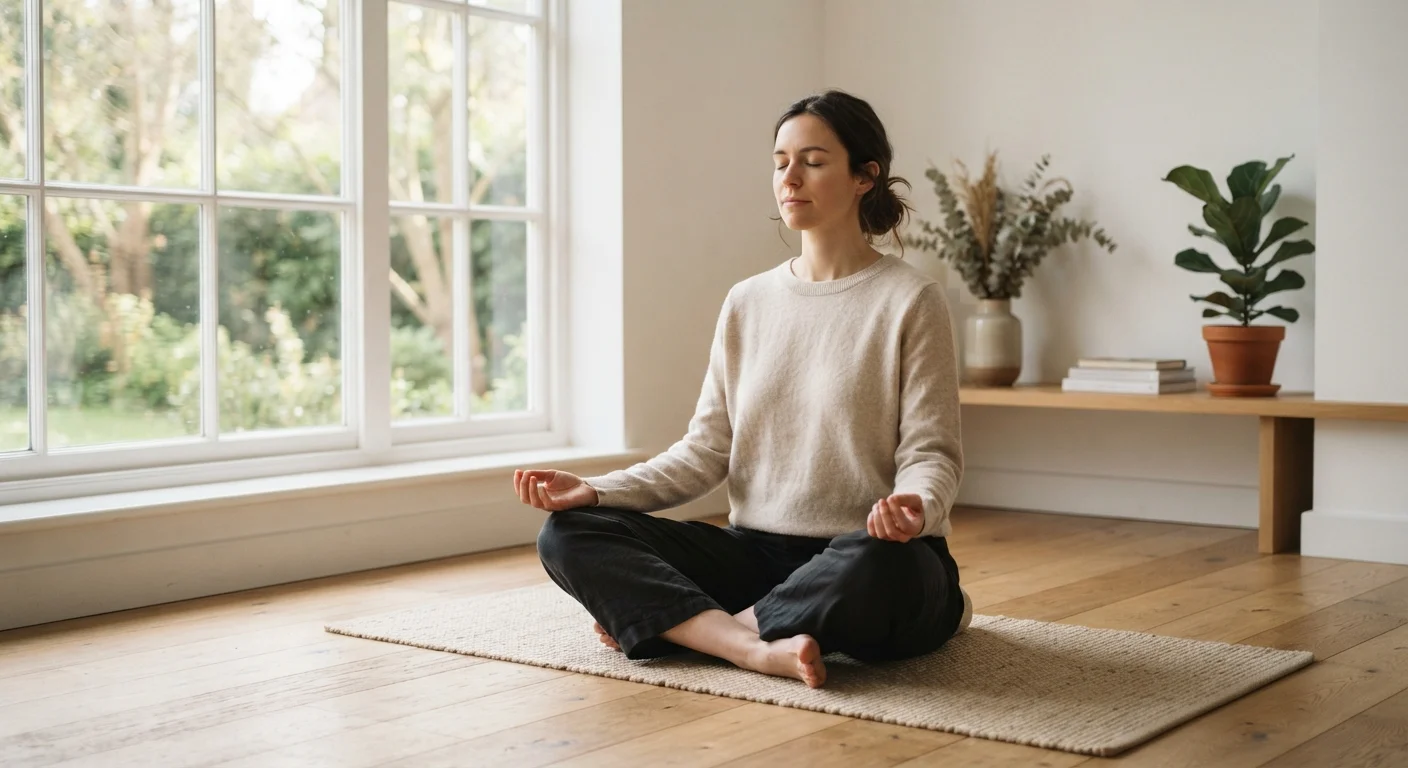
- Sit comfortably or lie on your back. Place one hand on your chest and one on your belly.
- Inhale slowly through your nose for about 4 seconds, allowing your belly to rise while your chest remains relatively still.
- Exhale slowly through pursed lips or your nose for 6 seconds, feeling your belly fall.
- Repeat for 5–10 cycles.
The goal is to make the belly-hand move more than the chest-hand, indicating the diaphragm is doing the work.
Box Breathing (4-4-4-4)
Box breathing — sometimes called square breathing — is used in high-stress professional settings including emergency medicine and military training. Its equal-interval structure makes it easy to remember under pressure.
- Inhale through your nose for 4 counts.
- Hold your breath for 4 counts.
- Exhale fully through your mouth for 4 counts.
- Hold at the bottom (lungs empty) for 4 counts.
- Repeat for 4–6 cycles.
The breath-holds train your body to tolerate carbon dioxide without triggering panic, which can gradually reduce anxiety sensitivity over time.
4-7-8 Breathing
Developed within integrative medicine traditions and studied for its effects on anxiety and sleep onset, the 4-7-8 pattern emphasizes an extended exhale to promote relaxation.
- Place the tip of your tongue behind your upper front teeth and keep it there throughout.
- Exhale completely through your mouth, making a gentle whoosh sound.
- Close your mouth and inhale quietly through your nose for 4 counts.
- Hold your breath for 7 counts.
- Exhale completely through your mouth for 8 counts.
- Complete 4 cycles to start; work up to 8 over time.
Resonance (Coherence) Breathing
Resonance breathing involves slowing the breath to approximately five to six cycles per minute — often achieved with a 5-second inhale and 5-second exhale. At this rate, the body's heart rate variability (HRV) — a marker of nervous system flexibility — is measurably increased. Higher HRV is associated with better emotional regulation and lower anxiety.
- Sit upright in a comfortable position.
- Inhale through your nose for 5 seconds.
- Exhale through your nose or mouth for 5 seconds.
- Continue for 5–10 minutes for best effect, though even 2–3 minutes provides benefit.
Apps or audio guides with a gentle tone cue can help you maintain the rhythm without watching a clock.
Start With Just One Technique
Trying multiple new techniques at once can feel overwhelming and reduce follow-through. Pick the single method that sounds most appealing, practice it daily for one week, then decide whether to add another. Building confidence with one approach first makes the habit far more likely to stick.
For context on how breathwork compares with physical recovery applications, the article on breathwork for physical recovery explores the physiological basis in greater depth.
Building a Sustainable Practice
The research on breathing techniques consistently points to one finding: regularity outperforms intensity. A five-minute session practiced daily tends to produce more durable nervous system effects than an occasional twenty-minute deep dive during moments of crisis. Starting small — even two or three minutes before a stressful meeting or before bed — is a realistic entry point for most people.
Many practitioners pair breathing exercises with a simple environmental cue: brewing coffee, sitting at a red light, or lying down before sleep. This pairing, known in behavioral science as habit stacking, can help the practice become automatic rather than aspirational.
Breathing techniques are one component in a larger toolkit. Comparing approaches like therapy, exercise, and meditation can help you understand how these tools fit together. And if anxiety or stress feels unmanageable despite self-help strategies, please reach out to a licensed mental health professional — these techniques are meant to complement professional care, not substitute for it.
This article is for informational purposes only and does not constitute medical advice. Consult a qualified healthcare provider for guidance tailored to your individual health needs.