
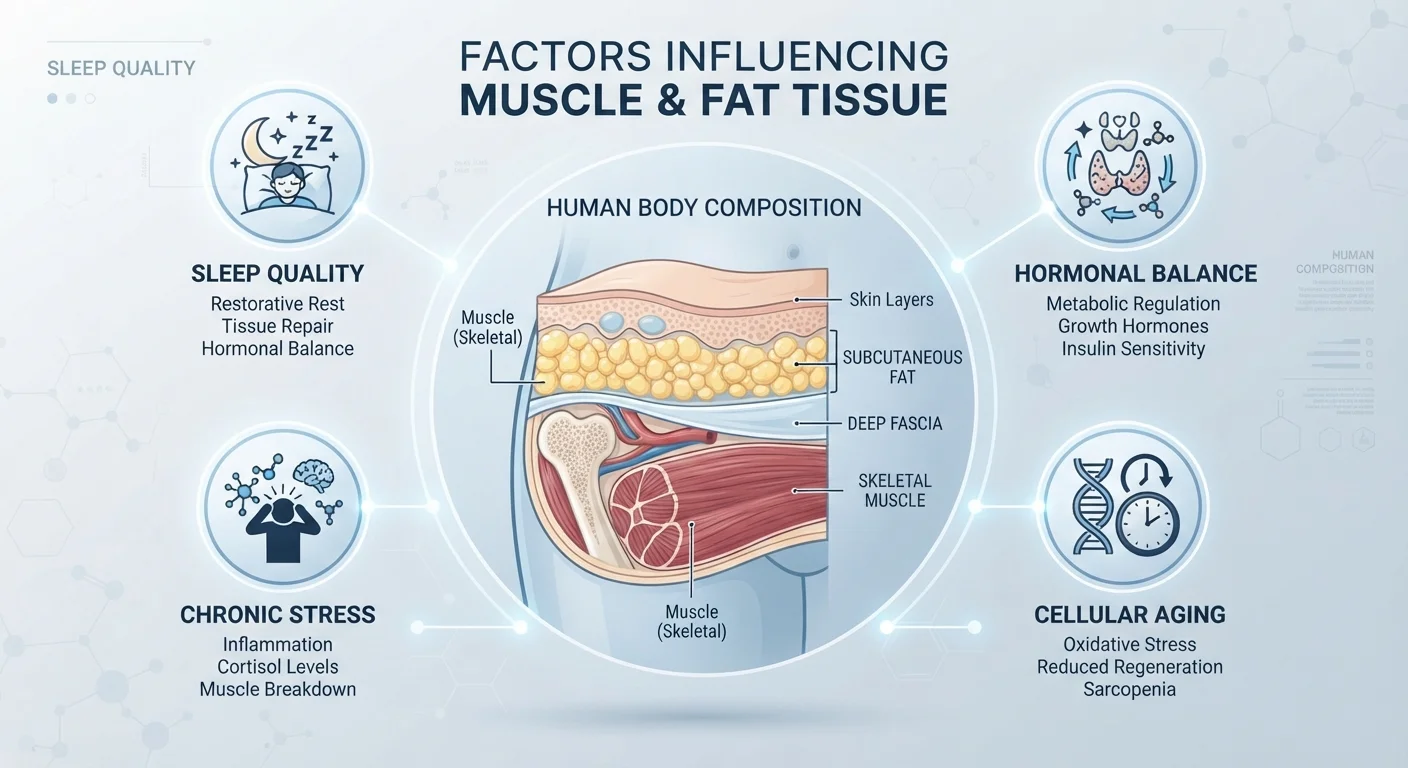
The Full Picture of Body Composition
Most conversations about body composition stop at two variables: calories consumed and calories burned. But research consistently shows that the ratio of fat mass to lean mass in the body is shaped by a much wider set of biological and environmental forces. For many people, these under-discussed factors explain why two individuals can follow nearly identical diet and exercise programs and arrive at meaningfully different outcomes.
Understanding what body composition actually measures is the starting point - but understanding what drives it is where real insight begins. The factors below are not excuses or obstacles; they are data points that can inform smarter, more realistic approaches to health.
Sleep Duration and Quality
Sleep is one of the most potent regulators of body composition that most people overlook. During deep sleep stages, the body releases growth hormone - a key driver of muscle protein synthesis and fat metabolism. Consistently poor sleep suppresses this release and simultaneously elevates ghrelin (the hunger-signaling hormone) while reducing leptin (the satiety hormone), shifting the body toward fat accumulation over time.
Research has linked chronic short sleep (generally defined as fewer than seven hours per night) with higher percentages of body fat and reduced lean mass, independent of caloric intake. The relationship is bidirectional: poor sleep disrupts metabolism, and metabolic dysfunction can worsen sleep quality.
Deep sleep drives growth hormone release - a key regulator of fat metabolism and muscle repair.
Hormonal Environment
Hormones act as the body's internal thermostat for tissue composition. Testosterone supports muscle protein synthesis and is associated with lower fat mass; estrogen influences fat distribution, particularly subcutaneous (under-the-skin) fat in women. Thyroid hormones set the baseline metabolic rate and affect how efficiently the body converts fuel to energy versus stores it.
Disruptions to any of these systems - from hypothyroidism to polycystic ovary syndrome (PCOS) to age-related hormonal decline - can significantly alter body composition even when diet and activity levels remain unchanged. This is also why body composition shifts across the lifespan are so pronounced around puberty, pregnancy, and menopause.
Thyroid, sex, and metabolic hormones are among the most powerful shapers of fat and muscle distribution.
Chronic Stress and Cortisol
The body's stress response system - centered on the hormone cortisol - evolved for short-term survival, not sustained modern-life pressures. When cortisol remains chronically elevated, it promotes the breakdown of muscle tissue (catabolism) and encourages the storage of visceral fat, particularly around the abdomen. Visceral fat, which surrounds internal organs, carries greater metabolic risk than subcutaneous fat.
Psychological stress, financial strain, poor work-life balance, and social isolation all activate the same physiological pathway. This connects directly to how metabolic rate is influenced - chronic cortisol exposure can suppress thyroid function and reduce resting energy expenditure over time.
Chronically elevated cortisol promotes muscle breakdown and preferential storage of visceral abdominal fat.
Genetics and Inherited Traits
Genetic variation accounts for a meaningful portion of differences in fat distribution patterns, muscle fiber composition, and the rate at which individuals gain or lose fat and lean tissue in response to a given stimulus. Studies of identical twins have demonstrated that heritability estimates for body fat percentage and fat distribution range roughly from 40% to 70%, suggesting a strong but not deterministic genetic influence.
Genes affect where fat is deposited (hips versus abdomen, for example), the ratio of fast-twitch to slow-twitch muscle fibers, and even how efficiently the gut extracts calories from food. Importantly, genetics set a range of outcomes - lifestyle factors determine where within that range an individual tends to land. This is a nuance that common body composition myths often obscure.
Genetics set a range of possible body composition outcomes - lifestyle determines where within that range you land.
Medications and Medical Conditions
Several commonly prescribed medications have well-documented effects on body composition. Corticosteroids, some antidepressants, antipsychotics, beta-blockers, and insulin-based therapies can promote fat gain, fluid retention, or lean mass loss as pharmacological side effects. These effects are not failures of willpower - they are physiological consequences of the drug's mechanism of action.
Underlying conditions including insulin resistance, Cushing's syndrome, hypogonadism, and hypothyroidism also alter how the body partitions energy. Anyone experiencing unexpected body composition changes while on medication should speak with their prescribing clinician rather than adjusting their regimen independently.
Medications such as corticosteroids and some antidepressants can meaningfully alter fat storage and lean mass.
Gut Microbiome Composition
The trillions of microorganisms in the gastrointestinal tract - collectively called the gut microbiome - influence how the body processes dietary energy, regulates inflammation, and even signals hunger and satiety to the brain. Research has shown that individuals with different microbiome compositions can extract meaningfully different amounts of energy from identical meals.
Certain bacterial populations are associated with leaner body composition profiles, while others correlate with greater fat accumulation, though the science of microbiome-targeted interventions is still emerging. Fiber diversity in the diet, antibiotic use history, and early-life exposures all shape the microbiome over time, adding another layer of biological individuality to body composition outcomes.
Gut microbiome differences mean two people eating the same meal may absorb meaningfully different amounts of energy.
Putting It All Together
Body composition is a dynamic, multi-system outcome. Recognizing these influences helps explain why progress isn't always linear and why a one-size-fits-all approach so often falls short. It also reinforces why body composition can shift significantly even when the scale doesn't move.
Track More Than the Scale
Because so many factors beyond diet and exercise influence body composition, relying solely on body weight as a progress metric can be misleading. Consider periodic assessments of waist circumference, energy levels, strength, and sleep quality as part of a broader picture. These proxy measures often reflect meaningful physiological change before the scale does.
If you've been consistent with your habits but aren't seeing the changes you expected, consider discussing factors like hormonal health, sleep quality, and medication effects with a qualified healthcare provider. This article is general health education and is not a substitute for personalized medical guidance.