
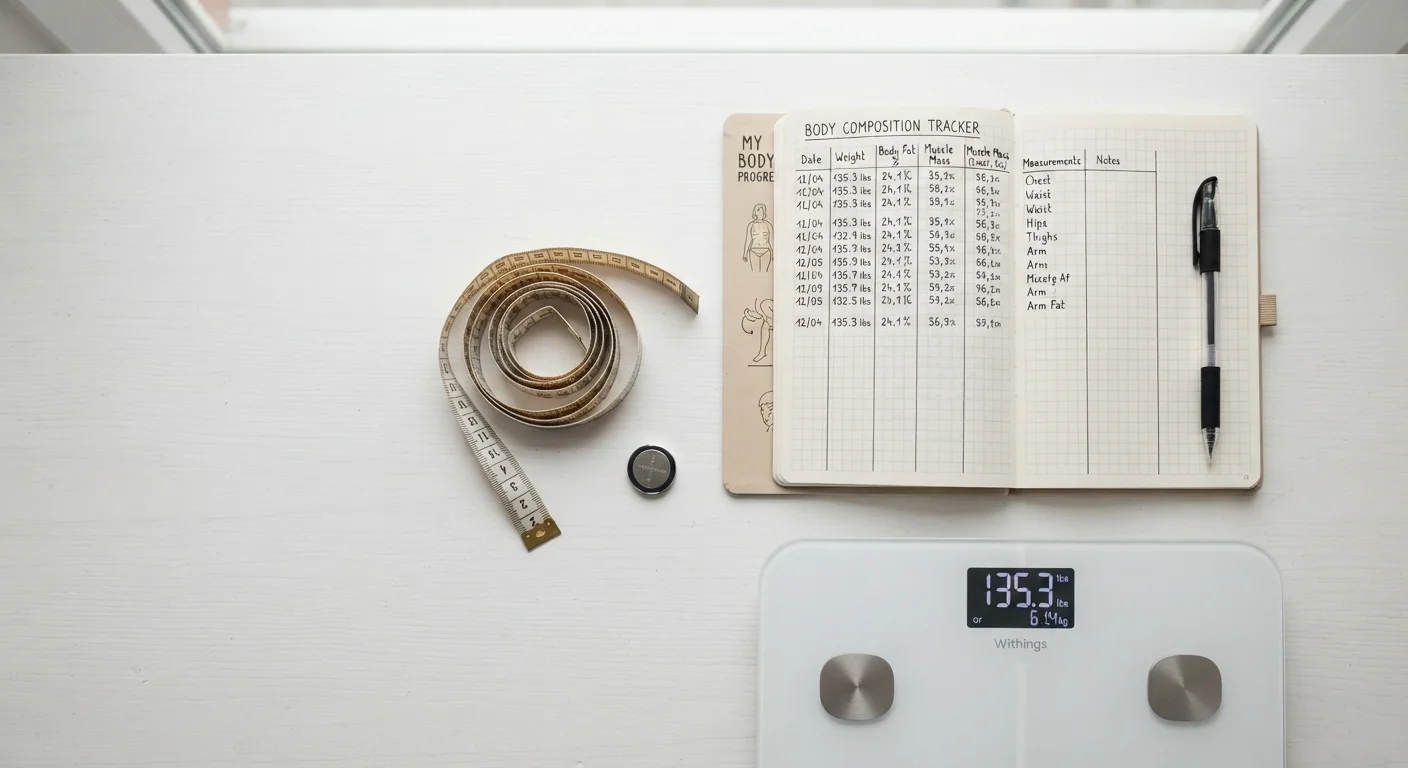
Why Multi-Metric Tracking Outperforms the Scale Alone
Body weight is a single aggregate number that combines muscle, fat, bone, water, and organ mass. On any given morning, that number can shift by several pounds based purely on hydration status, sodium intake, and digestive contents - none of which reflect meaningful changes in body composition. As we cover in depth in our body composition explainer, the distribution of tissue matters far more to health outcomes than the total.
Circumference measurements capture regional fat distribution patterns that are independently linked to metabolic health. Waist circumference in particular reflects visceral fat accumulation - the fat stored around abdominal organs - which carries greater health implications than subcutaneous fat stored elsewhere. Tracking both scale weight and circumferences together allows you to identify scenarios where weight holds steady but waist measurement declines, indicating a genuine favorable shift in composition. For those just beginning to explore body composition, understanding these distinctions is the essential first step.
This Is General Information, Not Medical Advice
Body composition tracking is a general health and fitness practice, not a clinical diagnostic tool. If you have an underlying health condition, are pregnant, or have a history of disordered eating, consult a qualified healthcare professional before beginning any structured tracking program. Changes in body composition can reflect medical conditions that require proper evaluation.
Tools, Setup, and Step-by-Step Instructions
Effective body composition tracking does not require expensive equipment. The tools below form a reliable, low-cost system when used consistently. Expensive clinical-grade methods such as DEXA scanning offer higher accuracy but are rarely necessary for general fitness monitoring.
Flexible cloth measuring tape
Measures circumferences at the waist, hips, chest, and limbs with minimal cost and no equipment error.
Calibrated bathroom scale
Tracks total body weight as one data point within a broader tracking system.
Bioelectrical impedance analysis (BIA) scale
Estimates body fat percentage and lean mass via electrical current; useful for tracking directional trends when used under identical conditions.
Skinfold calipers
A low-cost method to estimate subcutaneous fat at specific body sites; accuracy depends heavily on consistent technique.
Notebook or tracking spreadsheet
Records measurements, dates, and conditions so you can identify genuine trends over time.
What you will need
Choose the metrics you will track
Start by selecting a small, purposeful set of measurements rather than tracking everything at once. Most people benefit from monitoring total body weight, at least two circumference measurements (waist and hips are the most clinically relevant), and an optional body fat percentage estimate if a reliable method is accessible.
As explained in our breakdown of common body composition metrics, each measurement captures a different dimension of health. No single number tells the full story - which is precisely why a multi-metric approach produces more useful information than scale weight alone.
Establish your baseline under controlled conditions
Take all measurements on the same morning, after waking and using the restroom, before eating or drinking anything. Wear minimal, consistent clothing. For circumference measurements, keep the tape parallel to the floor, snug but not compressing skin, with muscles relaxed.
Record every figure alongside the date, time, and any notable context (e.g., previous night's poor sleep, menstrual cycle phase, recent high-sodium meal). This context proves invaluable when interpreting future readings.
Set a measurement frequency and stick to it
For most people, monthly measurements strike the best balance between capturing genuine change and avoiding noise-driven anxiety. Body composition shifts - particularly changes in lean mass - occur over weeks to months, not days. Measuring more often rarely adds signal and frequently adds confusion.
If you are early in a new training or nutrition program and want closer feedback, a biweekly schedule is reasonable, but daily tracking is not recommended for body composition purposes. Our article on realistic fitness timelines explains what timeframes research generally supports for composition changes.
Log measurements and note contextual factors
Record every data point in a consistent format - a simple spreadsheet with columns for date, weight, waist, hips, and any optional metrics works well. Add a brief notes column for relevant context such as training volume that week, sleep quality, hydration, or illness.
Context transforms raw numbers into interpretable data. A two-pound uptick after a high-carbohydrate week likely reflects glycogen and water storage, not fat gain - a distinction that is only visible when you track conditions alongside measurements.
Interpret trends, not individual data points
Review your data across 8-12 week windows rather than comparing last week to this week. Meaningful body composition changes - particularly in lean mass - unfold slowly. Single readings can vary by 1-5 pounds due to hydration, glycogen storage, digestive contents, and hormonal fluctuations, none of which represent fat change.
If your measurements appear inconsistent or confusing, our guide to common misreadings of body composition data walks through the most frequent interpretation errors and how to avoid them. Also worth reviewing: why body composition can shift while scale weight stays flat.
Photograph Your Tracking Setup Once
Take a quick photo of your tape placement landmarks and scale position the first time you measure. Recreating identical conditions months later is easier when you have a visual reference. Consistent posture and relaxed muscles during circumference measurements also meaningfully reduce variability.
Understanding What Changes - and What Doesn't
Even with a perfect tracking protocol, some variation is unavoidable and expected. Women may notice cyclical fluctuations of 2-5 pounds across the menstrual cycle due to water retention driven by hormonal shifts. High-carbohydrate eating increases glycogen storage in muscle, pulling water with it and temporarily raising scale weight. These are physiological norms, not tracking failures.
Genuine fat loss or muscle gain becomes visible in your data when you look across multiple measurement sessions over at least two months. A consistent downward trend in waist circumference alongside stable or increasing lean mass is a reliable positive signal. Isolated single-session readings - whether encouraging or discouraging - should be treated as single data points, not conclusions. Understanding how metabolism works and adapts can further contextualize why body composition changes sometimes plateau despite continued effort.
Avoid Over-Tracking and Obsessive Measurement
Daily weigh-ins and frequent composition checks can distort perspective and fuel anxiety, especially when normal biological fluctuations are misread as failure. If tracking begins to feel compulsive or negatively affects your relationship with food or your body, pause and speak with a healthcare provider or mental health professional.
This article is for general informational and educational purposes only and does not constitute medical advice. Consult a qualified healthcare professional before making changes to your health, diet, or exercise routine, particularly if you have an existing health condition.