
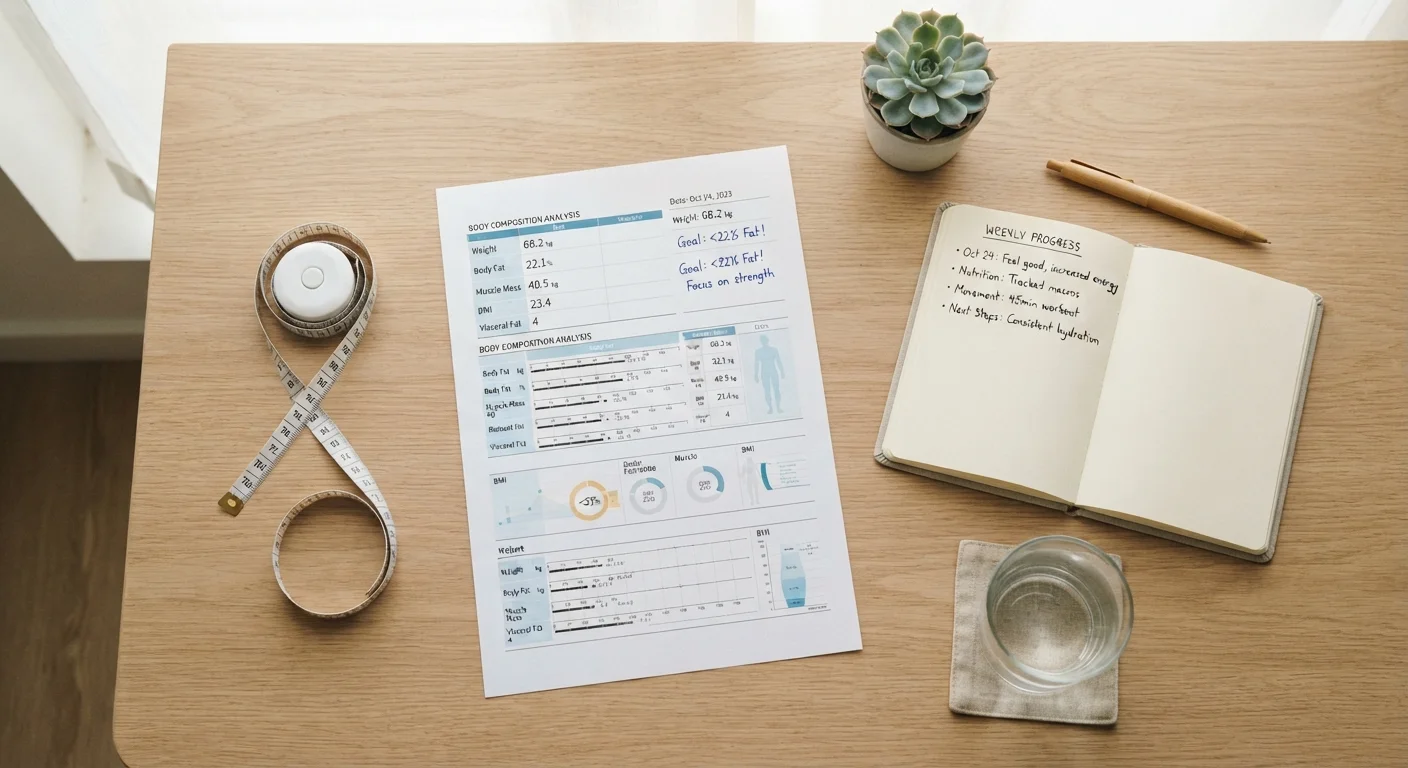
What Body Composition Actually Means
When most people think about their body, they think about the number on the scale. But that number only tells you one thing: how much gravity is pulling on you at that moment. It says nothing about what your body is actually made of.
Body composition is the breakdown of your body's physical components - primarily fat mass, lean mass (muscle, organs, connective tissue), bone, and water. Understanding these proportions gives you a far clearer picture of your health than weight alone. For a deeper look at why this distinction matters, see why the scale doesn't tell the whole story.
Think of your body as a building. Total weight is like knowing the building's overall mass - useful, but it doesn't tell you how much of it is structural steel versus insulation versus empty space. Body composition gives you that breakdown.
Body composition
The proportional breakdown of your body into fat mass, lean mass, bone, and water - a more complete health picture than total weight alone.
Fat mass
The total amount of fat tissue in your body, including both essential fat (needed for organ function) and storage fat.
Lean body mass
Everything in your body that isn't fat - muscle, bone, organs, and fluids. It's where most of your body's metabolic work happens.
Visceral fat
Fat stored deep in the abdomen around internal organs. Higher levels are associated with greater risk of metabolic and cardiovascular conditions.
Body fat percentage
The fraction of your total body weight that comes from fat tissue, expressed as a percentage. One of the most used body composition metrics.
Body recomposition
The process of simultaneously reducing fat mass and increasing lean muscle mass, often resulting in little or no change on the scale despite health improvements.
The Core Metrics You Need to Know
Body composition is typically described through a handful of key measurements. Getting familiar with these terms helps you interpret any assessment you encounter.
- Body fat percentage: The proportion of your total weight that is fat tissue. This is the most commonly referenced body composition metric.
- Fat-free mass (FFM) / Lean body mass: Everything in your body that isn't fat - muscle, bone, organs, and water. This is where metabolic activity is concentrated.
- Skeletal muscle mass: The muscle tissue attached to your skeleton that enables movement. Higher skeletal muscle mass is associated with better metabolic health and physical function.
- Visceral fat: Fat stored around your internal organs, distinct from subcutaneous fat (under the skin). Elevated visceral fat is linked to greater cardiometabolic risk.
- Bone mineral density: A measure of mineral content in your bones, relevant to long-term structural health and fracture risk.
You don't need to memorize every metric immediately. For most beginners, body fat percentage and lean mass are the most practical starting points. If terms like BMI and metabolic rate are also new to you, this plain-language glossary covers them in accessible detail.
How Body Composition Differs From Body Weight
Here's a scenario that illustrates the difference clearly: imagine two adults, both 170 pounds. One has 35% body fat and low muscle mass; the other has 20% body fat, higher skeletal muscle, and strong bone density. On a scale, they're identical. In terms of metabolic health, physical capacity, and disease risk, they're very different people.
This is exactly why understanding your metabolism matters alongside body composition - muscle tissue is metabolically active, meaning it burns more energy at rest than fat tissue does. More lean mass generally supports a higher resting metabolic rate.
Weight can also stay flat while composition shifts significantly. Someone building muscle while losing fat may see no change on the scale for weeks - but their body composition, and often their health markers, is improving. This phenomenon, sometimes called body recomposition, is a key reason fitness professionals emphasize composition over weight.
Why Body Composition Matters for Functional Health
Body composition isn't just an aesthetic concern - it has real implications for how your body functions day to day and how it ages.
Higher lean mass supports physical independence, joint stability, and metabolic resilience. Research consistently links greater muscle mass to reduced risk of type 2 diabetes, cardiovascular disease, and all-cause mortality in older adults. Excess fat mass - particularly visceral fat - is associated with chronic low-grade inflammation and insulin resistance.
Consistency Beats Precision at the Start
When you're new to tracking body composition, the method matters less than the consistency. Using the same tool, at the same time of day, under the same conditions will give you more meaningful trend data than switching between high-tech methods. Build the habit of measuring first - refine your approach later.
Bone density, another component of composition, declines naturally with age. Early awareness of where you stand gives you a longer runway to support bone health through resistance exercise and adequate nutrition. For context on how nutrition connects to these outcomes, building balanced daily eating habits is a strong companion topic.
None of this means a single body composition measurement defines your health. It's one input among many - and context, consistency, and professional interpretation all matter.
This article is for informational purposes only and is not a substitute for professional medical advice, diagnosis, or treatment. Consult a qualified healthcare provider for guidance specific to your individual health circumstances.
How to Start Assessing Your Own Body Composition
You don't need a clinical setting to begin. There are several accessible approaches, each with trade-offs in accuracy and practicality.
Tape measure circumferences: Tracking waist, hip, and limb measurements over time is low-cost and surprisingly informative. Waist circumference in particular is a well-studied proxy for visceral fat accumulation.
Bioelectrical impedance analysis (BIA): Many consumer scales now include BIA, which estimates body fat percentage by sending a small electrical current through the body. Results vary with hydration and timing, so consistency in conditions matters more than any single reading.
Clinical methods: DEXA (dual-energy X-ray absorptiometry), hydrostatic weighing, and air displacement plethysmography offer higher accuracy and are available through medical or sports performance facilities. For a full comparison of methods, see the body composition testing methods reference guide.
Once you start measuring, the next challenge is interpreting what you find. Reading your results without jumping to conclusions walks through how to make sense of numbers like fat-free mass and body fat percentage in real-world context. And when you're ready to establish a reliable tracking rhythm, tracking body composition over time covers which metrics to follow and how often.