
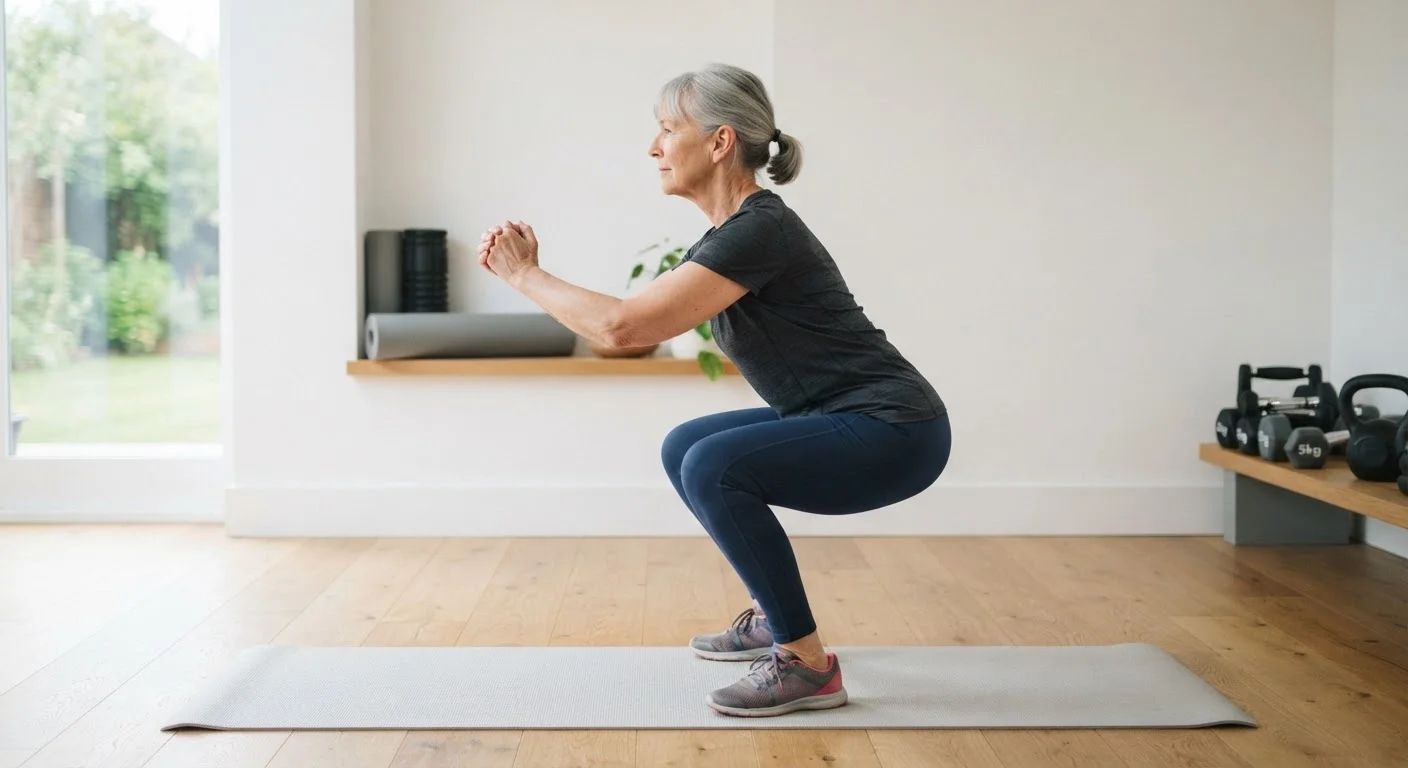
Why Fundamental Movements Fade
Human bodies are shaped by what they repeatedly do—and increasingly, what they don't. Sedentary and semi-sedentary lifestyles have narrowed the range of positions and movements most adults encounter daily, and aging amplifies the consequences. Muscle tissue declines at roughly 3–8% per decade after age 30, and connective tissue loses elasticity, but research makes clear that disuse accelerates these changes far beyond what age alone explains.
The movements covered below are not exotic or athletic—they are the patterns underlying ordinary tasks like rising from a chair, picking something up, or turning to see behind you. When they erode silently, independence narrows. The encouraging counterpoint is that targeted, consistent practice can restore meaningful function at virtually any age. Physical habits built across decades determine how well these patterns hold into later life.
Movement Loss Often Goes Unnoticed
Functional movement patterns typically erode gradually over years, not overnight. People often adapt unconsciously—avoiding activities that have become difficult—which masks the underlying decline. Regular self-assessment or periodic check-ins with a physical therapist can help identify limitations before they significantly affect daily life.
Six Movement Patterns Worth Reclaiming
Deep Squatting
The ability to lower fully into a squat—hips below parallel, heels flat—was once a default resting posture for humans across cultures. Chair-dependent lifestyles gradually replace this pattern, causing hip flexors, ankle dorsiflexion (the upward bending of the foot), and posterior chain strength to decline together. The result is often an inability to rise from low surfaces without assistance, a key marker of reduced independence.
Restoring the squat begins conservatively: use a doorframe or TRX strap for counterbalance, sit into a supported squat position daily, and gradually reduce assistance as ankle and hip mobility improve. Research consistently links squat-pattern strength to fall prevention and lower-body functional capacity in older adults.
Chair dependency quietly replaces the squat, eroding hip, ankle, and posterior chain function together.
Overhead Reaching
Reaching overhead—placing an item on a high shelf, hanging a garment, or raising both arms above the head—requires coordinated shoulder mobility, thoracic (mid-spine) extension, and scapular (shoulder blade) control. Prolonged forward-head posture from screen use and desk work progressively limits thoracic extension, making true overhead reach feel labored or painful.
Reintroducing this pattern involves targeted thoracic mobility work such as foam roller extensions over a rolled towel and wall-slide exercises that train the shoulder blade to move properly. Consistent overhead reaching practice also appears to support posture quality, which has downstream effects on breathing and balance.
Overhead reach depends on thoracic mobility that screen-heavy lifestyles steadily compress.
Hip Hinging
A hip hinge—bending forward at the hip while keeping a neutral spine—is fundamental to safely picking objects up from the floor, loading a dishwasher, or tending a garden. Without deliberate practice, many people substitute lumbar flexion (rounding the lower back) for true hip movement, placing cumulative stress on spinal discs and reducing hamstring engagement.
Relearning the hinge typically starts with a dowel rod or wall-touch drill that provides tactile feedback about spine position. Deadlift variations, even with light loads, are among the most well-studied exercises for reinforcing this pattern and are appropriate for most older adults when introduced progressively.
Most people substitute lumbar rounding for hip hinging without realizing the distinction.
Rotational Movement
Turning to check a blind spot while driving, reaching across the body to grab a seatbelt, or swinging a golf club all require thoracic rotation—a pattern that noticeably stiffens with age and inactivity. Limited rotation is frequently compensated by over-rotating the lumbar spine, which is not designed for significant rotational range and is vulnerable to injury when chronically overloaded in that way.
Seated thoracic rotations, half-kneeling cable or band rotations, and yoga-derived twisting postures can all reintroduce rotational range safely. The goal is restoring movement at the thoracic level, reducing compensatory strain lower in the spine.
Rotational stiffness forces the lumbar spine to compensate, raising injury risk over time.
Single-Leg Balance and Gait
Every step involves a brief single-leg stance phase—a moment where the entire body balances over one foot. As proprioception (the body's internal sense of position and movement) and hip abductor (outer hip) strength decline, this phase becomes less stable, increasing fall risk. Gait research identifies slower walking speed and shortened step length as early, measurable signals of this erosion.
Single-leg standing exercises, even practiced for short intervals near a stable surface, have demonstrated measurable improvements in balance metrics in older populations. Incorporating barefoot walking on varied surfaces may also help recalibrate proprioceptive feedback. See low-impact exercise options that can support gait and balance without joint stress.
Every step is a single-leg balance challenge—one that becomes less reliable when hip strength fades.
Ground-to-Stand Transitions
The ability to lower to the floor and return to standing without using hands or furniture has been associated in observational research with longevity markers, though it is important to note this reflects overall physical capacity rather than a direct causal relationship. Regardless, the skill draws on hip mobility, core stability, knee flexion strength, and coordination simultaneously—making it a meaningful functional test.
Practicing transitional movements—kneeling, half-kneeling, seated floor positions, and controlled lowering to hands and knees—rebuilds the neural pathways and strength these transitions require. Building this capacity also connects to daily movement habits that support independence beyond formal exercise.
Floor-to-stand transitions integrate hip mobility, core strength, and coordination in one demanding movement.
Building a Practice That Sticks
Reclaiming these patterns does not require a structured gym program, though strength training after 50 can provide a highly effective framework. Many of the restorative movements described above can be woven into daily routines: practicing a supported squat while waiting for coffee to brew, doing a thoracic rotation while seated, or balancing briefly on one foot while washing dishes.
Consistency matters more than intensity here. Movement research increasingly supports the idea that spreading varied physical activity throughout the day—rather than concentrating it in a single session—produces more durable functional outcomes. For broader context on how lifestyle factors interact with healthy aging, the evidence on cognitively healthy older adults shows movement is rarely isolated from other healthful behaviors.
If you have existing joint conditions, balance concerns, or are recovering from injury, work with a physical therapist or certified movement specialist before introducing new exercises. Individual anatomy and health history shape what approaches are appropriate—general guidance cannot substitute for a personalized assessment.
This article is for general informational purposes only and does not constitute medical advice. Always consult a qualified healthcare professional before starting a new exercise program, particularly if you have existing health conditions or concerns.