
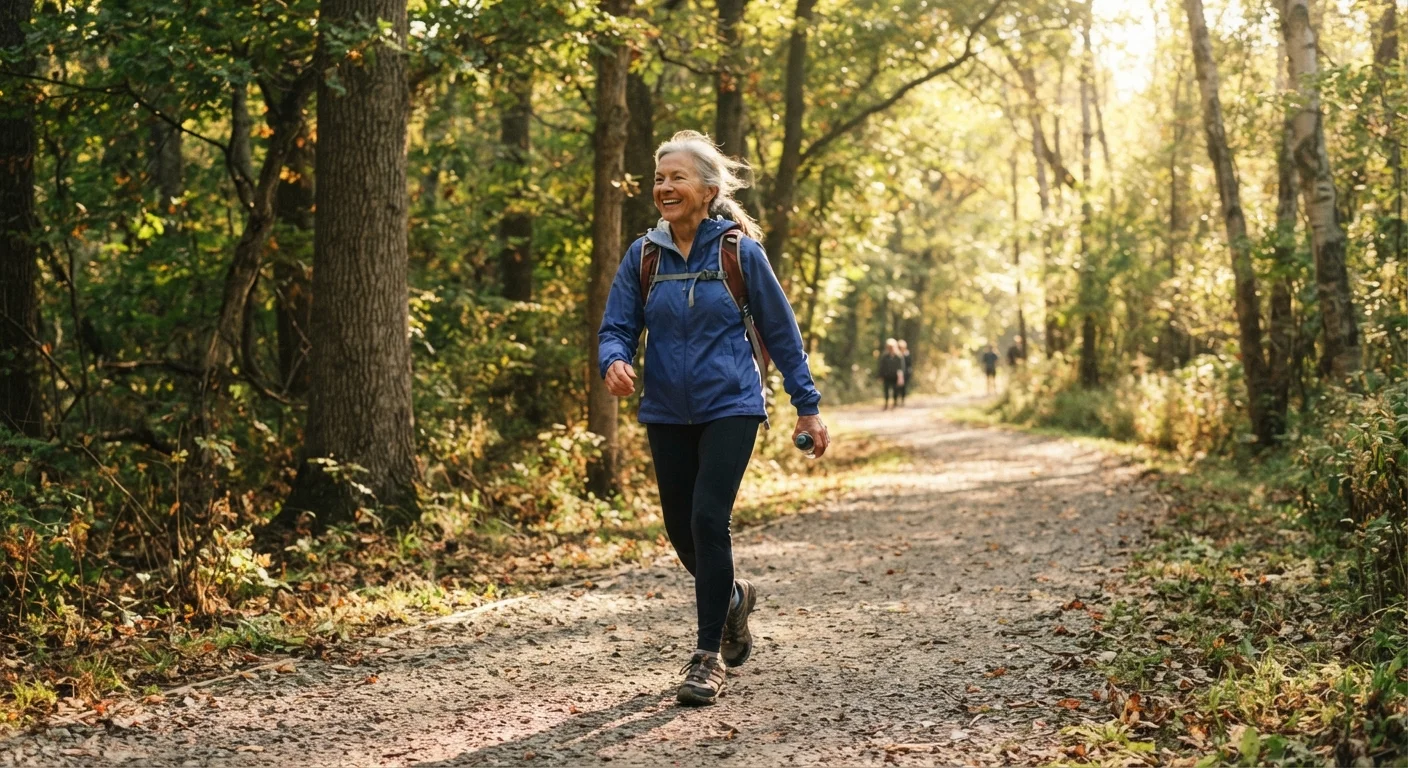
Why Your 50s Are a Pivotal Decade for Movement
The fifth decade of life sits at a biological inflection point. Hormonal shifts — declining estrogen in women and gradually falling testosterone in men — accelerate the natural loss of muscle mass and bone density that begins in the mid-30s. At the same time, recovery from injury takes longer, and sedentary patterns, once established, become harder to reverse.
This convergence makes the 50s what many exercise physiologists describe as a critical window: a period when deliberate, consistent movement can meaningfully slow the trajectory toward physical decline. Research consistently shows that adults who maintain regular physical activity through midlife enter their later decades with greater functional reserves — meaning more capacity to absorb the losses that aging inevitably brings. Those reserves translate directly into practical independence: the ability to rise from a chair without assistance, carry groceries, climb stairs, and avoid falls.
For a deeper look at how these priorities shift across every life stage, see our guide to longevity habits across each decade.
This article is for general informational purposes only and does not constitute medical advice. Consult a qualified healthcare professional before beginning or changing any exercise program.
What Research Tells Us About Consistency Over Time
Longitudinal studies following adults across decades consistently find that sustained moderate physical activity — rather than sporadic intense effort — is the strongest behavioral predictor of preserved physical function in later life. One often-cited body of work from the Harvard Alumni Health Study found that men who maintained regular walking and leisure activity across decades had measurably lower rates of physical disability in their 70s and 80s compared with peers who were intermittently active or sedentary.
Key findings across the literature point in a consistent direction:
- Adults who accumulate at least 150 minutes of moderate aerobic activity per week over years retain greater aerobic capacity, which correlates with lower all-cause mortality and better functional performance.
- Resistance exercise practiced consistently through the 50s and 60s is associated with higher muscle mass and strength in the 70s — a direct buffer against sarcopenia (age-related muscle loss).
- Balance and flexibility training, often underemphasized, show strong associations with reduced fall risk — the leading cause of injury-related death among older adults in the U.S.
~1% per week
Rate of aerobic fitness loss during inactivity
Research on sedentary deconditioning in adults estimates VO₂ max declines at approximately 1% per week without aerobic activity.
150+ min/week
Moderate aerobic activity linked to preserved function
Adults meeting this threshold consistently across years show lower rates of physical disability and mortality in multiple longitudinal studies.
#1
Falls: leading cause of injury death in older U.S. adults
According to CDC data, falls are the leading cause of injury-related death among adults aged 65 and older in the United States.
The pattern across this research is clear: the benefit is cumulative. A decade of consistent movement builds a physiological bank account that pays dividends in functional independence.
The Physiology of Inactivity: Why Gaps Compound
Understanding what happens without movement is equally instructive. Skeletal muscle is metabolically expensive tissue; the body reduces it when it goes unused. Studies of bed rest, even in healthy younger adults, show measurable muscle loss within days. In adults over 50, the rate of loss during periods of inactivity is estimated to be faster, and — critically — recovery takes longer and is often incomplete.
Bone responds similarly. Weight-bearing activity sends mechanical signals that stimulate bone remodeling. Remove that stimulus across months or years, and bone mineral density declines at an accelerated rate, increasing fracture risk. Cardiovascular fitness, measured as VO₂ max (the body's maximal oxygen uptake capacity), also decays during inactivity at roughly 1% per week in sedentary adults.
These physiological realities mean that gaps in activity don't simply pause progress — they actively erode the reserves built by prior movement. A five-year period of significant inactivity in the 50s can translate to entering the 60s with the physical baseline of someone a decade older.
Types of Movement That Matter Most
No single modality covers all the bases. The research supports a multi-component approach that addresses the distinct physiological systems most vulnerable to aging:
Aerobic Exercise
Walking, cycling, swimming, and similar activities support cardiovascular and metabolic health. Sustained aerobic capacity correlates strongly with longevity and quality of life. Accumulated minutes matter more than pace or intensity for most adults.
Resistance Training
Lifting weights, using resistance bands, or doing bodyweight exercises preserves muscle mass and bone density. Evidence suggests that even adults new to resistance training in their 60s and 70s can gain meaningful strength. See our article on strength training in your 60s and 70s for how the approach shifts with age.
Balance and Coordination Work
Tai chi, yoga, and targeted balance exercises reduce fall risk — often more effectively than aerobic or strength training alone. Our mobility self-check for adults over 55 can help identify gaps in balance and coordination before they become problems.
Functional Movement
Movements that mirror everyday tasks — squatting, stepping, reaching, carrying — translate directly to independence. Understanding what functional fitness actually means for people over 65 helps frame exercise as preparation for life, not just fitness metrics.
Don't wait until a health scare to prioritize movement. The physiological reserves you build in your 50s act as a buffer against the accelerated losses that tend to arrive in your late 60s and 70s.
Research on functional reserve shows that the gap between active and inactive older adults widens most steeply after age 65 — meaning advantages built earlier compound over time.
When building a multi-component routine, add balance work first — it has among the highest return on investment for fall prevention and requires no equipment.
Falls are the leading cause of injury-related death in older U.S. adults, and targeted balance training has strong evidence for reducing fall risk independent of strength or aerobic gains.
Building a Sustainable Movement Practice
Sustainability is the variable that most strongly predicts long-term outcomes. An ambitious program abandoned after three months delivers less benefit than a modest program maintained for years. Research on habit formation and exercise adherence points to several principles that support consistency:
- Anchor movement to existing routines. Activities tied to a regular context — a morning walk after coffee, a lunchtime stretch — are more likely to persist than those requiring special scheduling.
- Prioritize enjoyment over optimization. Adults who report enjoying their primary physical activity are more likely to sustain it across years. Variety also helps prevent both boredom and overuse injury.
- Treat recovery as part of the program. Sleep, hydration, and rest days are not concessions to aging — they are the conditions under which the body adapts. Ignoring them increases injury risk and undermines consistency.
- Adjust, don't stop. Illness, injury, or life disruption will interrupt any practice. The critical habit is returning promptly, even at a reduced level, rather than waiting for full readiness.
For adults managing chronic conditions, older adults over 75, or those returning after a long gap, consulting a physician or physical therapist before significantly increasing activity is strongly recommended.
Beyond the Body: Movement and Cognitive Health
Physical activity's benefits extend well beyond muscle and bone. A growing body of evidence links regular aerobic exercise to reduced risk of cognitive decline and dementia. Exercise increases cerebral blood flow, supports neuroplasticity, and is associated with greater volume in the hippocampus — a brain region central to memory.
Importantly, these cognitive benefits appear to accumulate over time in much the same way physical benefits do. Midlife activity levels have been associated in several studies with cognitive function in later decades, suggesting that the brain, like the body, benefits from investment made well before symptoms of decline appear.
Movement also intersects with purpose and psychological well-being — factors that themselves influence longevity. For more on those connections, see why having a sense of purpose matters for healthy aging. And for research on the broader lifestyle clusters associated with cognitive longevity, our article on lifestyle patterns in cognitively healthy older adults offers useful context.
The long view on aging and movement points in one direction: the habits built now, repeated consistently, are among the most reliable investments available for the decades ahead.
This article is for general informational purposes only and does not constitute medical advice. Always consult a qualified healthcare professional for guidance specific to your health history and needs.