
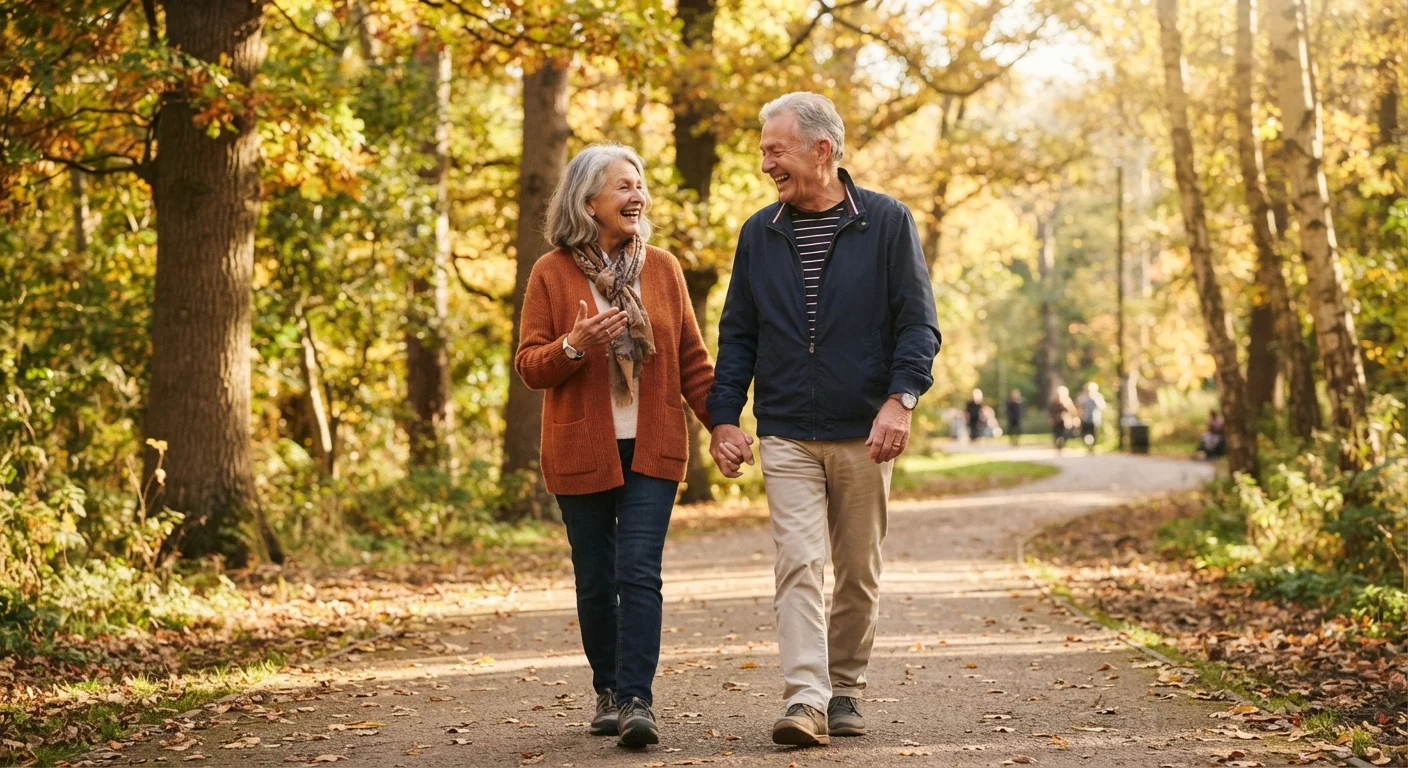
What Researchers Actually See in People Who Age Cognitively Well
When scientists study older adults who maintain strong memory, processing speed, and executive function well into their 70s and 80s, a consistent picture emerges: protective behaviors don't tend to appear in isolation. They cluster. People who exercise regularly also tend to sleep better. People who maintain rich social lives often report lower chronic stress. This co-occurrence is one of the most important — and frequently underappreciated — findings in cognitive aging research.
That clustering effect matters because it suggests cognitive resilience isn't built by any single intervention. Rather, it reflects a cumulative lifestyle load across multiple domains. The following patterns are among those most consistently documented in longitudinal studies and population-level research on brain health. They are general health information intended for educational purposes — not personal medical guidance. Always consult a qualified healthcare professional about your individual health circumstances.
The Core Lifestyle Patterns That Tend to Cluster
Researchers working in cognitive epidemiology and geroscience have identified several behavioral domains that reliably show up among older adults with preserved cognitive function. Understanding what these patterns look like in practice — and why they matter — is the first step toward building them intentionally.
Sustain regular aerobic and resistance physical activity throughout midlife and beyond.
Physical exercise is among the most robustly supported behaviors in cognitive aging research. Aerobic activity improves cerebral blood flow and supports hippocampal volume, while resistance training is associated with preserved processing speed and executive function. The two modalities appear to complement each other mechanistically.
Prioritize consistent, adequate sleep as a non-negotiable health behavior.
Sleep is when the brain's glymphatic system clears metabolic byproducts, including proteins associated with neurodegenerative processes. Chronic short sleep duration and poor sleep quality have been independently associated with accelerated cognitive decline in multiple large-scale studies.
Maintain meaningful social connections and avoid sustained social isolation.
Social engagement appears to support cognitive reserve — the brain's ability to cope with pathological change without showing clinical symptoms. Isolation, by contrast, is associated with heightened inflammation and accelerated cognitive aging, independent of depression.
Follow a dietary pattern emphasizing whole foods, vegetables, and limited ultra-processed intake.
No single food provides cognitive protection, but overall dietary patterns — particularly those resembling the Mediterranean or MIND diets — are consistently associated with slower cognitive decline in observational research. These patterns reduce cardiovascular risk factors that also compromise brain health.
Actively manage cardiovascular risk factors including blood pressure, blood glucose, and cholesterol.
The brain is a vascular organ: conditions that damage blood vessels also impair cognitive function over time. Midlife hypertension, in particular, is one of the most consistently identified modifiable risk factors for dementia, according to the Lancet Commission on Dementia Prevention.
Engage in mentally stimulating activities that involve learning, challenge, or novelty.
Cognitive stimulation — especially activities that require active engagement rather than passive consumption — is thought to build neural reserve over time. The key appears to be genuine challenge: activities that demand the brain to adapt and learn new patterns, rather than repeat well-practiced ones.
For a structured look at how these habits can be layered across different life decades, see our guide to brain health habits by decade.
Why These Habits Rarely Travel Alone
One of the more striking findings across large cohort studies — including work from the FINGER trial and the Rush Memory and Aging Project — is that the protective effect of any single behavior tends to grow when combined with others. Exercise alone improves cerebrovascular function; add consistent sleep, and the brain's glymphatic clearance of metabolic waste (a process active during deep sleep) compounds the benefit. Social engagement alone reduces loneliness-linked inflammation; pair it with cognitive stimulation, and the effect on neural reserve appears to strengthen further.
“What we eat, how we move, how we sleep, and how we connect with others are not separate inputs into health — they form an integrated biological system. Treating them as independent levers misses the point.”
— Miia Kivipelto, Professor of Clinical Geriatrics at the Karolinska Institute and lead investigator of the FINGER trial
This synergy has practical implications. Rather than treating brain-health habits as a checklist of separate items, researchers increasingly recommend thinking of them as an integrated lifestyle pattern — one where each component supports the others. Midlife is an especially important window: choices made in your 50s can meaningfully shape your function in your 70s.
It is worth noting that not all research in this area has reached definitive conclusions. Observational studies can identify associations but cannot always establish causation. Some protective associations may partly reflect healthy-participant bias — people who adopt these patterns may have started from a position of better baseline health. This nuance doesn't undermine the evidence base, but it warrants appropriate humility when communicating findings.
Putting the Patterns Into Practice
Knowing which habits cluster among cognitively healthy older adults is useful; knowing how to start building them is more actionable. Research on behavior change consistently suggests that small, consistent actions are more durable than large, sporadic efforts — and that linking a new behavior to an existing routine significantly improves adherence.
For a broader look at how movement fits into this picture beyond formal exercise, explore daily movement habits that support healthy aging. And to take a more structured inventory of where your own habits currently stand, the annual brain health self-audit offers a practical framework for identifying gaps.
This article is for informational and educational purposes only and does not constitute medical advice. Speak with a qualified healthcare provider before making significant changes to your lifestyle, especially if you have existing health conditions.