
Why Cortisol Matters for Your Brain
Stress is a universal human experience, but its biological footprint varies enormously depending on whether it is short-lived or chronic. When you perceive a threat — a deadline, a confrontation, a near-accident — your hypothalamus-pituitary-adrenal (HPA) axis activates, prompting the adrenal glands to release cortisol. This is appropriate and adaptive. The problem emerges when that response never fully turns off.
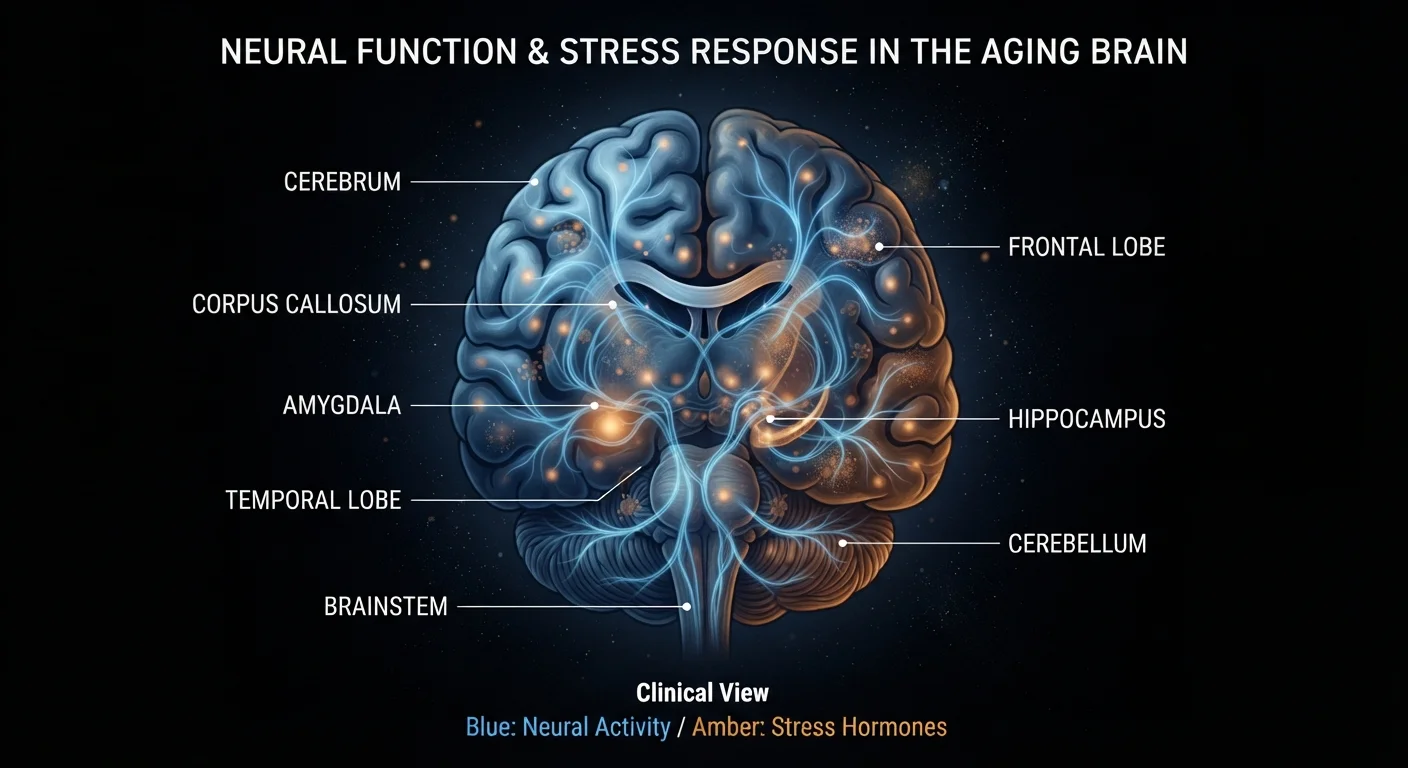
For the aging brain, persistently elevated cortisol is a particular concern. The hippocampus — the region most associated with learning and memory consolidation — is densely packed with glucocorticoid receptors, the binding sites for cortisol. While cortisol in appropriate amounts supports alertness and adaptive thinking, sustained high levels appear to suppress neurogenesis (the birth of new neurons), reduce synaptic connectivity, and even shrink hippocampal volume over time, according to research reviewed in peer-reviewed neuroscience literature.
It is important to distinguish this from everyday stress. A difficult week does not rewire your brain. The concern is a pattern: months or years of inadequate stress recovery, whether driven by caregiving demands, financial hardship, workplace pressure, or unresolved trauma. Chronic stress also affects telomere length and cellular repair, extending its reach well beyond the brain.
~40%
Higher dementia risk linked to chronic stress
Pooled analyses of longitudinal cohort studies suggest individuals with high chronic psychological stress may face meaningfully elevated dementia risk compared to low-stress peers, though effect sizes vary by study.
~10–14%
Hippocampal volume reduction observed in chronic stress
Neuroimaging research has documented hippocampal volume reductions in individuals with prolonged stress exposure or stress-related disorders, compared to age-matched controls.
3–4x
Cortisol disruption of normal sleep architecture
Studies on HPA axis dysregulation show elevated nighttime cortisol can multiply the frequency of sleep micro-arousals, significantly degrading restorative sleep quality.
What the Research Actually Shows
Several large longitudinal studies have found associations between high perceived stress, elevated cortisol markers, and accelerated cognitive aging. A widely cited body of work from population health research links chronic psychological stress in midlife to a meaningfully higher risk of dementia in later decades. However, researchers are careful to note that association is not causation — people under chronic stress also tend to sleep poorly, exercise less, and have higher rates of cardiovascular disease, all independent risk factors for cognitive decline.
Animal studies have provided stronger mechanistic evidence: rodents exposed to chronic stress show measurable hippocampal atrophy and memory impairment, effects that partially reverse when stress exposure is removed and lifestyle conditions improve. Translating these findings to humans is complex, but the directional signal is consistent.
Crucially, individual biology matters. Not everyone exposed to equivalent stressors develops the same neurological profile. Factors including genetic variants in stress hormone regulation, early-life experiences, and access to social support all modulate how the brain responds to sustained cortisol exposure. This heterogeneity explains why population-level risk data does not map cleanly onto any individual person's outcome.
The relationship between cortisol and the brain also intersects with sleep. Cortisol follows a natural diurnal rhythm, peaking in the morning and tapering through the day. Chronic stress disrupts this rhythm, often elevating nighttime cortisol, which fragments sleep — and fragmented sleep independently accelerates neurological aging. The cortisol-recovery relationship extends to physical health as well, affecting tissue repair and immune regulation.
Evidence-Backed Habits That Support Brain Resilience
Given the complexity of the cortisol-brain relationship, the most defensible approach is to adopt habits with established biological rationale — not to chase a specific cortisol number or treat stress as a purely pharmacological problem.
- Regular aerobic exercise is among the most consistently supported interventions. It promotes hippocampal neurogenesis, reduces baseline cortisol, and improves sleep architecture — three mechanisms relevant to brain protection.
- Sleep prioritization allows the brain's glymphatic system to clear metabolic waste, including proteins associated with neurodegeneration. Targeting consistent sleep duration and timing supports healthy cortisol rhythm restoration.
- Mindfulness-based stress reduction (MBSR) has shown measurable effects on perceived stress and cortisol levels in controlled trials, with some studies suggesting structural brain benefits with sustained practice.
- Social connection acts as a cortisol buffer. Meaningful relationships activate neurochemical pathways that down-regulate the HPA axis response, reducing both the intensity and duration of cortisol spikes.
- Dietary patterns that support cardiovascular health — rich in whole foods, omega-3 fatty acids, and antioxidants — appear to indirectly protect the brain by reducing systemic inflammation, which chronic cortisol elevation tends to promote.
Chronic stress also influences inflammation, immunity, and cardiovascular function, reinforcing why brain health strategies rarely succeed in isolation from overall health habits.
Start With Sleep and Movement
If you are looking for the highest-leverage entry points for cortisol regulation and brain protection, sleep consistency and regular aerobic movement have the strongest evidence base. Even modest increases in daily walking — sustained over months — are associated with measurable improvements in hippocampal volume in older adults. Small, consistent habits compound over time in ways that episodic interventions do not.
This article is for general informational and educational purposes only and does not constitute medical advice. Consult a qualified healthcare professional for guidance on your personal health situation, symptoms, or any concerns about cognitive health.