
Why Your Body Treats Stress as a Physical Emergency
When you encounter a stressor — whether a looming deadline or a loud noise — your brain's threat-detection center, the amygdala, signals the hypothalamus to launch the stress response. Within seconds, the sympathetic nervous system floods your body with adrenaline, raising heart rate, redirecting blood to muscles, and sharpening alertness. Cortisol follows shortly after, sustaining the alert state and mobilizing energy stores.
This system is exquisitely designed for short-term threats. The problem emerges when it stays switched on. Unlike the acute stress of a near-accident that resolves in minutes, modern stressors — financial insecurity, relational conflict, workplace pressure — can persist indefinitely, keeping cortisol chronically elevated and the body in a state of sustained physiological preparedness.
For a deeper look at how cortisol intersects with recovery specifically, see our cortisol and physical recovery explainer.
Inflammation, Immunity, and the Stress Cascade
One of the most consequential downstream effects of chronic stress is its influence on immune regulation. Research published in journals including Psychosomatic Medicine and findings reviewed by the American Psychological Association show that sustained psychological stress is associated with reduced activity of natural killer cells, lower antibody production in response to vaccines, and slower wound healing.
At the same time, chronic stress promotes the release of pro-inflammatory cytokines — signaling proteins that are useful in short bursts but damaging when persistently elevated. This low-grade systemic inflammation has been implicated in a wide range of conditions, including type 2 diabetes, cardiovascular disease, and certain autoimmune disorders.
~77%
Adults reporting physical stress symptoms
According to American Psychological Association survey data, a large majority of U.S. adults report experiencing physical symptoms they associate with stress.
2–3×
Increased cold susceptibility under chronic stress
Carnegie Mellon University research found that people with chronic psychological stress were significantly more likely to develop a cold after viral exposure compared to low-stress individuals.
40%
Higher cardiovascular risk associated with job strain
A meta-analysis published in The Lancet found that job strain — a form of chronic occupational stress — was associated with substantially elevated risk of coronary heart disease.
Stress also disrupts the gut-immune interface. The gut houses a substantial portion of immune tissue, and chronic stress alters both the gut microbiome and intestinal barrier function — a connection explored in detail in our stress, cortisol, and gut health article.
Cardiovascular and Metabolic Consequences
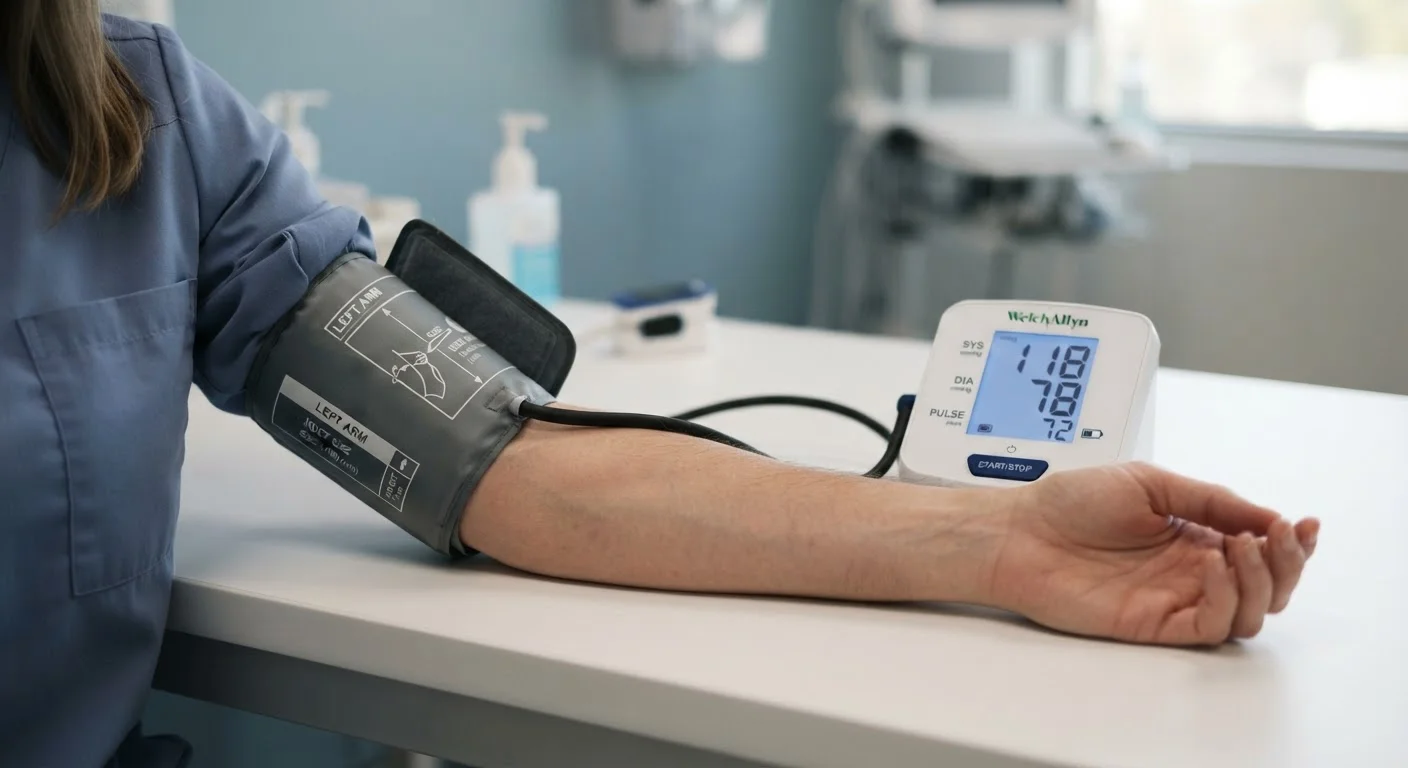
The cardiovascular system bears a particularly measurable burden from chronic stress. Prolonged sympathetic nervous system activation keeps heart rate and blood pressure elevated above baseline. Over time, this mechanical strain contributes to arterial stiffness and may accelerate the development of atherosclerosis — the buildup of plaques in arterial walls that underlies most heart attacks and strokes.
Stress hormones also influence metabolism. Cortisol promotes glucose release for immediate energy, but in chronically elevated states it can contribute to insulin resistance, shifts in fat distribution (particularly around the abdomen), and disrupted appetite signaling. These mechanisms are explored further in our stress, cortisol, and weight article and our sleep, stress, and metabolic health overview.
Chronic stress also accelerates certain markers of cellular aging, including telomere shortening — a process detailed in our chronic stress and accelerated aging article.
Prevention-Oriented Habits That Help Buffer the Effects
No single habit eliminates the physiological effects of chronic stress, but several evidence-supported daily practices can meaningfully reduce the body's stress burden over time.
- Regular aerobic movement: Physical activity helps regulate cortisol over time and supports mood via multiple pathways, including endorphin release and improved sleep quality.
- Consistent sleep: Sleep is a primary recovery window for stress hormones. Disrupted or insufficient sleep amplifies cortisol reactivity the following day — creating a reinforcing cycle.
- Social connection: Human social bonds buffer stress through both psychological and biological mechanisms. Isolation, by contrast, compounds physiological stress load. See how social support affects stress and what loneliness research reveals.
- Controlled breathing: Diaphragmatic breathing activates the parasympathetic nervous system, helping to counter the sympathetic stress response. Our breathing exercises and mood article explains the physiology behind this.
If stress symptoms are persistent or significantly affecting your daily functioning, consult a qualified healthcare professional — chronic stress warrants the same clinical attention as any other physical health concern.
Build a Daily Stress-Buffer Routine
Rather than waiting for stress to become overwhelming, small daily practices compound over time. Aim for consistent sleep and wake times, at least a short period of physical movement, and one deliberate moment of social connection each day. These habits collectively support cortisol regulation and immune resilience — no single practice needs to be elaborate to contribute meaningfully.
This article is for general informational and educational purposes only and is not a substitute for professional medical advice, diagnosis, or treatment. Always consult a qualified healthcare provider with questions about your health.