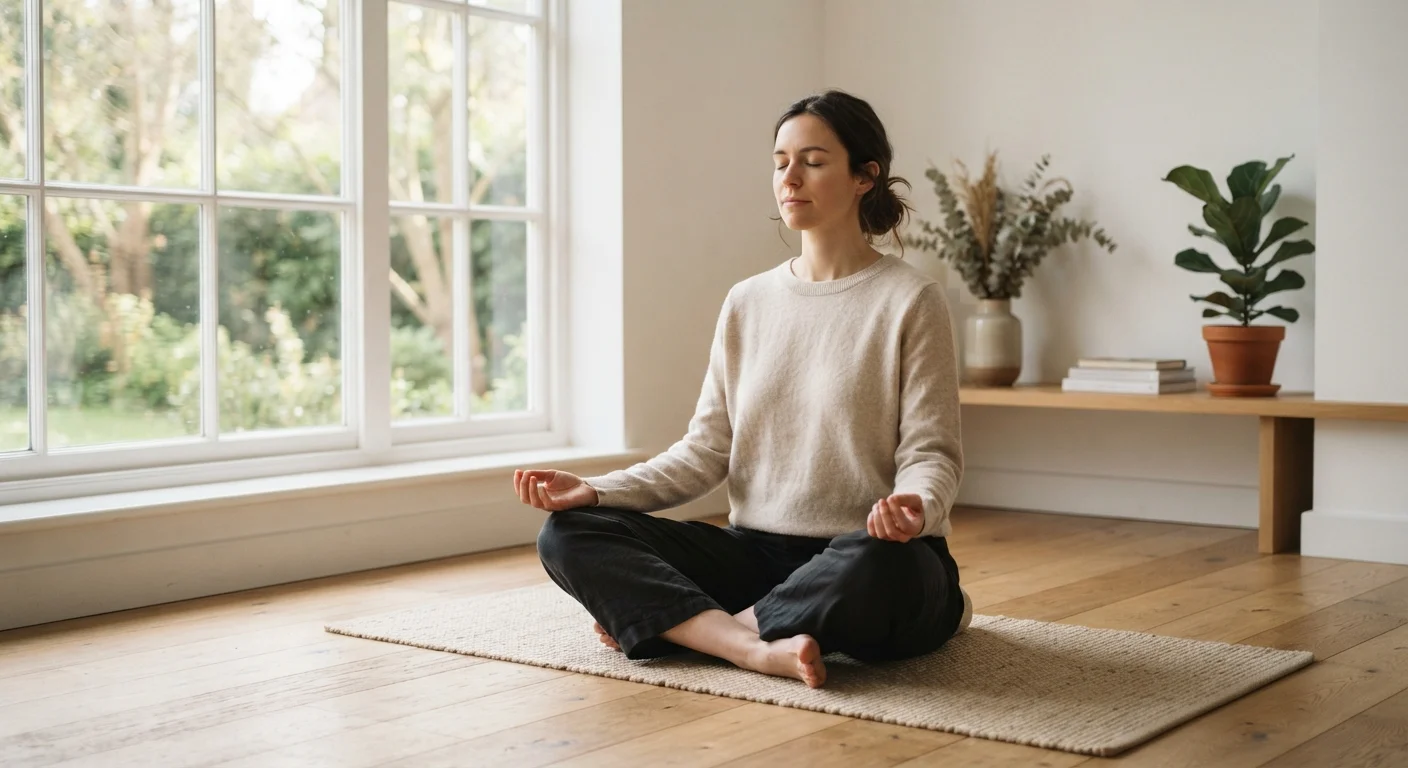

The Duration Myth That Derails Most Beginners
A lot of Americans approach mindfulness the same way they approach a new gym membership: go hard, go long, or don't bother. It's an understandable impulse, but when it comes to mindfulness and emotional regulation, that all-or-nothing thinking tends to backfire quickly.
Research on habit formation and behavioral neuroscience consistently points toward a different truth — frequency matters far more than duration. A 2018 study published in Mindfulness found that participants who practiced briefly every day reported greater reductions in stress and anxiety compared to those who engaged in longer but less consistent sessions. The brain, it turns out, learns emotional regulation the same way it learns any skill: through repeated exposure, not marathon effort.
This doesn't mean longer sessions have no value. It means that for most everyday practitioners, chasing length at the expense of regularity is a trade-off that rarely pays off. If you've tried mindfulness and felt like it "didn't work," the pattern of practice — not the practice itself — may be worth examining. You might also find it useful to check whether common misconceptions played a role; several widespread beliefs about mindfulness simply aren't accurate.
Common Mistakes That Undermine a Consistent Practice
Understanding where mindfulness routines typically break down is the first step toward building one that actually holds. The mistakes below are remarkably consistent across beginners and even returning practitioners.
Setting a session length you can't realistically maintain from the start.
Why it happens: Motivated beginners often model their goals on advanced practitioners or app recommendations that assume more available time and experience than most people have.
Treating a missed day as a reason to abandon the practice entirely.
Why it happens: All-or-nothing thinking is a common cognitive pattern, especially among people already prone to stress. One missed session can feel like evidence that the whole effort has failed.
Measuring success only by how calm or focused the session felt.
Why it happens: People expect mindfulness to feel peaceful immediately, and when the mind wanders or anxiety persists during a session, it reads as failure rather than as normal brain behavior.
Skipping informal mindfulness in favor of only formal seated practice.
Why it happens: Many people associate mindfulness exclusively with structured sitting meditation, unaware that brief moments of deliberate awareness during daily activities are equally valid and evidence-supported.
Waiting until you feel stressed to practice, rather than practicing regularly.
Why it happens: Mindfulness is often framed as a stress-relief tool, leading people to treat it reactively — reaching for it only in moments of acute distress when it's hardest to engage with.
For a broader view of whether your approach is serving you, this checklist can help you assess your current practice honestly and without judgment.
What Consistency Actually Does to the Brain
Mindfulness isn't just a feeling — it has measurable neurological effects. Repeated brief practice appears to gradually strengthen the prefrontal cortex's ability to regulate emotional responses generated in the amygdala, sometimes described as the brain's alarm center. This is a process that unfolds over weeks and months of regular engagement, not hours logged in any single sitting.
8 weeks
Time for measurable brain changes to appear
Research published in Psychiatry Research found structural differences in brain regions associated with self-awareness and stress regulation after eight weeks of regular mindfulness practice.
5–10 min
Daily practice linked to stress reduction
Multiple mindfulness studies have found that even brief daily sessions in this range are associated with meaningful reductions in self-reported stress when maintained consistently over several weeks.
Think of it like physical conditioning. Sporadic intense workouts rarely produce the same long-term adaptation as steady moderate effort — a principle that holds equally in exercise outcomes and, as emerging evidence suggests, in mindfulness. The same logic applies across many health domains: smaller, repeated actions tend to outperform high-effort overhauls when it comes to lasting change.
It's also worth knowing that mindfulness doesn't have to mean sitting in silence. Informal mindfulness — brief moments of deliberate awareness woven into daily life — counts, too, and can be an effective bridge when a formal session simply isn't possible.
This article is for general informational and educational purposes only and is not a substitute for professional medical or mental health advice. If you are experiencing significant emotional distress or mental health concerns, please consult a qualified healthcare professional.