What Stress and Anxiety Actually Are
Stress and anxiety are words people often use interchangeably, but they describe slightly different experiences. Stress is typically a response to an identifiable external pressure — a work deadline, a difficult conversation, financial uncertainty. It tends to ease when the situation resolves. Anxiety involves persistent worry or dread that may persist even without a clear trigger, often centered on anticipated future threats.
Both experiences are normal parts of human life. The goal of managing them isn't elimination — it's keeping them proportionate so they don't interfere with daily functioning, relationships, or health. Understanding what you're dealing with is the first step toward responding effectively. For a deeper look at where normal worry ends and clinical anxiety begins, see how clinicians distinguish everyday stress from anxiety disorders.
The Biology Behind the Stress Response
When your brain perceives a threat — real or imagined — the hypothalamus signals the adrenal glands to release cortisol and adrenaline. Heart rate climbs, muscles tense, breathing quickens, and digestion slows. This is the fight-or-flight response, and it evolved to protect us from immediate physical danger.
The challenge in modern life is that the same system activates for psychological stressors — a tense email or a crowded commute — and the body doesn't easily distinguish between them. When this response fires repeatedly without adequate recovery time, it can contribute to sleep disruption, immune suppression, digestive issues, and mood instability.
77%
Adults experiencing physical stress symptoms
According to the American Psychological Association's Stress in America survey, a large majority of U.S. adults report physical symptoms they attribute to stress.
31%
U.S. adults affected by anxiety at some point
The National Institute of Mental Health estimates that roughly 31% of American adults experience an anxiety disorder at some point in their lives.
6–8 min
Minimum daily mindfulness for stress benefit
Research published in peer-reviewed journals suggests even brief daily mindfulness practice can produce measurable reductions in self-reported stress.
Understanding this biology matters because many evidence-based coping tools work precisely by interrupting or dampening this physiological cascade — giving your nervous system the signal that the threat has passed.
When Everyday Stress Becomes a Concern
Occasional stress is universal. But certain patterns are worth paying attention to:
- Worry that feels uncontrollable or disproportionate to the situation
- Physical symptoms — headaches, muscle tension, GI upset — with no clear medical cause
- Difficulty sleeping most nights due to racing thoughts
- Avoiding people, places, or activities because of anxiety
- Relying on alcohol or other substances to feel calm
If any of these patterns feel familiar and persistent, it's a good reason to speak with a primary care provider or mental health professional. This article provides general health information — it is not a substitute for personalized medical or psychological evaluation. You deserve support that accounts for your full picture.
Evidence-Based Coping Tools You Can Use Today
Research supports several accessible strategies for reducing stress reactivity and anxious thinking. These are not cures, but practiced consistently, many people find meaningful relief.
Diaphragmatic Breathing
Slow, deep breathing activates the parasympathetic nervous system — the body's "rest and digest" counterpart to fight-or-flight. A simple approach: inhale for four counts, hold for four, exhale for six. Even two to three minutes can shift how you feel in the moment.
Cognitive Reframing
Anxious thinking often involves catastrophizing — assuming the worst outcome is both likely and unmanageable. Cognitive reframing, a core element of Cognitive Behavioral Therapy (CBT), involves gently questioning those assumptions: Is this thought accurate? What evidence do I have? What would I tell a friend in this situation?
Mindfulness Practices
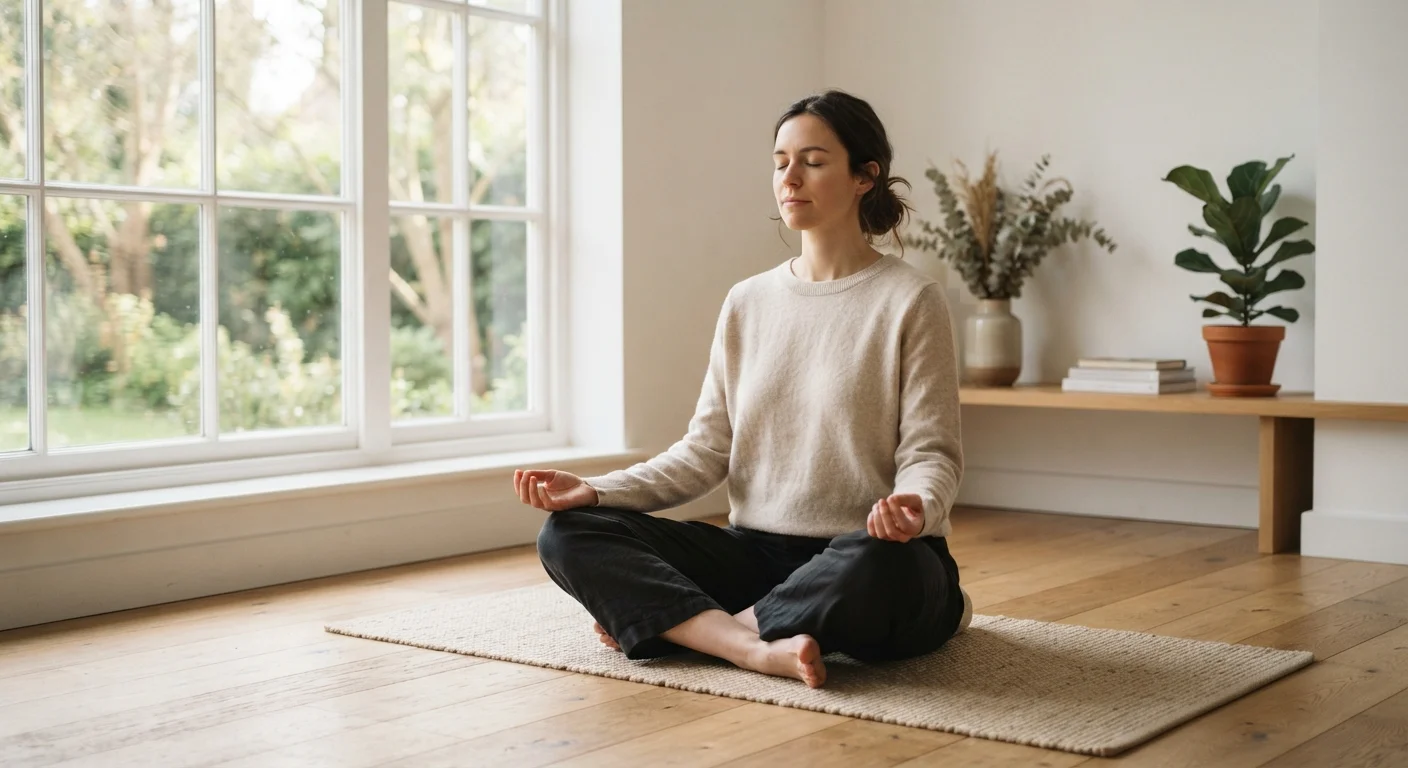
Mindfulness — intentionally focusing on the present moment without judgment — has robust evidence behind it for reducing anxiety. It doesn't require meditation; paying full attention during a short walk or a meal counts. For a thorough introduction, see our complete guide to mindfulness and mood.
Don't wait until you're overwhelmed to use a breathing technique — practice it daily when calm so it becomes automatic when you need it most.
Stress responses narrow our available coping behaviors; skills practiced under low-stress conditions are far more accessible when anxiety peaks.
Write anxious thoughts down before bed rather than trying to resolve them mentally — the act of externalizing worry reduces its hold on working memory.
Research on expressive writing and cognitive offloading suggests that writing concerns down can reduce bedtime rumination and improve sleep onset.
Building Long-Term Resilience
Coping tools work best on a foundation of healthy daily habits. Sleep is arguably the most powerful — even mild sleep deprivation amplifies emotional reactivity and reduces the brain's capacity to regulate worry. Regular physical movement, even brisk walking, has been shown in multiple studies to reduce anxiety symptoms. Social connection — genuine, reciprocal relationships — acts as a buffer against chronic stress in ways researchers are still exploring.
Reducing stimulant intake (caffeine in excess), limiting news-scrolling, and building in predictable rest periods throughout the day all contribute to a lower baseline of physiological arousal. These aren't indulgences — they are foundational. For a structured approach to integrating these habits, explore our science-backed framework for healthy daily habits.
Resilience isn't the absence of stress — it's the capacity to recover from it. Building that capacity is a practice, not a destination, and small consistent steps compound meaningfully over time.
This article is for general informational and educational purposes only and does not constitute medical advice. If you are experiencing persistent or distressing symptoms, please consult a qualified healthcare professional.