
Two Different Metrics, Two Different Health Levers
Most Americans think about physical health in terms of what they do — how many times a week they work out, how many steps they log. Far fewer pay attention to what they spend the rest of the day not doing. That gap in awareness is exactly where a significant slice of preventable health risk hides.
Sedentary behavior and exercise are not simply opposite ends of the same dial. Public health researchers treat them as two distinct behavioral variables, each with its own physiological effects and its own set of evidence-based targets. Understanding them separately — not as a trade-off — is the foundation of a more complete prevention strategy.
For a broader look at how everyday movement fits into this picture, see how NEAT contributes to overall fitness.
| Criterion | Sedentary Time | Exercise Time |
|---|---|---|
| Definition | Waking hours spent in low-energy seated or reclined posture | Structured bouts of moderate-to-vigorous physical activity |
| Primary health concern | Metabolic disruption, cardiovascular risk from prolonged inactivity | Insufficient cardiorespiratory and muscular fitness |
| Key guideline target | Minimize; break up every 30–60 minutes | 150+ min/week moderate or 75+ min/week vigorous |
| Risk when target is missed | Elevated glucose, lipid dysregulation, CVD risk | Lower cardiorespiratory fitness, higher all-cause mortality risk |
| Do they offset each other? | No — sitting risk persists even with regular exercise | No — exercise benefits persist even with high sitting time, but don't eliminate its risk |
| Tracking method | Wearable accelerometers, screen-time logs, desk timers | Fitness trackers, heart rate monitors, workout logs |
What the Research Says About Sitting
A body of research — including large prospective cohort studies published in journals such as the Annals of Internal Medicine and JAMA Cardiology — has demonstrated that total daily sitting time is associated with elevated risks for cardiovascular disease, type 2 diabetes, and all-cause mortality, independent of whether participants met physical activity guidelines. This is the critical phrase: independent of exercise.
The mechanism is partly metabolic. Extended periods of muscle inactivity — particularly in the large lower-body muscles — appear to suppress the activity of lipoprotein lipase, an enzyme involved in fat and glucose metabolism. Put simply, muscles that aren't contracting regularly stop managing blood sugar and blood lipids as efficiently.
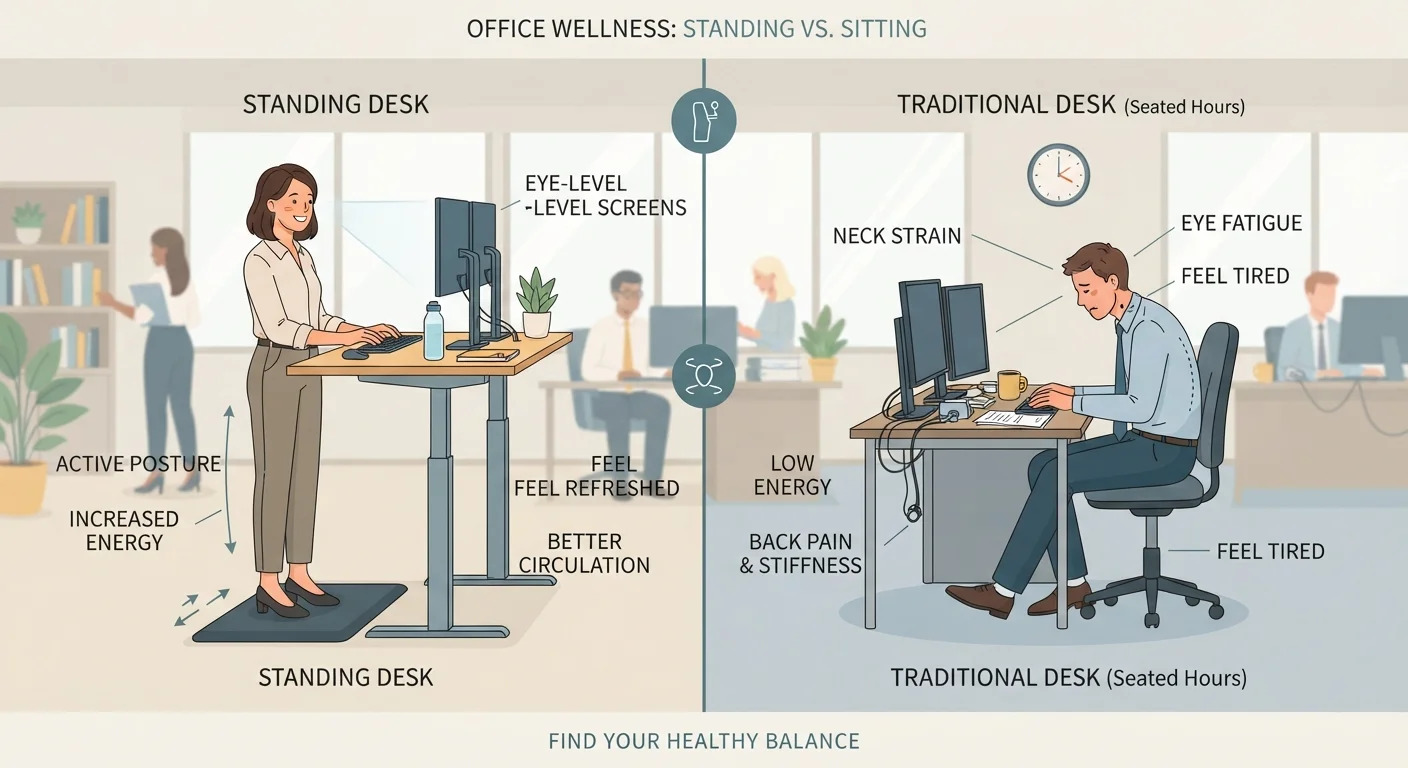
Breaking up sitting time matters too. Studies suggest that interrupting prolonged sitting with even brief bouts of light-intensity movement — standing, walking to a colleague's desk, a two-minute stretch — can attenuate some of these metabolic disruptions. A common practical threshold cited in guidance is breaking up sitting roughly every 30 to 60 minutes.
What Exercise Time Accomplishes That Sitting Breaks Cannot
Structured exercise — particularly moderate-to-vigorous physical activity (MVPA) — delivers adaptations that incidental movement simply cannot replicate at the same magnitude. These include improved cardiorespiratory fitness (VO2 max), increased muscular strength and endurance, favorable changes in HDL cholesterol, and reductions in resting blood pressure.
The CDC and the U.S. Department of Health and Human Services Physical Activity Guidelines for Americans recommend adults accumulate at least 150 minutes of moderate-intensity or 75 minutes of vigorous-intensity aerobic activity per week, along with muscle-strengthening activities on two or more days. Meeting these targets is associated with substantially lower risk of heart disease, stroke, and several cancers.
However, meeting those guidelines does not create a health "bank account" that absorbs hours of daily inactivity. Research characterizes physically active yet highly sedentary individuals as a distinct risk group — sometimes described informally as "active couch potatoes" in epidemiological literature.
If all-or-nothing thinking is what keeps structured exercise feeling out of reach, overcomplicating fitness is a common and reversible barrier.
Practical Framework: Tracking and Changing Both Numbers
Addressing both sedentary time and exercise time requires two parallel but distinct habits.
- For exercise time: Aim toward the 150-minute weekly MVPA target using activities sustainable enough to maintain long-term — brisk walking, cycling, swimming, or any rhythmic activity that elevates your heart rate noticeably.
- For sedentary time: Use environmental cues or device reminders to stand or walk briefly every 30–60 minutes during prolonged desk or screen time. The goal isn't intense movement — it's interruption of stillness.
- For the full spectrum: Recognize that light activity and moderate activity serve different roles. Both matter; neither fully substitutes for the other.
Adults managing chronic conditions, recovering from injury, or in older age groups should discuss realistic sedentary reduction and activity goals with a qualified healthcare professional before making significant changes. For age-specific context, sedentary behavior and exercise interact differently for adults over 60.
This article is for general informational and educational purposes only and does not constitute medical advice. Always consult a qualified healthcare professional for guidance specific to your health situation.