Why Bone Density Screening Matters Before Symptoms Appear
Osteoporosis is often called a silent disease for a clear reason: bones can weaken significantly over years or decades without causing any pain, stiffness, or visible changes. For many people, the first sign of bone loss is a fracture from a fall — or even from a minor movement like bending or coughing. According to the National Institutes of Health (NIH), osteoporosis is responsible for an estimated 2 million fractures in the United States each year, with hip fractures carrying particularly serious consequences for long-term mobility and independence.
This is precisely why preventive screening exists. A bone density test can detect low bone mass before a fracture ever occurs, creating a window for intervention. Screening fits into a broader framework of adult preventive care — the same logic that drives blood pressure checks and cancer screenings. For context on how bone density testing fits alongside other adult screenings, see the Complete Preventive Screening Guide for Adults.
This article is for general health education and is not a substitute for personalized medical advice. Always consult a qualified healthcare provider for guidance specific to your situation.
Who Should Get Screened and When
The U.S. Preventive Services Task Force (USPSTF) — a leading independent panel of clinical experts — recommends bone density screening for all women aged 65 and older. For postmenopausal women under 65, screening is recommended when their 10-year fracture risk is equal to or greater than that of a 65-year-old white woman with no additional risk factors, based on validated risk assessment tools.
Bone Mineral Density (BMD)
A measurement of the amount of mineral — primarily calcium — packed into a segment of bone. Higher density generally means stronger, more fracture-resistant bone.
DEXA Scan
Dual-Energy X-ray Absorptiometry — the standard clinical imaging test used to measure bone density at the hip and spine using two low-dose X-ray beams.
T-Score
A number that shows how your bone density compares to a healthy young adult at peak bone mass. Scores below –2.5 indicate osteoporosis.
Osteopenia
A condition where bone mineral density is lower than normal but not yet low enough to be classified as osteoporosis. It signals elevated future risk.
Osteoporosis
A disease in which bones become weak and porous, significantly increasing the risk of fractures from minor falls or even everyday movements.
FRAX Score
A validated clinical tool developed by the World Health Organization that estimates a person's 10-year probability of experiencing a major osteoporotic fracture, combining BMD with other risk factors.
Key risk factors that may indicate earlier screening is appropriate include:
- Low body weight or small body frame
- History of fractures in adulthood
- Family history of osteoporosis or hip fracture
- Current or past smoking
- Excessive alcohol use
- Long-term use of corticosteroids (such as prednisone)
- Early menopause (before age 45) or surgical removal of the ovaries
- Conditions affecting nutrient absorption, such as celiac disease
For men, there is currently no universal USPSTF recommendation, but clinicians often screen men over 70 or younger men with major risk factors. If you are unsure whether you qualify for screening, a conversation with your primary care physician is the right first step.
How a DEXA Scan Works
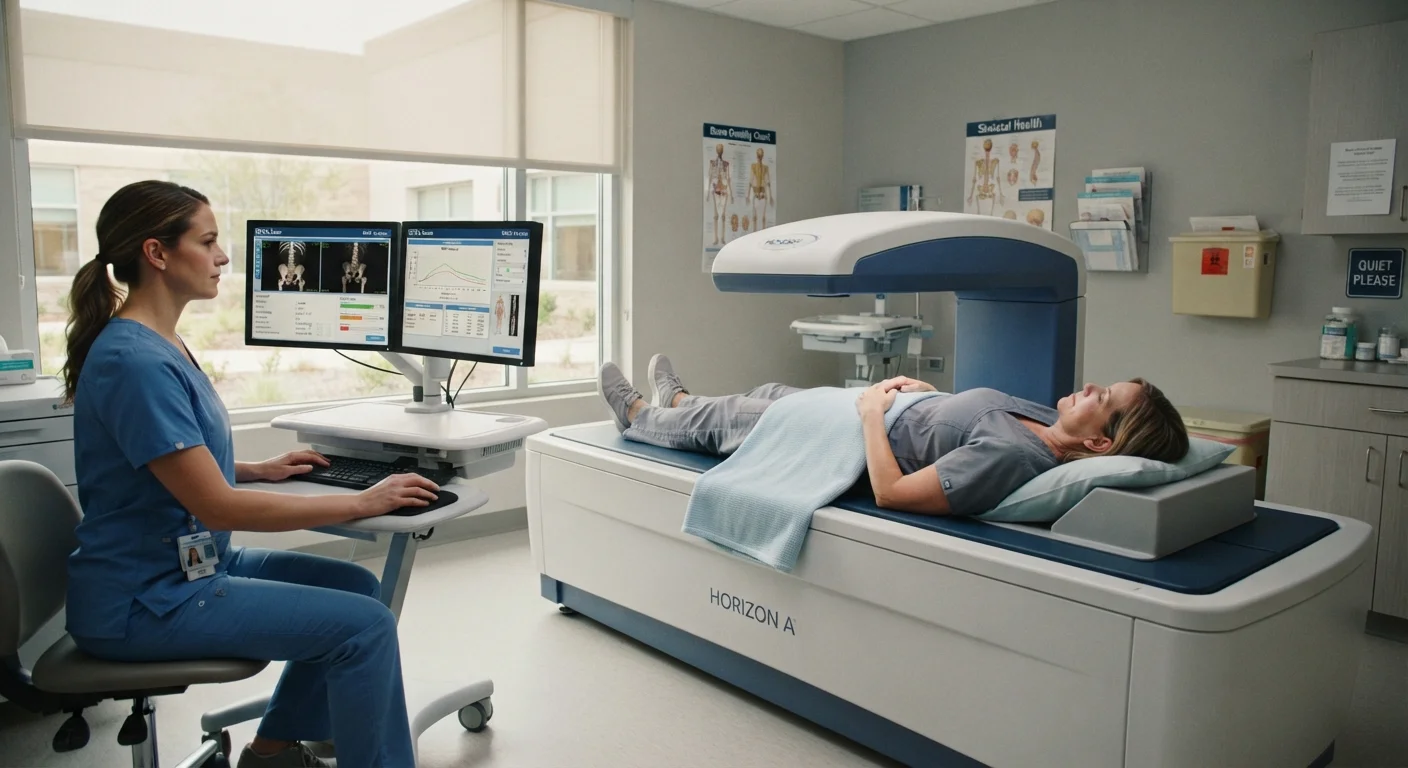
DEXA (Dual-Energy X-ray Absorptiometry) is the clinical standard for measuring bone mineral density (BMD). The test uses two low-dose X-ray beams to measure how much energy is absorbed by bone tissue, typically at the hip and lumbar spine — the two sites most predictive of fracture risk.
A DEXA scan is:
- Fast: The scan typically takes 10–20 minutes.
- Painless: You lie still on a padded table while a scanner arm passes over you.
- Low-radiation: The radiation dose is a fraction of that from a standard chest X-ray.
- Non-invasive: No injections, fasting, or special preparation are generally required, though you should avoid calcium supplements in the 24 hours before the test.
Peripheral devices — such as heel or wrist scanners sometimes found at pharmacies or health fairs — can provide a rough estimate of bone density but are not a substitute for a full DEXA scan at a clinical facility. If a peripheral result raises concern, a clinical DEXA scan is the next appropriate step.
Reading Your T-Score Results
Your DEXA results are reported as a T-score, which compares your bone mineral density to that of a healthy young adult of the same sex at peak bone mass. Here is how the World Health Organization (WHO) defines the standard categories:
| T-Score Range | Classification |
|---|---|
| –1.0 and above | Normal bone density |
| Between –1.0 and –2.5 | Low bone mass (osteopenia) |
| –2.5 and below | Osteoporosis |
A related measure, the Z-score, compares your density to others of your same age and sex. This is particularly useful for younger adults and children, where age-matched comparisons are more clinically informative.
It is important to understand that a T-score is one data point, not a diagnosis in isolation. Clinicians combine it with other factors — including age, fall risk, prior fractures, and a validated tool called the FRAX score — to form a complete picture of your fracture risk and guide next steps.
Bring Your Previous Results to Each Appointment
If you have had a prior DEXA scan, bring those records to your next appointment — even if it was at a different facility. Comparing scans over time requires consistent methodology, and your physician can assess whether changes in your T-score are clinically meaningful or within normal measurement variation.
What Happens After Your Screening
The path forward after a DEXA scan depends entirely on your results and overall risk profile. Common next steps include:
- Normal results: Maintain bone health through adequate calcium and vitamin D intake, weight-bearing exercise, fall prevention strategies, and scheduled follow-up screening per your doctor's guidance.
- Low bone mass (osteopenia): Lifestyle modifications are emphasized; medication is generally not initiated unless fracture risk is elevated based on FRAX or other clinical factors.
- Osteoporosis: A clinician will discuss treatment options, which may include prescription medications alongside lifestyle measures. Repeat scanning is scheduled to monitor changes over time.
Physical activity plays a meaningful role at every stage — but the type and intensity of movement matters when bone health is already compromised. For a detailed overview of safe, bone-supportive exercise principles, see Osteoporosis and Physical Activity: Navigating Safe, Bone-Supportive Movement.
Bone density screening is one piece of a broader preventive health picture. Just as blood sugar screening catches diabetes risk early — as explored in Diabetes Screening: Who Gets Tested, What It Measures, and What Comes Next — a DEXA scan gives you actionable information while there is still time to change the trajectory of bone health.
This content is for general informational purposes only and does not constitute medical advice. Consult your healthcare provider to determine whether bone density screening is appropriate for you.