Two Different Roles in the Same System
Probiotics and prebiotics are often mentioned together, and for good reason — they both support gut health. But they do fundamentally different jobs. Confusing the two is common, and that confusion can make it harder to understand what you actually need.
A probiotic is a live microorganism that, when consumed in adequate amounts, confers a health benefit on the host. That's the clinical definition from the World Health Organization. In plain terms: probiotics are beneficial bacteria (and some yeasts) that you ingest through fermented foods like yogurt, kefir, kimchi, sauerkraut, and miso — or through supplements.
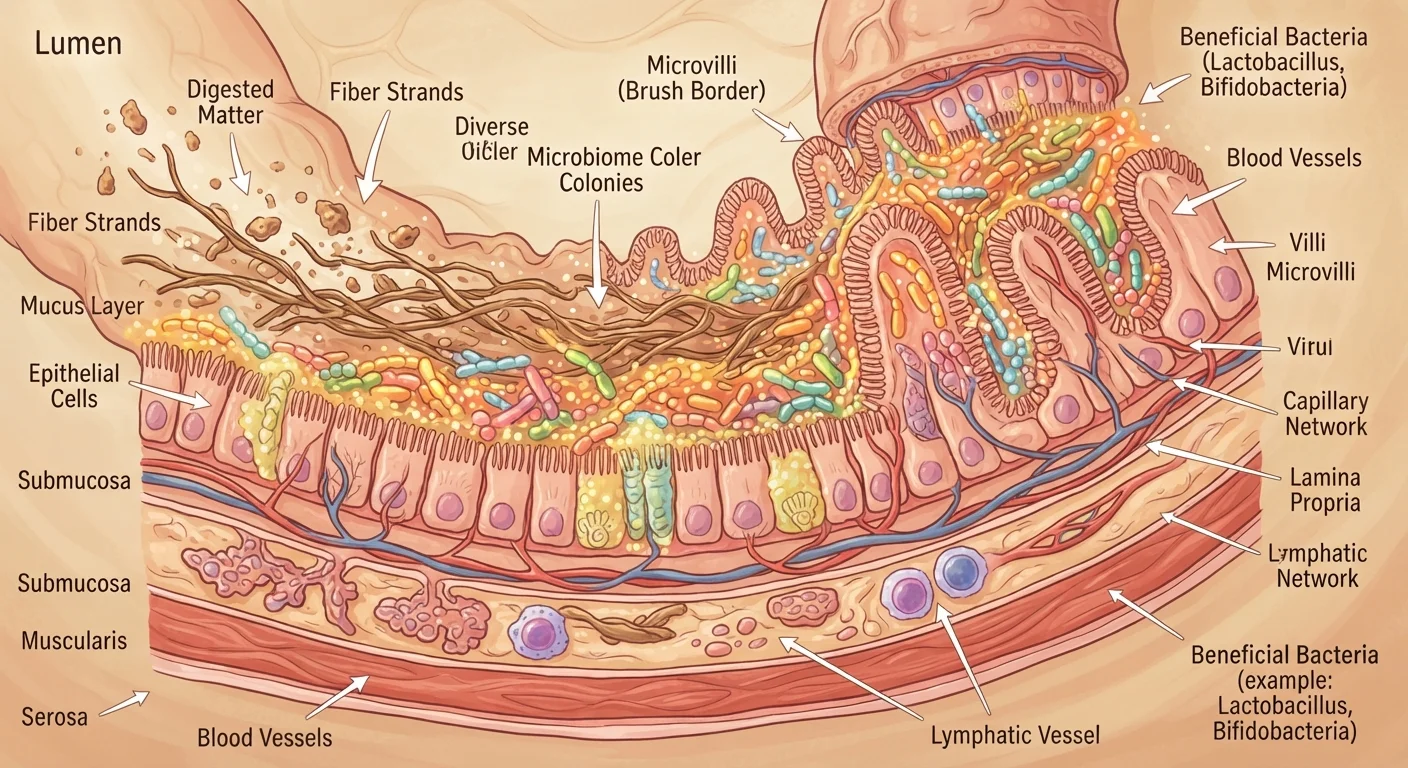
A prebiotic, by contrast, is not a living thing. It's a type of dietary fiber — specifically, a non-digestible compound that selectively feeds the beneficial bacteria already living in your gut. Your body can't break prebiotics down itself, so they travel to the colon intact, where gut bacteria ferment them for energy. Common prebiotic fibers include inulin, fructooligosaccharides (FOS), and galactooligosaccharides (GOS), found in foods like garlic, onions, leeks, asparagus, bananas, and oats.
Think of it this way: probiotics are the workers, and prebiotics are the food that keeps them working.
| Criterion | Probiotics | Prebiotics |
|---|---|---|
| What it is | Live beneficial microorganisms | Non-digestible plant fiber |
| Primary function | Adds bacteria to the gut microbiome | Feeds existing beneficial bacteria |
| Main food sources | Yogurt, kefir, kimchi, miso, sauerkraut | Garlic, onions, oats, bananas, asparagus |
| Survives stomach acid | Varies by strain; some survive, some don't | Yes — passes intact to the colon |
| Key byproduct | Microbial diversity, immune signaling | Short-chain fatty acids (e.g., butyrate) |
| Supplement availability | Widely available; quality varies | Available; fiber-rich foods preferred |
| Strength of evidence | Strong for specific strains and conditions | Strong for high-fiber diets broadly |
How Each One Affects Gut and Immune Health
Roughly 70% of the body's immune tissue is located in or near the gastrointestinal tract, which is why gut health is so central to immune function. The trillions of microorganisms living in your gut — collectively called the gut microbiome — help regulate inflammation, train immune cells to distinguish threats from harmless substances, and produce compounds like short-chain fatty acids (SCFAs) that support the gut lining.
Probiotics contribute by adding diversity to this microbial community. Research suggests that a more diverse microbiome is associated with better metabolic, immune, and digestive outcomes, though scientists are still mapping exactly which strains produce which effects. Strains like Lactobacillus and Bifidobacterium are the most studied and appear in many food-based sources.
Prebiotics do their work downstream. When bacteria ferment prebiotic fibers, they produce SCFAs — particularly butyrate, propionate, and acetate. Butyrate, for example, is a primary energy source for colonocytes (the cells lining your colon) and plays a role in maintaining the intestinal barrier. A compromised gut barrier is associated with systemic inflammation, so keeping it intact is a meaningful preventive health goal.
For more on the specific types of fiber involved, see our guide to soluble vs. insoluble fiber — it explains how each fiber type functions and where to find them in everyday foods.
~70%
Immune tissue located in or near the gut
The gastrointestinal tract houses the majority of the body's immune-associated tissue, per established immunology literature.
< 10 g/day
Average American daily fiber intake
Most U.S. adults consume significantly less than the recommended 25–38 grams of fiber daily, according to the Dietary Guidelines for Americans.
38 trillion
Estimated bacterial cells in the human body
A widely cited 2016 study in Cell estimated the human body contains roughly as many bacterial cells as human cells.
What the Evidence Actually Says
The science around probiotics is promising but still maturing. The strongest clinical evidence supports specific strains for specific conditions — for example, certain Lactobacillus strains for antibiotic-associated diarrhea, and Bifidobacterium infantis for some symptoms of irritable bowel syndrome (IBS). The evidence for more general claims — immunity boosting, mood improvement, weight management — is less conclusive and often based on small studies.
Prebiotic research, while less prominent in popular media, is robust. High-fiber diets are consistently linked in large epidemiological studies to lower risk of colorectal cancer, cardiovascular disease, and type 2 diabetes. Most Americans consume far less than the recommended 25–38 grams of fiber per day, according to the Dietary Guidelines for Americans — meaning the most impactful step for many people is simply eating more fiber-rich whole foods.
Supplement quality for both probiotics and prebiotics varies considerably. The FDA regulates dietary supplements differently from drugs, meaning manufacturers don't need to prove efficacy before selling a product. If you're considering supplements, a conversation with a healthcare provider is a sensible first step — especially for anyone who is immunocompromised, pregnant, or managing a chronic condition.
A Note on Immunocompromised Individuals
For most healthy adults, probiotic-rich foods like yogurt and kefir are considered safe. However, people with weakened immune systems — including those undergoing chemotherapy, organ transplant recipients, or individuals with certain chronic conditions — should consult a physician before using probiotic supplements. In rare cases, live bacteria in supplements have caused infections in highly vulnerable patients.
This article is for general health information and educational purposes only. It is not a substitute for personalized medical advice. Always consult a qualified healthcare professional before making changes to your diet, supplement routine, or health management plan.