Why Colorectal Cancer Screening Starts at 45
Colorectal cancer is the third most commonly diagnosed cancer in the United States and the second leading cause of cancer-related death, according to the CDC. The encouraging reality is that it is also one of the most preventable cancers when caught early through routine screening.
In 2021, the U.S. Preventive Services Task Force (USPSTF) updated its guidance to recommend that average-risk adults begin colorectal cancer screening at age 45 — lowering the previous threshold of 50 — based on rising incidence rates among younger adults. Screening continues to be strongly recommended through age 75, with individualized decisions from ages 76 to 85.
The goal of screening is to detect precancerous polyps or early-stage cancer before symptoms appear. Most colorectal cancers develop slowly from polyps over 10 to 15 years, which gives screening a meaningful window to intervene. People with a personal or family history of colorectal cancer or polyps may need to start screening earlier — a conversation best had with a primary care provider.
Colonoscopy: How It Works and What to Expect
A colonoscopy is a direct visual examination of the entire colon and rectum using a flexible, camera-equipped tube called a colonoscope. It is considered both a screening and a diagnostic tool because a gastroenterologist can remove polyps or take tissue samples during the same procedure.
Preparation involves a bowel cleanse the day before — typically a liquid diet and a prescribed laxative solution — which many patients find to be the most challenging part. The procedure itself usually takes 30 to 60 minutes and is performed under sedation, meaning patients need someone to drive them home.
For average-risk individuals with no findings, a repeat colonoscopy is generally not needed for 10 years. If polyps are found and removed, follow-up intervals shorten based on the number and type of polyps detected. This infrequent schedule is one of colonoscopy's key practical advantages.
| Colonoscopy | FIT (Annual) | FIT-DNA (Every 1–3 Years) | |
|---|---|---|---|
| Screening frequency | Every 10 years (if normal) | Annually | Every 1–3 years |
| Requires bowel prep | Yes | No | No |
| Done at home | No | Yes | Yes |
| Detects polyps directly | Yes | No (blood only) | No (DNA + blood markers) |
| Can remove polyps same visit | Yes | No | No |
| Sedation required | Yes | No | No |
| Follow-up colonoscopy if abnormal | N/A | Yes | Yes |
| USPSTF recommended | Yes | Yes | Yes |
Stool-Based Tests: FIT and FIT-DNA Explained
Stool-based tests detect signs of colorectal cancer or polyps indirectly, by analyzing a sample collected at home. The two most commonly used options approved for average-risk screening in the U.S. are:
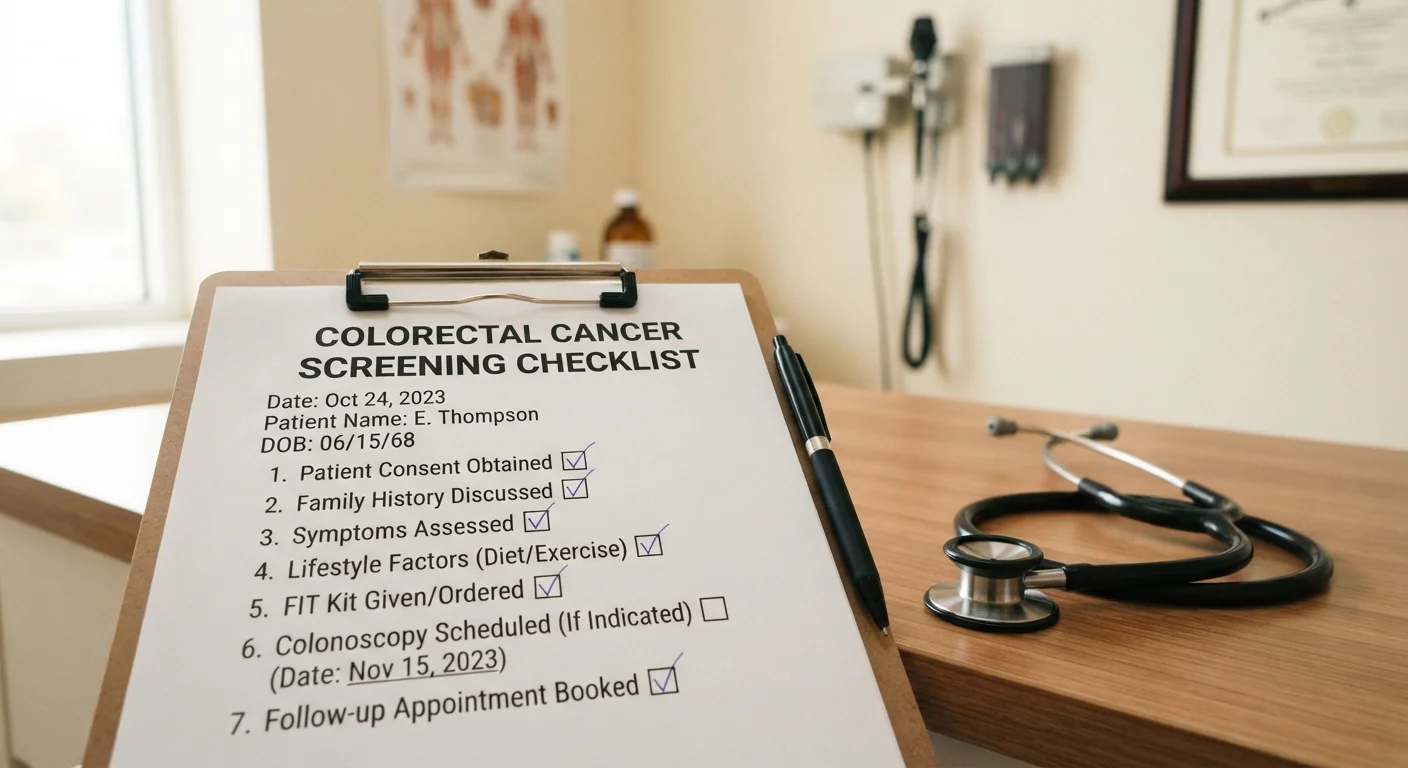
- Fecal Immunochemical Test (FIT): Detects hidden (occult) blood in stool using antibodies specific to human hemoglobin. It requires one stool sample and no dietary restrictions. The USPSTF recommends annual testing.
- FIT-DNA (multitargeted stool DNA test): Combines the blood-detection of FIT with analysis of DNA markers shed by abnormal colon cells. It is more sensitive than FIT alone but also has a higher rate of false positives. The USPSTF recommends it every 1 to 3 years.
Both tests are done entirely at home and involve no bowel prep, sedation, or time off work. However, a critical point: if either test returns an abnormal result, a follow-up colonoscopy is required. Stool tests are screening tools, not standalone diagnostic procedures.
This article is for informational purposes only and does not constitute medical advice. Always consult a qualified healthcare professional for personal screening decisions.
Choosing the Right Screening Method for You
From a population health standpoint, guidelines from the USPSTF and major gastroenterology societies endorse multiple screening strategies as acceptable — because the most effective screening is the one a person actually completes. Adherence, access, and individual preference all play a real role in outcomes.
Several factors are worth discussing with your doctor:
- Risk level: Average-risk individuals have more flexibility in method choice. Those with elevated risk — such as a first-degree relative diagnosed with colorectal cancer before age 60, or a personal history of inflammatory bowel disease — are typically steered toward colonoscopy, potentially at an earlier age.
- Logistics and access: Stool tests can be done at home and mailed to a lab, making them more accessible in areas with limited endoscopy capacity or for those without easy transportation.
- Tolerance for follow-up: A positive stool test obligates a follow-up colonoscopy. If access to colonoscopy is limited, that pathway becomes more complicated.
- Insurance and cost: Coverage varies. The Affordable Care Act requires most health plans to cover USPSTF-recommended preventive screenings without cost-sharing, but verify your specific plan's coverage and out-of-pocket rules with your insurer.
No screening method eliminates all risk, and none should be chosen without a conversation with your healthcare provider, particularly if you have symptoms such as rectal bleeding, unexplained weight loss, or changes in bowel habits — which warrant prompt medical evaluation regardless of screening status.