
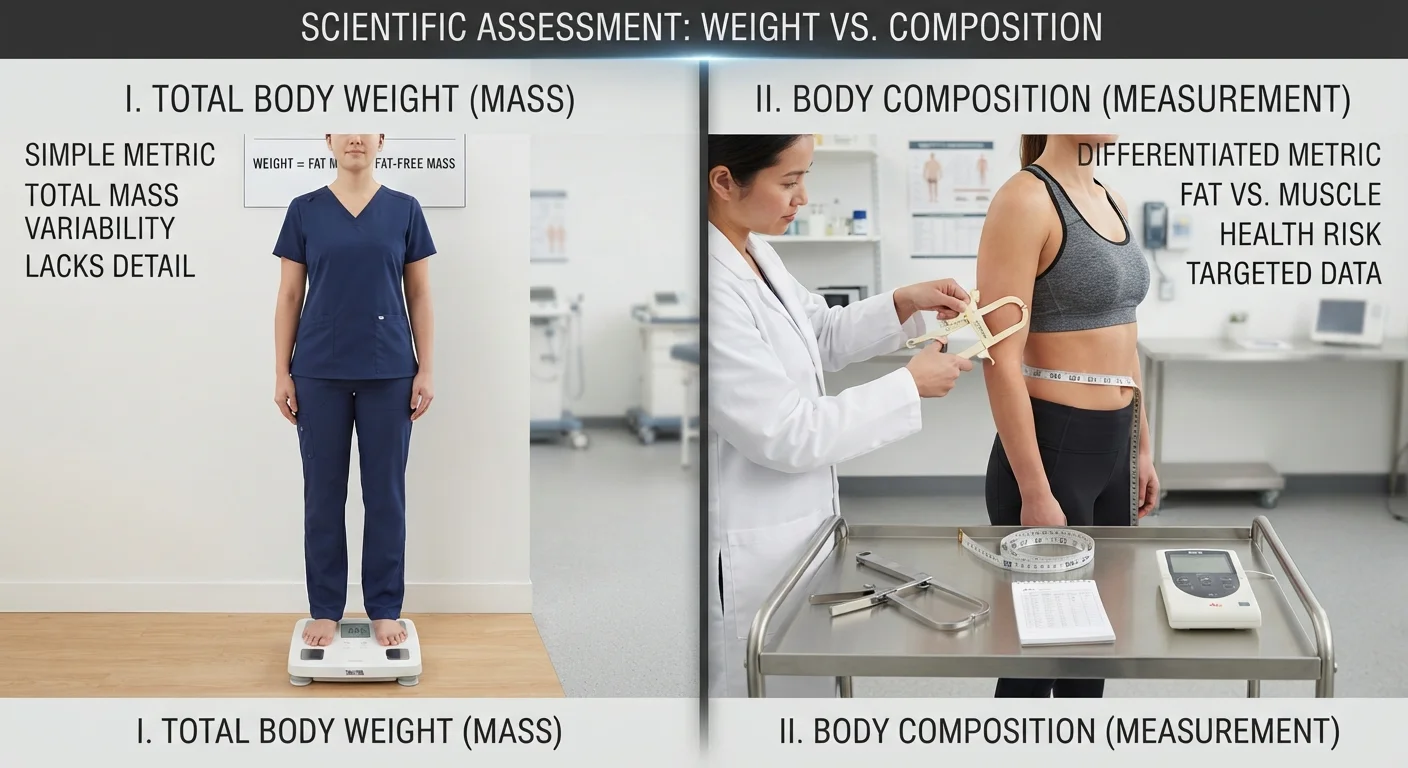
Why Body Composition Myths Are So Stubborn
Body composition - the ratio of fat mass to lean mass in your body - is one of the most misunderstood topics in everyday health. Misinformation spreads easily because many myths contain a grain of truth, are reinforced by marketing, or simply confirm what people already want to believe.
Understanding what research actually shows helps readers make smarter decisions about training, nutrition, and how they measure progress. As explored in our piece on why body composition shifts even when weight stays the same, the scale is an incomplete tool - and the myths below reflect exactly why.
Myth
Muscle weighs more than fat, so building muscle explains why the scale goes up.
Fact
A pound of muscle and a pound of fat weigh exactly the same. Muscle is denser, meaning it takes up less physical space per pound.
This myth persists because people notice the scale rising when they begin strength training, and assume muscle is somehow 'heavier.' In reality, one pound equals one pound regardless of tissue type. What differs is density: muscle tissue is roughly 18% denser than fat tissue, so the same mass of muscle occupies a smaller volume. Two people can weigh identically while one has a noticeably leaner appearance simply because a higher proportion of their weight is dense lean tissue rather than lower-density fat mass.
Myth
You can target fat loss in specific areas through focused exercise - often called 'spot reduction.'
Fact
Fat is mobilized systemically through the bloodstream, not locally from the muscle being worked. Spot reduction has been consistently unsupported by controlled research.
The idea that crunches burn belly fat or tricep dips eliminate arm fat is intuitive but physiologically inaccurate. When your body uses stored fat for energy, it draws from fat cells throughout the body via hormonal signals and blood flow - not preferentially from the tissue closest to the working muscle. Multiple controlled studies have found no meaningful difference in regional fat loss when comparing targeted versus non-targeted exercise. This myth is examined in detail alongside training misconceptions in our article on common myths about training to lose fat.
Myth
BMI is an accurate measure of individual body fatness and health risk.
Fact
BMI (Body Mass Index) is a population-level screening tool, not a precise diagnostic measure of body composition or individual health status.
BMI divides weight by height squared and was originally developed to describe population trends in the 19th century - not to assess individuals. It cannot distinguish between muscle mass and fat mass, which means a highly muscular person may register as 'obese' while someone with low muscle and high fat may fall in the 'normal' range. Research consistently shows that BMI misclassifies a meaningful proportion of individuals. Body fat percentage, waist circumference, or waist-to-hip ratio provide more clinically relevant information about metabolic risk for most individuals.
Myth
High body fat is always unhealthy, and low body fat is always healthier.
Fact
Both extremes of body fat carry health risks. Essential fat is required for hormonal, neurological, and immune function, and very low body fat is associated with serious health complications.
Health-promoting body fat ranges differ by sex, age, and individual physiology. Fat tissue is metabolically active - it produces hormones such as leptin and adiponectin, and plays roles in reproductive and immune function. Body fat below a functional threshold disrupts hormone production, bone density, and cardiovascular health. Conversely, excess adipose tissue - particularly visceral fat surrounding internal organs - is associated with elevated inflammation and metabolic risk. The goal is a range that supports physiological function, not minimization of fat at all costs.
Myth
Eating protein in large amounts automatically builds more muscle.
Fact
Muscle protein synthesis requires both adequate protein intake and a sufficient resistance training stimulus. Protein beyond what the body can use for repair and synthesis is oxidized for energy or stored.
Protein is essential for muscle repair and growth, but it doesn't act independently of training stimulus or caloric context. Research suggests there is a practical ceiling on how much protein can be used for muscle protein synthesis per meal and per day, though estimates vary with body size and training status. Consuming protein well above individual needs provides no additional muscle-building advantage. Our article on widely repeated myths about dietary protein examines these misconceptions in depth.
Myth
Cardio is the most effective exercise type for improving body composition.
Fact
Resistance training has a stronger direct effect on lean mass and resting metabolic rate, making it at least as important as aerobic exercise for body composition improvement.
Cardiovascular exercise supports heart health and contributes to caloric expenditure, but it does not generate the mechanical tension signal that drives muscle protein synthesis. Resistance training preserves and builds lean mass while simultaneously reducing fat mass, and increases resting metabolic rate by maintaining metabolically active muscle tissue. Research on exercise modalities consistently finds that programs combining resistance and aerobic training produce superior body composition outcomes compared to cardio alone. The relationship between training type and body composition is also shaped by dietary patterns - explored further in our piece on myths that make balanced eating harder than it needs to be.
Reading the Evidence Correctly
Correcting these myths is only half the battle. Even with accurate information, body composition data is frequently misinterpreted. A single measurement can fluctuate significantly based on hydration, time of day, and testing method - factors that have nothing to do with actual fat or muscle changes. Our companion article on common misreadings of body composition data covers how to avoid those interpretive errors.
It's also worth recognizing that body composition doesn't exist in isolation. Factors beyond diet and exercise - including sleep quality, stress hormones, age-related hormonal shifts, and genetics - meaningfully influence how your body stores fat and builds muscle. Dismissing these variables keeps myths alive by making individuals feel solely responsible for outcomes that are partly beyond any individual's direct control.
Chasing Low Body Fat Can Backfire
Pursuing extremely low body fat percentages - particularly through severe caloric restriction - can disrupt hormonal function, impair bone density, suppress immune response, and for some individuals, contribute to disordered eating patterns. Body composition goals should be framed around functional health and sustainable habits, not the lowest possible fat percentage. If you have concerns about body fat or body image, speaking with a healthcare provider or registered dietitian is strongly recommended.
This article is for general informational and educational purposes only and does not constitute medical advice. Consult a qualified healthcare professional before making changes to your diet, exercise routine, or health strategy.