
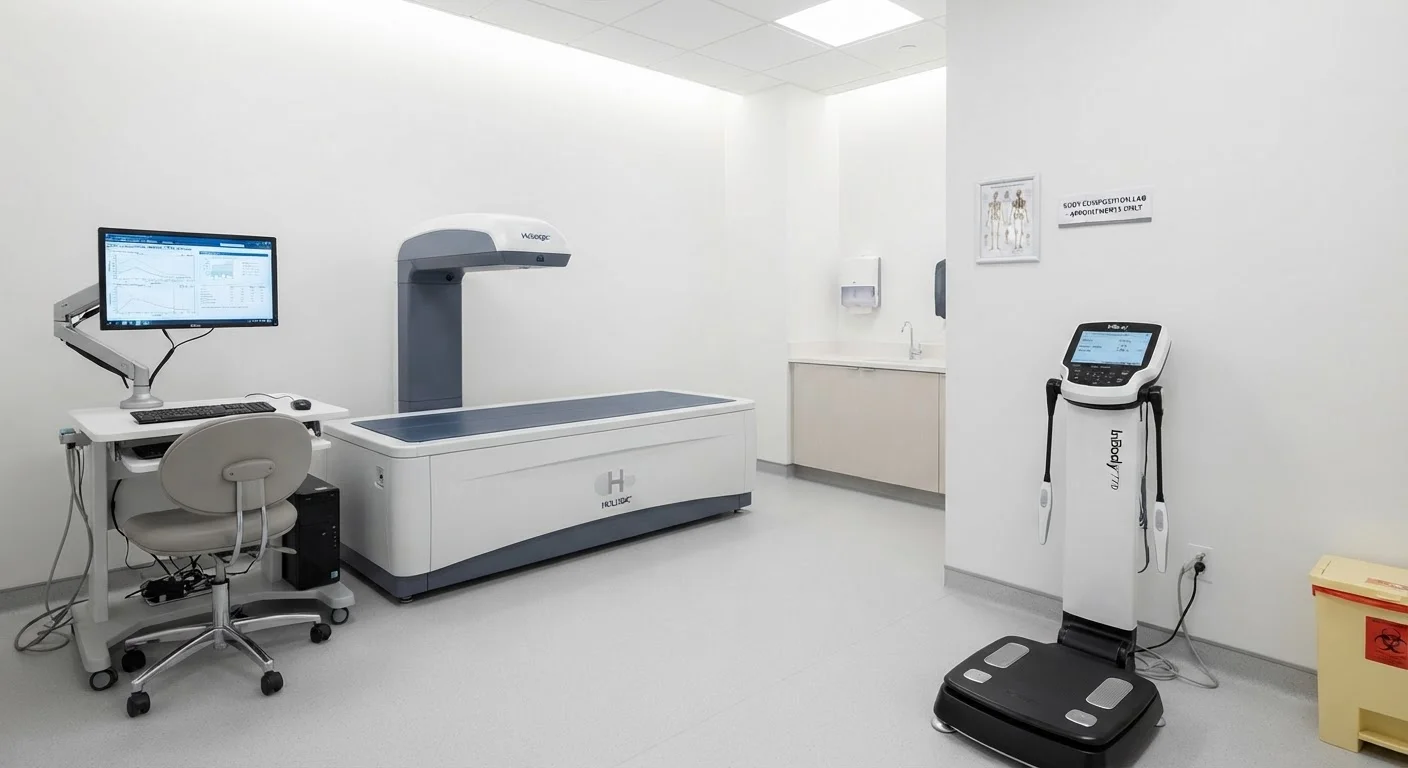
How Each Method Works
Understanding what these tests actually measure - and how - is the starting point for choosing between them. As explored in our body composition overview, weight alone tells an incomplete story. These two methods go further, but through very different mechanisms.
DEXA (Dual-Energy X-ray Absorptiometry) uses two low-dose X-ray beams at different energy levels to differentiate between three tissue types: fat mass, lean (fat-free) mass, and bone mineral density. A full-body scan takes roughly 10-20 minutes, produces a detailed segmental breakdown (arms, legs, trunk, android/gynoid regions), and is conducted in a clinical or research setting.
Bioelectrical Impedance Analysis (BIA) passes a weak, imperceptible electrical current through the body and measures the resistance (impedance) that current encounters. Because fat tissue resists electrical flow more than water-rich lean tissue does, the device estimates body composition using impedance values alongside entered data like height, age, and sex. Consumer BIA scales and handheld devices are widely available; multi-frequency clinical BIA units offer improved estimates.
Accuracy and Reliability: What the Evidence Shows
DEXA is consistently ranked among the most accurate field-accessible methods for body composition assessment. Its ability to segment the body regionally and measure bone mineral density alongside soft tissue makes it particularly valuable in clinical and research contexts. Error margins for DEXA are generally lower than most other non-laboratory methods.
BIA accuracy, by contrast, is more variable. The fundamental problem is that BIA estimates fat mass indirectly - it measures impedance and then applies population-based equations to convert that into a body fat percentage. Those equations were validated on specific demographic groups, and they may produce systematic errors when applied outside those groups.
| Criterion | DEXA Scan | BIA |
|---|---|---|
| Primary mechanism | Dual-energy X-ray imaging | Electrical impedance measurement |
| Accuracy | High; clinical-grade | Moderate; varies by device and conditions |
| Bone density measurement | Yes | No |
| Segmental body breakdown | Yes (arms, legs, trunk, regions) | Partial (device-dependent) |
| Hydration sensitivity | Low | High |
| Radiation exposure | Minimal (very low dose) | None |
| Typical cost | $50-$150 per scan | $20-$500+ (device purchase) |
| Accessibility | Requires clinical appointment | At-home or gym use possible |
| Best use frequency | Every 3-12 months | Weekly to monthly (trend tracking) |
Hydration status is the most significant source of BIA error. Being even mildly dehydrated can substantially overestimate body fat percentage, while excess hydration can underestimate it. Eating a large meal, exercising before testing, or testing at different times of day can all shift results meaningfully. This is why BIA results from a single test should be interpreted with caution, while DEXA remains more stable across conditions. For a broader comparison of measurement tools, see our reference guide to body composition testing methods.
Practical Considerations: Cost, Access, and Frequency
DEXA scans are available at hospitals, university research labs, sports medicine clinics, and an increasing number of private wellness centers. A single scan typically costs between $50 and $150 out of pocket when not covered by insurance, though this varies by region. Because scans involve a clinical setting and minimal radiation, they are generally performed periodically - perhaps once or twice a year for tracking purposes - rather than weekly.
BIA devices span a wide range from inexpensive consumer bathroom scales to professional multi-frequency units used in clinical and fitness settings. Consumer devices are convenient but carry the largest measurement variability. Research-grade multi-frequency BIA systems produce markedly better estimates than single-frequency consumer scales, though they are less widely accessible.
For those using BIA for trend monitoring, standardizing conditions is essential: test first thing in the morning, before eating or drinking, after using the bathroom, and on days you have not exercised heavily. Consistent conditions help ensure that changes in readings reflect actual changes in body composition rather than hydration fluctuations.
Before drawing conclusions from any body composition test result, it's worth reviewing how to interpret body composition results without overreacting, and being mindful of common misreadings of body composition data.
This article is for general informational and educational purposes only and is not a substitute for professional medical advice. If you have questions about body composition testing in the context of a specific health condition, please consult a qualified healthcare provider.