
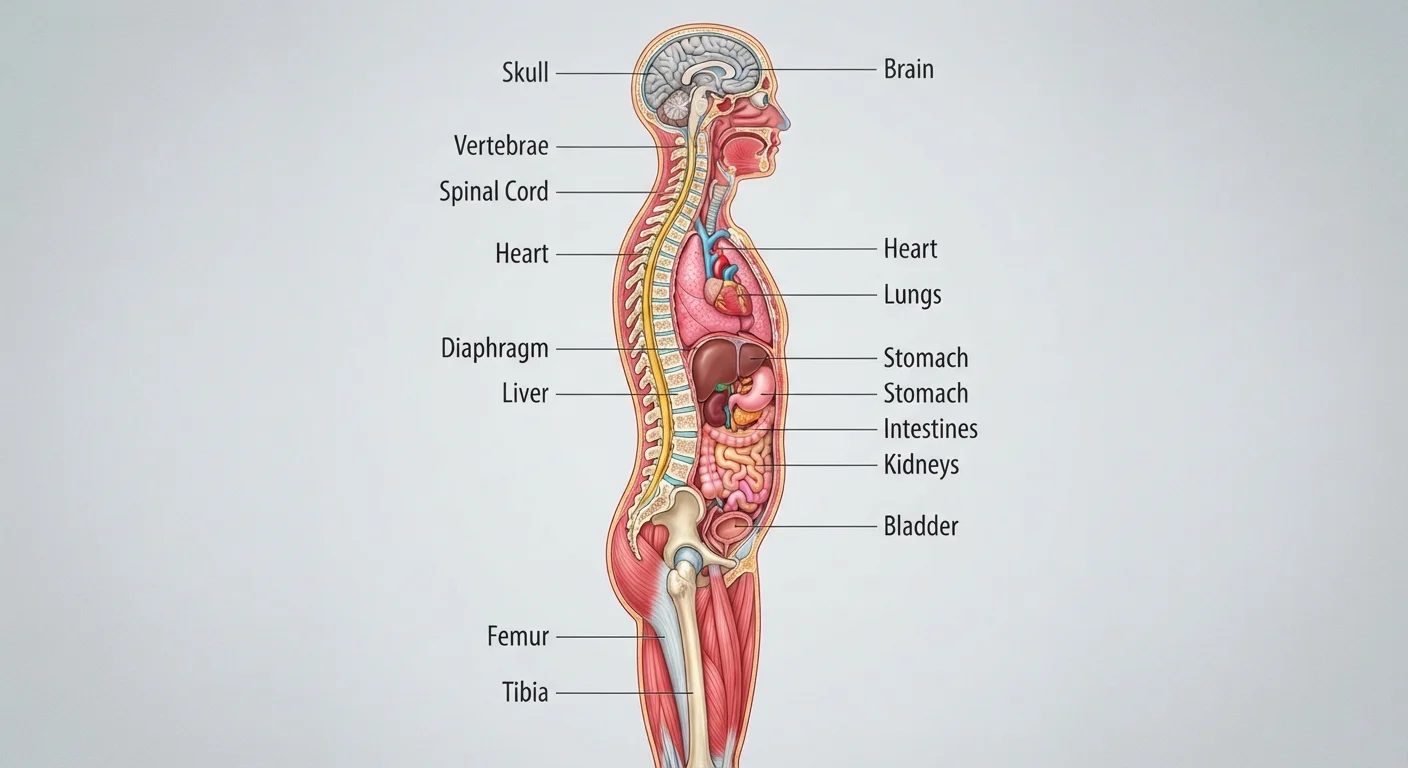
What Lean Body Mass Actually Includes
When most people think about body composition, they focus on fat. But lean body mass - everything that isn't fat - is equally important for understanding how the body functions. It encompasses skeletal muscle, bone mineral, organs such as the heart, liver, and kidneys, connective tissue including tendons and ligaments, and the water distributed throughout these tissues.
This distinction matters because the scale cannot tell you what changed. A person who loses ten pounds could have shed fat, muscle, or fluid - or some combination of all three. Only by estimating lean mass separately from fat mass does the picture become meaningful. For a broader look at how these metrics fit together, see body composition explained.
Why Lean Body Mass Is a Functional Health Marker
Lean body mass - and skeletal muscle in particular - is directly tied to how well the body performs day to day. Muscle tissue is metabolically active, meaning it burns calories at rest, helps regulate blood glucose through insulin-mediated glucose uptake, and supports the structural demands of movement and balance.
~3-8%
Muscle mass lost per decade after age 30
Research published in the Journal of Cachexia, Sarcopenia and Muscle estimates adults lose roughly 3-8% of muscle mass per decade beginning in the fourth decade of life, with rates accelerating after age 60.
~20-25%
Of resting metabolic rate from skeletal muscle
Skeletal muscle is estimated to account for approximately 20-25% of resting metabolic rate in average adults, making it one of the most metabolically significant lean tissues.
30-35
Age when lean mass decline typically begins
Most research indicates that skeletal muscle mass begins a gradual decline starting around ages 30-35, underscoring why preserving lean mass is a lifespan concern rather than an older-adult issue alone.
Bone, another component of lean mass, determines fracture risk and structural resilience. Organ mass reflects the capacity of vital systems. Taken together, maintaining adequate lean mass throughout life is associated with functional independence, lower fall risk, improved metabolic regulation, and better recovery from illness or surgery.
To understand how muscle specifically connects to long-term metabolic outcomes, see the relationship between muscle mass and metabolic health.
How Lean Body Mass Is Measured
Several techniques estimate lean body mass with varying degrees of precision:
- DEXA (Dual-Energy X-ray Absorptiometry): Considered the clinical gold standard. It separates bone mineral, lean soft tissue, and fat tissue with high accuracy and reproducibility.
- Bioelectrical Impedance Analysis (BIA): Uses a small electrical current to estimate tissue composition based on resistance. Widely available in consumer scales and gym devices, though accuracy is sensitive to hydration status.
- Hydrostatic Weighing: Estimates body density by measuring displacement in water. Accurate but logistically complex and rarely available outside research settings.
- Skinfold Calipers: Trained practitioners measure subcutaneous fat at multiple sites to estimate overall composition. Skill-dependent but low-cost.
No method is perfect, and results can vary across techniques. Consistency - using the same method under similar conditions over time - matters more than a single precise reading. For help interpreting results from any of these tools, reading your body composition results without jumping to conclusions offers useful context.
Lean Mass, Aging, and Why It Deserves Attention
Lean body mass is not static. Adults begin to lose skeletal muscle gradually from around age 30-35, with the rate accelerating after 60 in a process called sarcopenia. Bone density also peaks in early adulthood and declines with age, especially in postmenopausal women.
These changes are not inevitable at the pace many assume. Resistance training, sufficient dietary protein, and staying physically active are well-supported strategies for preserving lean mass across the lifespan. The goal is not to look a certain way but to sustain the physical capacity that supports independence, health resilience, and quality of life.
It is worth noting that lean body mass is just one piece of the puzzle. How the body distributes fat, cardiovascular fitness, and metabolic markers all contribute to the full picture. For a comparison of how different metrics measure up, body fat percentage, BMI, and waist-to-hip ratio explains what each reveals - and where each falls short. And for a broader look at what the number on the scale does and doesn't capture, see what body weight actually measures.
This article provides general health information and education only. It is not a substitute for personalized medical advice. Consult a qualified healthcare professional before making changes to your diet, exercise routine, or health management plan.