
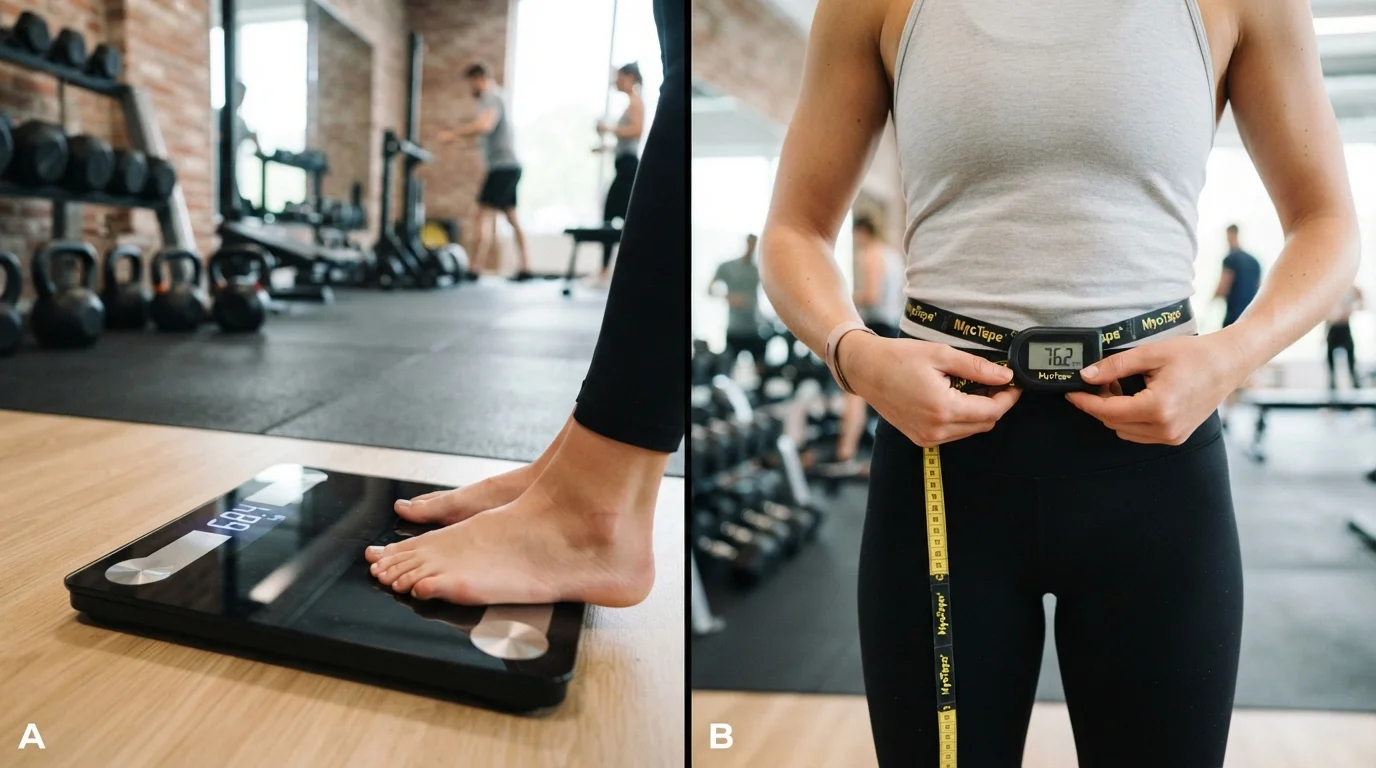
Why These Two Terms Mean Very Different Things
The words weight loss and fat loss are often used interchangeably, but they describe fundamentally different outcomes. Understanding the gap between them isn't just academic — it changes how you train, how you measure progress, and how realistic your expectations should be.
Weight is a measure of everything your body contains: muscle, bone, water, organs, food in transit, and fat. When you step on a scale, all of that registers as a single number. Fat loss, by contrast, refers specifically to a reduction in adipose tissue — the stored energy your body holds as fat. It's possible to lose weight without losing much fat (for example, through dehydration or muscle loss), and it's equally possible to lose fat while gaining muscle, leaving the scale almost unchanged.
This matters because the scale's number, taken alone, can be misleading. Someone who drops five pounds rapidly during a crash diet may be losing mostly water and lean tissue. Someone who adds resistance training while eating at a moderate deficit may see the scale barely move while reshaping their body composition significantly. For a deeper look at where fat is stored and why it matters, see visceral fat vs. subcutaneous fat.
| Criterion | Weight Loss | Fat Loss |
|---|---|---|
| What decreases | Total body mass (fat, muscle, water) | Adipose tissue specifically |
| Primary training tool | Cardiovascular exercise | Resistance training + cardio |
| Key progress metric | Scale weight | Body fat %, measurements, fit of clothing |
| Risk if poorly managed | Muscle loss alongside fat loss | Slower scale progress (can be misread as failure) |
| Protein emphasis | Moderate | High — critical for muscle preservation |
| Speed of visible results | Often faster on the scale | Often slower on scale, but more meaningful |
| Long-term metabolic impact | Variable — depends on muscle retention | Generally more favorable with muscle preserved |
How Each Goal Should Shape Your Training
Once you've identified which outcome you're actually pursuing, your training approach should follow.
Training for Weight Loss
A weight-loss focus typically emphasizes increasing overall energy expenditure. This often involves cardiovascular activity — walking, cycling, swimming — combined with moderate resistance work. The goal is a consistent calorie deficit over time. However, without attention to how weight is lost, a significant portion of that loss can come from lean muscle, which is metabolically costly to rebuild.
Training for Fat Loss
Fat loss training prioritizes preserving — or building — lean muscle while reducing fat stores. This generally means placing resistance training at the center of the program, not the periphery. Compound movements (squats, deadlifts, rows, presses) stimulate muscle protein synthesis and help offset the muscle-wasting effects of a calorie deficit. Cardio plays a supporting role. Research consistently supports that higher protein intake, combined with resistance training, helps preserve lean mass during periods of caloric restriction.
Cardio for fat loss looks different from endurance cardio — understanding those distinctions helps you allocate session time more effectively. And if you've encountered popular claims about fat-burning zones or spot reduction, common myths about training to lose fat addresses what the evidence actually shows.
~25%
Weight lost as lean mass during caloric restriction
Studies suggest that without resistance training, roughly a quarter of weight lost during a calorie deficit may come from lean tissue, not fat.
2–3x
Greater fat loss with resistance training added
Research published in exercise science literature suggests combining resistance training with a caloric deficit produces significantly better fat-loss outcomes than diet alone.
~0.5–1%
Recommended weekly body weight reduction rate
Many exercise scientists suggest a loss rate of roughly 0.5–1% of body weight per week helps minimize lean mass loss during a fat-loss phase.
Measuring Progress Beyond the Scale
Choosing the right metrics for your goal prevents frustration and keeps you on track.
- For weight loss: Scale weight tracked as a weekly average (not daily) smooths out natural fluctuations from hydration and digestion. Trend matters more than any single reading.
- For fat loss: Body measurements (waist, hips, arms), progress photos, and how clothing fits are often more informative than scale weight alone. Body fat percentage assessments — through methods like DEXA, skinfold calipers, or bioelectrical impedance — provide the most direct data, though each has its own accuracy limitations.
Understanding body composition as a concept, rather than fixating on a single number, gives you a more complete picture of what's actually changing in your body.
Nutrition context also matters. The relationship between caloric intake, food quality, and energy balance plays a central role in both goals — for a balanced breakdown, see calorie deficit vs. calorie quality. For sustainable approaches that don't rely on extreme restriction, the weight management hub offers broader context.
This article is for general informational purposes only and does not constitute medical or dietary advice. Consult a qualified healthcare professional before making significant changes to your exercise or nutrition routine, especially if you have an existing health condition.