Why Preparation Makes All the Difference
Walking into a gym for the first time — or returning after a long break — carries a specific kind of anxiety. The equipment looks complicated, everyone else seems to know exactly what they're doing, and it's hard to know where to start. The good news is that most of that uncertainty is solvable before you ever set foot on the floor.
This checklist is designed to walk you through three distinct preparation phases: what to sort out at home, what to bring with you, and what to keep in mind once you're inside. Think of it as a dry run. Readers who want broader context on building an exercise habit from the ground up may find our guide to starting a workout routine a useful companion read.
Use the checklist below to work through each category. Items marked must are non-negotiable for safety and effectiveness; should items are strongly recommended; and nice-to-have items are worth doing if time allows.
Before You Go: Health and Goal Readiness
What to Bring
During Your Session
Recovery After Your Session
Tools and Resources Worth Having Ready
You don't need much to get started, but having the right basics in place removes friction and keeps your first session focused on movement rather than logistics.
Athletic Shoes
Provide the support and grip needed for safe movement across gym surfaces.
Reusable Water Bottle
Keeps you hydrated throughout your session without relying solely on gym water fountains.
Workout Log (notebook or app)
Records exercises, sets, reps, and weights so you can measure progress over time.
Gym Towel
Required by most gyms for wiping down equipment after use — a basic etiquette standard.
Resistance Bands
Useful for warm-up activation exercises and low-impact movement practice without needing machines.
Heart Rate Monitor or Fitness Watch
Gives real-time intensity feedback, helping beginners avoid going too hard too soon.
If you're curious about tracking more than just workouts — including changes in how your body is composed over time — our introduction to body composition covers the foundational concepts in plain language.
What to Expect Once You're Inside
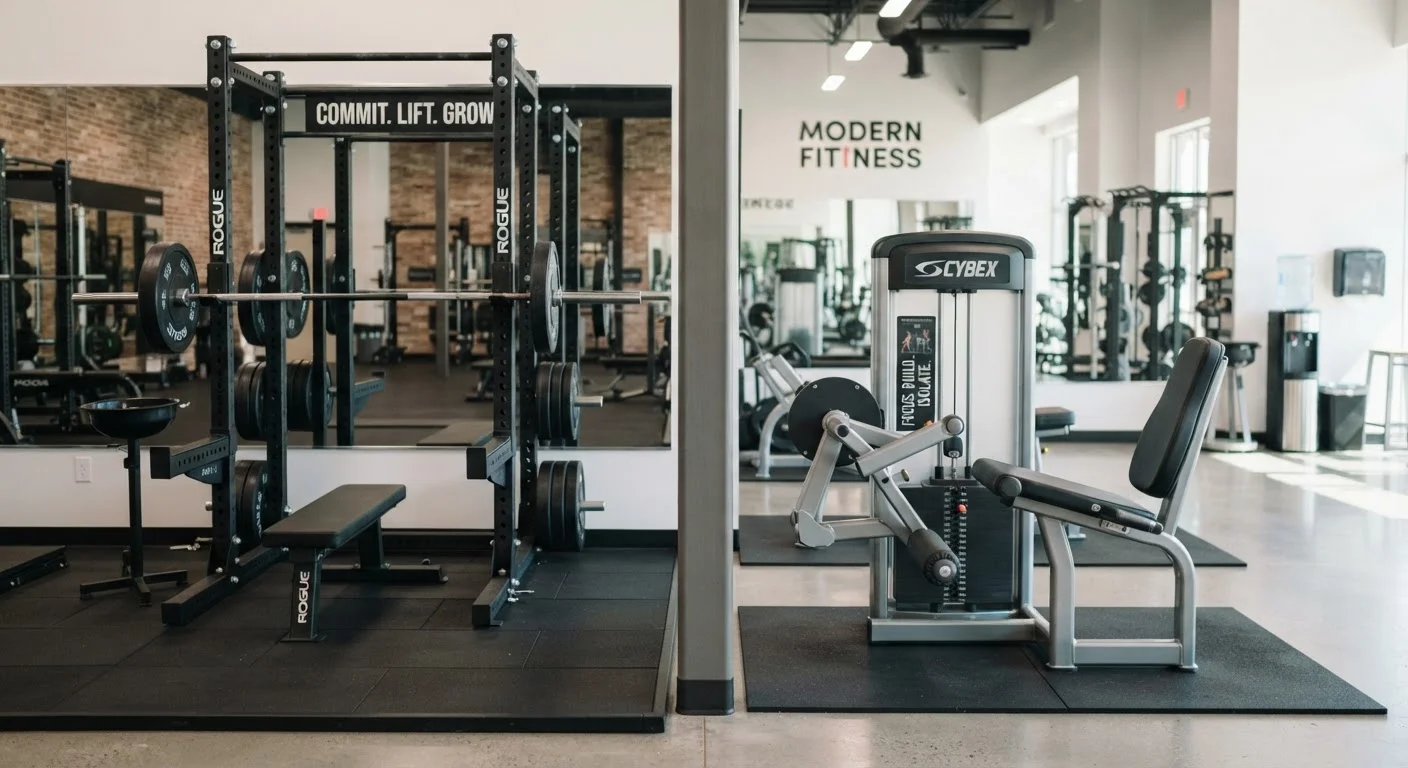
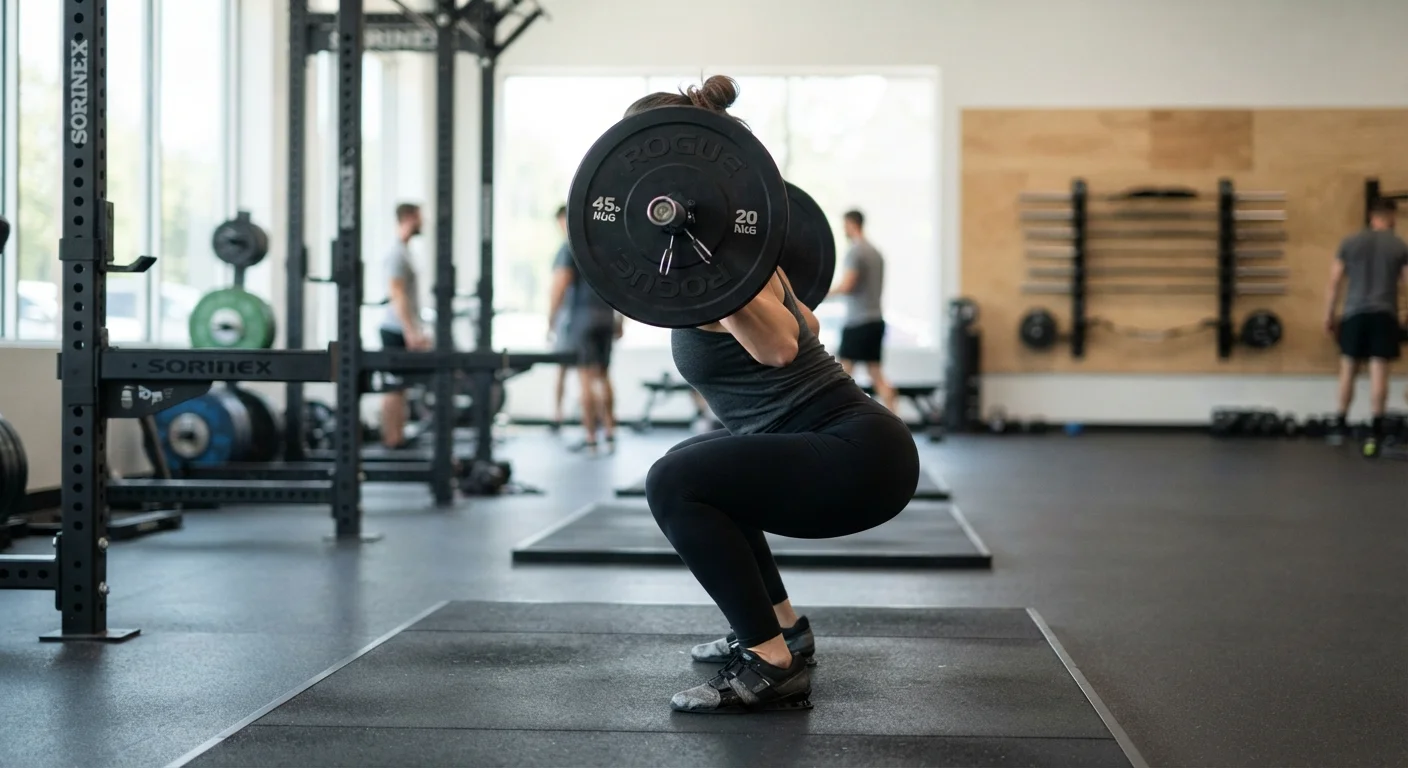
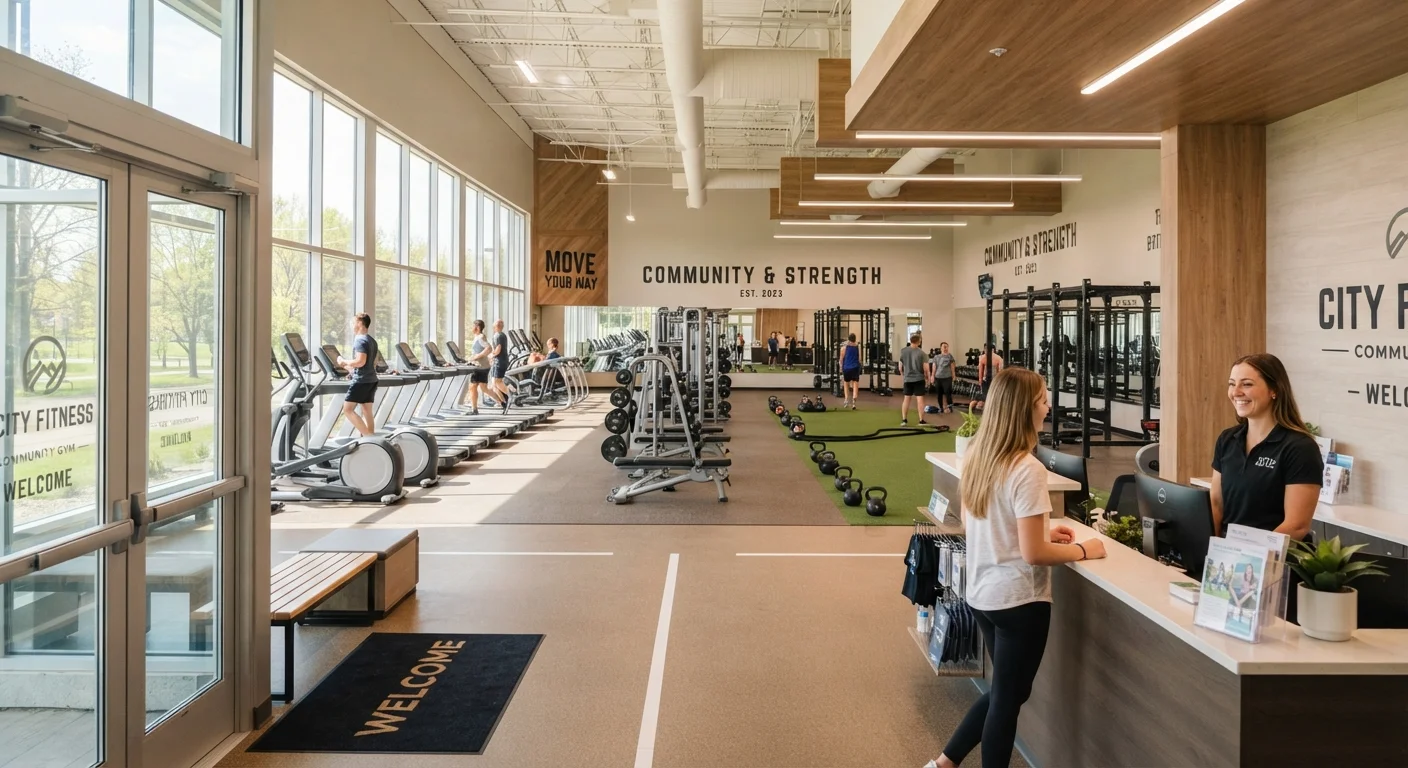
Most gyms follow a predictable layout: a cardio section near the entrance, a free-weights area (often toward the back), resistance machines around the perimeter, and a stretching or mat zone. Take two minutes on arrival to orient yourself — locate the bathrooms, the water fountain, and any staff desk before you start.
Gym etiquette is unwritten but consistent across most facilities. Wipe down equipment after use, re-rack weights to their original position, limit rest time on machines during busy hours, and avoid giving unsolicited advice to other members. These habits make the space better for everyone and signal that you belong there just as much as anyone else.
Don't Push Through Sharp or Joint Pain
Muscle fatigue and mild discomfort during exercise is normal — sharp, sudden, or joint-specific pain is not. If you experience chest pain, dizziness, or pain that doesn't feel like ordinary exertion, stop immediately and inform gym staff. It's always better to cut a session short than to risk a serious injury that sidelines you for weeks.
For a structured look at how to build your first weeks of training — including how often to go and how hard to push — see our framework for new exercisers. And if you haven't had a recent physical exam, it's worth scheduling one before ramping up intensity; our guide to preparing for an adult physical explains what to expect.
This article is for general informational purposes only and is not a substitute for personalized medical or fitness advice. If you have any health conditions, injuries, or concerns, consult a qualified healthcare professional before beginning a new exercise program.