Why Fitness Vocabulary Matters
Walking into a gym — or opening a workout app — for the first time can feel like arriving in a foreign country. Trainers talk about progressive overload, class schedules advertise HIIT and LISS, and online programs reference RPE and periodization without explanation. That barrier isn't just confusing; it can quietly push people away from exercise altogether.
This reference guide decodes the terminology you're most likely to encounter when you're starting out or returning after a break. No assumptions, no jargon left undefined. Once the language clicks, the programming behind it becomes far less intimidating. For the building blocks of how any session is actually structured, see our plain-English breakdown of reps, sets, and rest.
Rep (Repetition)
One complete execution of an exercise movement — for example, one squat from standing to the bottom position and back up. Reps are the smallest unit of exercise volume.
Set
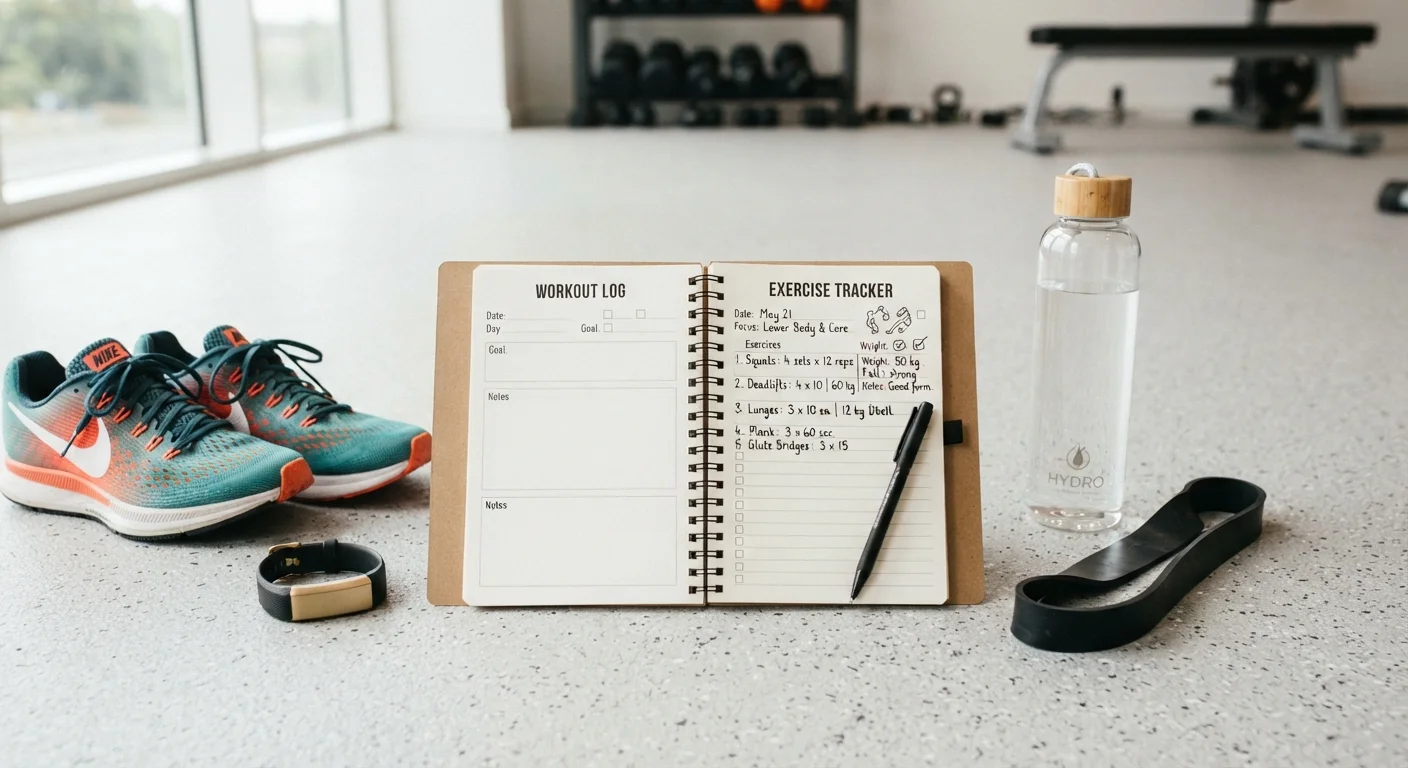
A group of consecutive reps performed without rest. A program might prescribe 3 sets of 10 reps, meaning you perform 10 reps, rest, then repeat that sequence twice more.
RPE (Rate of Perceived Exertion)
A self-reported scale — commonly 1 to 10 — that measures how hard an effort feels. An RPE of 6 feels moderately challenging; an RPE of 9 is near-maximal. It helps regulate intensity without requiring equipment.
Progressive Overload
The principle of gradually increasing the demand placed on the body over time — through more weight, more reps, reduced rest, or greater movement complexity. It is the primary mechanism behind strength and fitness gains.
HIIT (High-Intensity Interval Training)
A training format alternating short bursts of intense effort with brief recovery periods. HIIT sessions are typically shorter than steady-state cardio but place higher demands on the cardiovascular system.
LISS (Low-Intensity Steady State)
Sustained aerobic exercise performed at a consistent, comfortable pace — such as a 30-minute brisk walk or easy bike ride. LISS supports cardiovascular health and active recovery without heavy fatigue.
Periodization
The planned, systematic variation of training volume and intensity over time. Periodization prevents plateaus and overtraining by cycling through phases of heavier effort and lighter recovery work.
Compound Movement
An exercise that engages multiple muscle groups and joints simultaneously — such as a squat, deadlift, or push-up. Compound movements are efficient and form the core of most strength programs.
Isolation Exercise
An exercise targeting a single muscle group through movement at one joint — such as a bicep curl. Isolation work is often used to address muscle imbalances or complement compound training.
Recovery
The time and processes by which the body repairs and adapts after exercise. Recovery includes sleep, rest days, nutrition, and active recovery activities. Adequate recovery is essential for progress and injury prevention.
Training Volume
The total amount of work performed in a session or week, typically calculated as sets × reps × load. Volume is a key variable for managing fatigue and driving adaptation.
1RM (One-Rep Maximum)
The maximum amount of weight a person can lift for exactly one full repetition of a given exercise. It is commonly used as a benchmark to set training loads as a percentage of maximal strength.
Core Training Concepts at a Glance
The terms below form the foundation of most exercise programs. Whether you're following a written plan, working with a trainer, or building your own routine, these concepts shape nearly every decision about how you train.
| Beginner-recommended training frequency | 2–3 days per week (American College of Sports Medicine (ACSM) General Guidelines) |
| Aerobic activity recommended for adults | 150–300 min/week (moderate intensity) (U.S. Department of Health and Human Services Physical Activity Guidelines) |
| Progressive overload principle | Increase load or volume gradually, ~5–10% per week (General exercise science guidance; individual variation applies) |
| RPE scale range | 1 (no effort) to 10 (maximum effort) (Modified Borg RPE Scale, widely used in exercise programming) |
| Minimum rest between strength sessions (same muscle group) | 48 hours (ACSM Resistance Training Position Stand) |
Two broad categories of training appear throughout fitness programming: aerobic exercise (sustained activity where oxygen fuels the effort — think walking, cycling, or swimming) and anaerobic exercise (short, high-intensity bursts where the body works faster than oxygen can be delivered — think sprinting or heavy lifting). Most complete programs blend both.
When you're ready to put these concepts into practice, our guide on starting a workout routine from scratch walks through how to apply them week by week. For goal-specific programs, the Training by Goal hub offers structured starting points.
Fitness language also overlaps with weight health conversations. If terms like TDEE or metabolic rate come up in your research, the weight management terms decoded resource covers those clearly.
This article is for general informational purposes only and does not constitute medical or personal fitness advice. Consult a qualified healthcare or fitness professional before beginning any new exercise program, particularly if you have existing health conditions or concerns.