
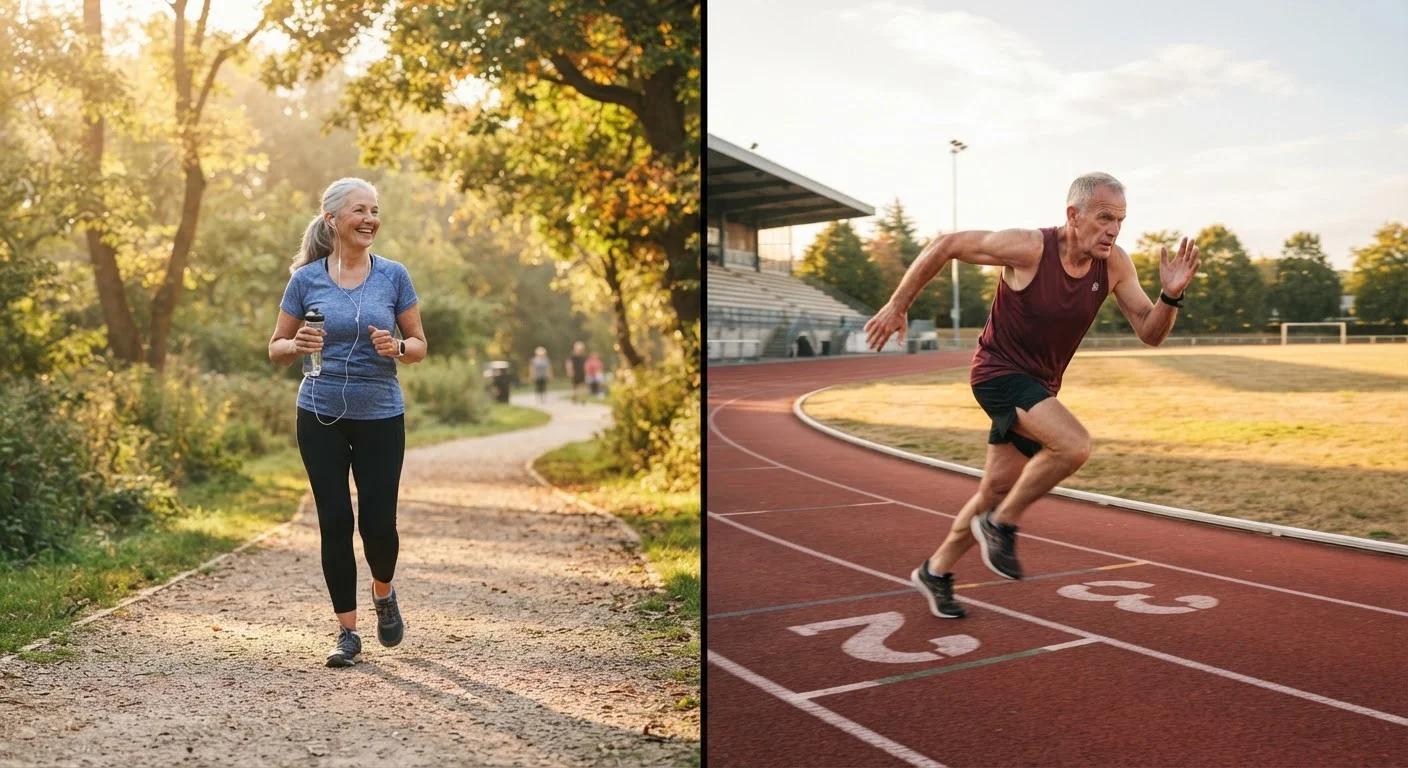
What Zone 2 and High-Intensity Training Actually Mean
Before comparing these two approaches, it helps to understand what they physiologically involve. Zone 2 cardio refers to sustained aerobic exercise performed at a moderate intensity — roughly 60–70% of maximum heart rate — where you can hold a conversation but feel a clear aerobic effort. At this intensity, the body primarily burns fat for fuel and heavily recruits the mitochondria inside slow-twitch muscle fibers.
High-intensity training broadly includes HIIT and sprint interval training (SIT), which involve repeated bouts of vigorous effort — typically above 80% of maximum heart rate — alternated with rest or low-effort recovery periods. These sessions are shorter but place considerably more physiological demand on the cardiovascular and musculoskeletal systems.
Both modalities are well-studied and distinct from strength training. For a broader look at how cardio and resistance work compare, see what cardio and strength training each do for your body.
How Each Approach Affects the Aging Body
Aging brings measurable physiological shifts: declining mitochondrial function, reduced VO2 max (the body's maximum oxygen uptake capacity), and slower recovery from physiological stress. Both Zone 2 and high-intensity training address these changes, but through different mechanisms.
Zone 2 cardio is particularly effective at stimulating mitochondrial biogenesis — the creation of new mitochondria — which tends to decline with age. Regular Zone 2 sessions support fat oxidation, insulin sensitivity, and cardiac efficiency. Because the effort level is sustainable, it can be practiced frequently with low recovery cost, making it a practical cornerstone of a lifelong fitness habit.
High-intensity training produces some of the largest documented improvements in VO2 max, a biomarker strongly associated with longevity and reduced cardiovascular risk. HIIT also triggers beneficial hormonal responses, including growth hormone release, and may preserve muscle fiber quality better than steady-state exercise alone. However, it requires longer recovery windows — a consideration that becomes increasingly important in your 50s, 60s, and beyond.
| Criterion | Zone 2 Cardio | High-Intensity Training |
|---|---|---|
| Primary intensity | 60–70% max heart rate | 80–95% max heart rate |
| Session duration | 30–90 minutes | 10–30 minutes |
| Key physiological benefit | Mitochondrial density, fat oxidation | VO2 max, hormonal response |
| Recovery demand | Low — can be daily | High — 48–72 hrs recommended |
| Injury risk (older adults) | Low with appropriate modality | Moderate — requires progression |
| Longevity evidence | Strong, especially metabolic health | Strong, especially VO2 max gains |
| Accessibility | Very high — walking qualifies | Moderate — technique matters |
For those curious about how these aerobic modalities affect cognition alongside physical health, aerobic exercise and brain health research offers useful context.
Recovery, Injury Risk, and the Role of Age
One of the most practical distinctions between these two approaches is recovery demand. Zone 2 sessions — whether walking, cycling, or swimming — place relatively modest stress on connective tissue and joints, and most healthy adults can perform them daily or near-daily without accumulating excessive fatigue.
High-intensity work, by contrast, taxes the central nervous system, muscles, and joints more acutely. Research suggests that older adults experience slower neuromuscular recovery after intense bouts compared with younger populations, which means that the same HIIT session may require 48–72 hours of recovery rather than 24. Poorly managed high-intensity volume is one of the more common contributors to overuse injury in older exercisers.
This does not mean high-intensity work should be avoided — it means it should be dosed thoughtfully. How aging muscles respond to exercise is an important backdrop here: adaptation still occurs robustly in older adults, but consistency and adequate recovery are the primary drivers of long-term progress.
For those managing joint concerns or limited mobility, low-impact exercise options for older adults may help identify Zone 2-compatible modalities that protect vulnerable joints.
Special Populations: A Note on Individual Variation
Older adults with cardiovascular disease, hypertension, diabetes, or musculoskeletal conditions face unique considerations when adopting high-intensity exercise. What is appropriate for a healthy 65-year-old may not be appropriate for someone managing multiple chronic conditions. Always work with a physician or qualified exercise professional to determine the right intensity and volume for your specific health profile.
This article is for general informational and educational purposes only and does not constitute medical advice. Consult a qualified healthcare professional before beginning or significantly changing any exercise program, especially if you have existing health conditions.
The Evidence for Combining Both
The strongest case in exercise science for healthy aging is not a binary choice between Zone 2 and high-intensity training — it is a structured combination of both. The so-called polarized training model, which allocates roughly 80% of training volume to low-to-moderate intensity and about 20% to high intensity, has shown favorable outcomes in both athletic and general populations across multiple studies.
This framework maximizes mitochondrial development through Zone 2 volume while preserving the powerful cardiovascular adaptations that only high-intensity work reliably triggers. VO2 max, in particular, responds more robustly to high-intensity stimuli than to Zone 2 alone — and VO2 max is among the most consistent predictors of all-cause mortality risk identified in cardiovascular research.
~1 yr
Life expectancy gain per MET increase in fitness
A large Mayo Clinic Proceedings study found that each one-MET improvement in cardiorespiratory fitness was associated with roughly a 13% reduction in all-cause mortality risk.
80/20
Recommended intensity split in polarized training
Exercise scientists studying endurance performance and longevity frequently reference an 80% low-intensity, 20% high-intensity volume distribution as a sustainable and effective training model.
~7%
Annual VO2 max decline without training after age 45
Research suggests untrained adults may lose VO2 max at roughly 1% per year in their 40s, accelerating with age — a rate that regular exercise can substantially slow.
What the research says about training for longevity explores this evidence base in greater depth, including how different exercise habits map onto healthspan outcomes. For readers building a complete routine, training by goal resources can help align session structure with personal priorities.