
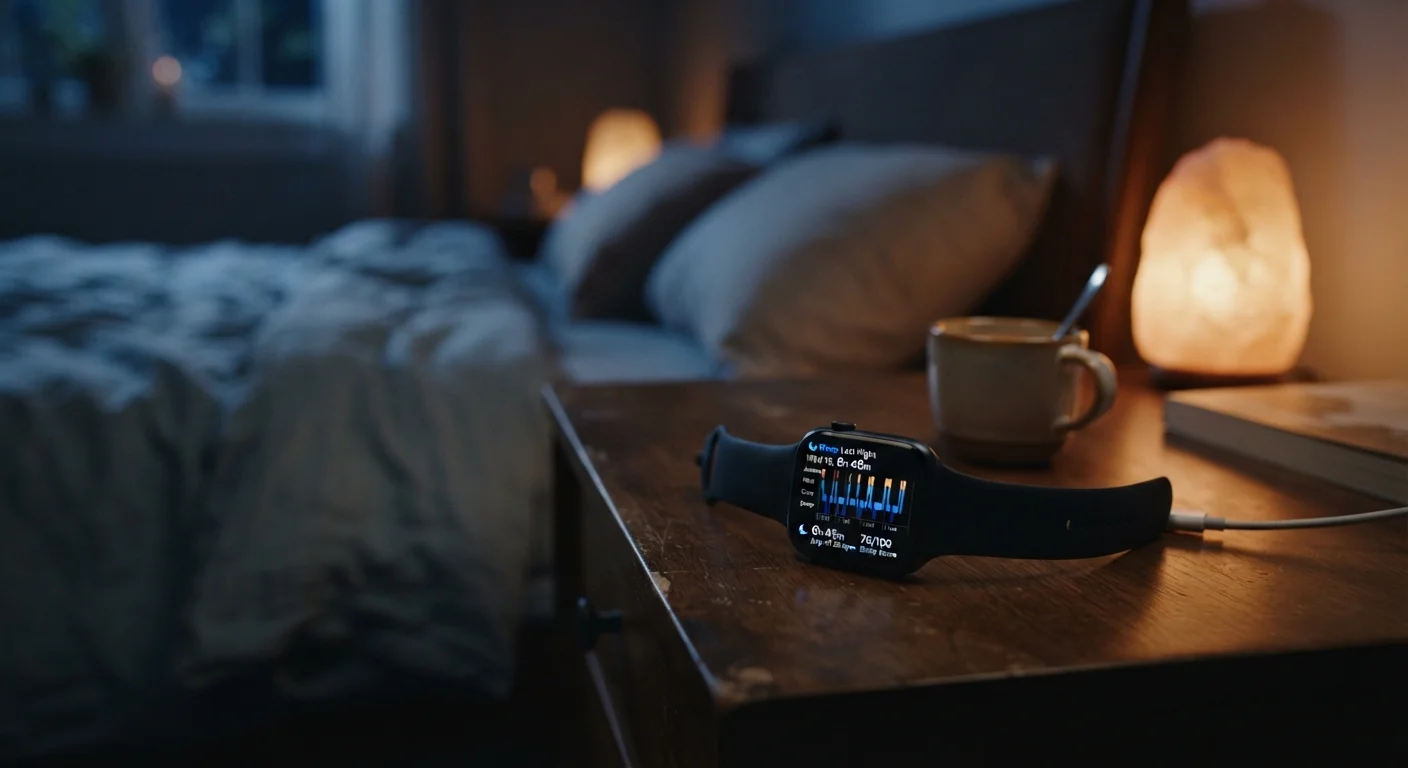
How Consumer Sleep Trackers Actually Work
Most wearable sleep trackers — whether a wristband, ring, or smartwatch — rely on two primary signals: actigraphy (detecting body movement) and photoplethysmography (measuring heart rate through light pulses on the skin). Algorithms then translate those signals into estimated sleep stages: light, deep, and REM sleep.
This is fundamentally different from how sleep is measured clinically. A polysomnography (PSG) study — the gold standard — records brain electrical activity via electrodes placed on the scalp, along with eye movements and muscle tone. If you're curious what that process looks like, see our plain-language guide to polysomnography for a full breakdown.
Because consumer devices cannot read brain waves, they infer sleep stages indirectly. Research consistently shows this inference is reasonably accurate for distinguishing sleep from wakefulness, but considerably less reliable for identifying specific stages — particularly slow-wave (deep) sleep and REM.
What Sleep Trackers Do Well
Reveals long-term sleep pattern trends
Nightly data aggregated over weeks can highlight chronic issues like consistently short sleep duration or irregular schedules that are easy to overlook in day-to-day life.
Encourages healthier bedtime routines
Seeing a visual record of late nights can motivate behavioral change in a way that vague intentions often don't, reinforcing the link between consistent timing and how rested you feel.
Accessible and non-invasive data collection
Unlike a clinical sleep study requiring an overnight lab visit, a wearable tracker collects data passively in your own bed — lowering the barrier to noticing potential concerns early.
Supports more productive healthcare conversations
Weeks of objective-looking trend data can help a clinician ask better questions and decide whether further evaluation — such as a formal sleep study — is warranted.
Beyond the technical picture, trackers do have meaningful practical strengths for everyday users.
- Consistency awareness: Seeing your actual bedtime and wake time charted over weeks can reveal irregular patterns you'd otherwise rationalize away.
- Habit pairing: Many trackers integrate with other lifestyle data — exercise, caffeine, evening screen exposure. Pairing sleep data with evening screen habits can help you spot connections that motivate real changes.
- Conversation starter: Bringing several weeks of trend data to a primary care visit gives a clinician a richer context than a verbal description alone.
Real Limitations You Should Know
Inaccurate sleep stage classification
Studies comparing wearables to polysomnography find that consumer devices frequently misclassify REM and deep sleep stages, meaning the breakdown on your app may not reflect what your brain was actually doing.
Cannot detect key sleep disorders
Conditions like sleep apnea, periodic limb movement disorder, and narcolepsy require clinical measurement of brain activity, airflow, and oxygen levels — data no consumer wristband can provide.
Risk of orthosomnia and data-driven anxiety
Fixating on nightly sleep scores can itself disrupt rest, creating a counterproductive loop where the pursuit of 'perfect' data undermines the relaxed mindset sleep requires.
Accuracy varies by device fit and skin tone
Optical heart rate sensors can be affected by loose wear, tattoos, and darker skin tones, introducing errors that then propagate through sleep stage estimates.
Algorithms are proprietary and opaque
Each manufacturer uses different — and undisclosed — algorithms, making it difficult to compare data across devices or evaluate accuracy claims independently.
Understanding these limitations isn't about dismissing the technology — it's about using it wisely so the data works for you rather than against you.
Watch for Orthosomnia
Orthosomnia refers to sleep disruption caused by anxiety about achieving ideal sleep-tracker scores. Researchers have documented cases where patients developed insomnia specifically from over-monitoring their wearable data. If reviewing nightly scores increases your stress rather than informing healthy habits, consider switching to weekly trend reviews — or taking a deliberate break from the app altogether. Your subjective sense of rest is a valid and important data point in its own right.
One underappreciated risk is orthosomnia — a term coined by sleep researchers to describe anxiety and insomnia driven by preoccupation with achieving perfect sleep scores. If checking your tracker first thing each morning shapes your entire mood, consider stepping back from daily reviews and focusing on weekly trends instead. Sleep quality ultimately matters more than any algorithm's nightly grade.
Putting the Data in Its Proper Place
The most useful mindset is to treat your tracker like a bathroom scale for sleep: a rough, directional measurement rather than a precise diagnostic tool. Just as body weight tells only part of the story, a sleep score leaves out critical context — how rested you actually feel, whether stress or illness influenced the night, or whether your device fit properly.
Practical guidance: review trends over two to four weeks rather than obsessing over individual nights. Notice whether lifestyle changes — earlier bedtimes, less caffeine, more movement — shift your patterns in a positive direction. And if you're experiencing persistent fatigue, frequent waking, loud snoring, or suspected sleep apnea, speak with a healthcare provider. A tracker score is not a substitute for a clinical evaluation, and no app can diagnose a sleep disorder.
This article is for informational purposes only and does not constitute medical advice. Always consult a qualified healthcare professional for concerns about your sleep health or any medical symptoms.