
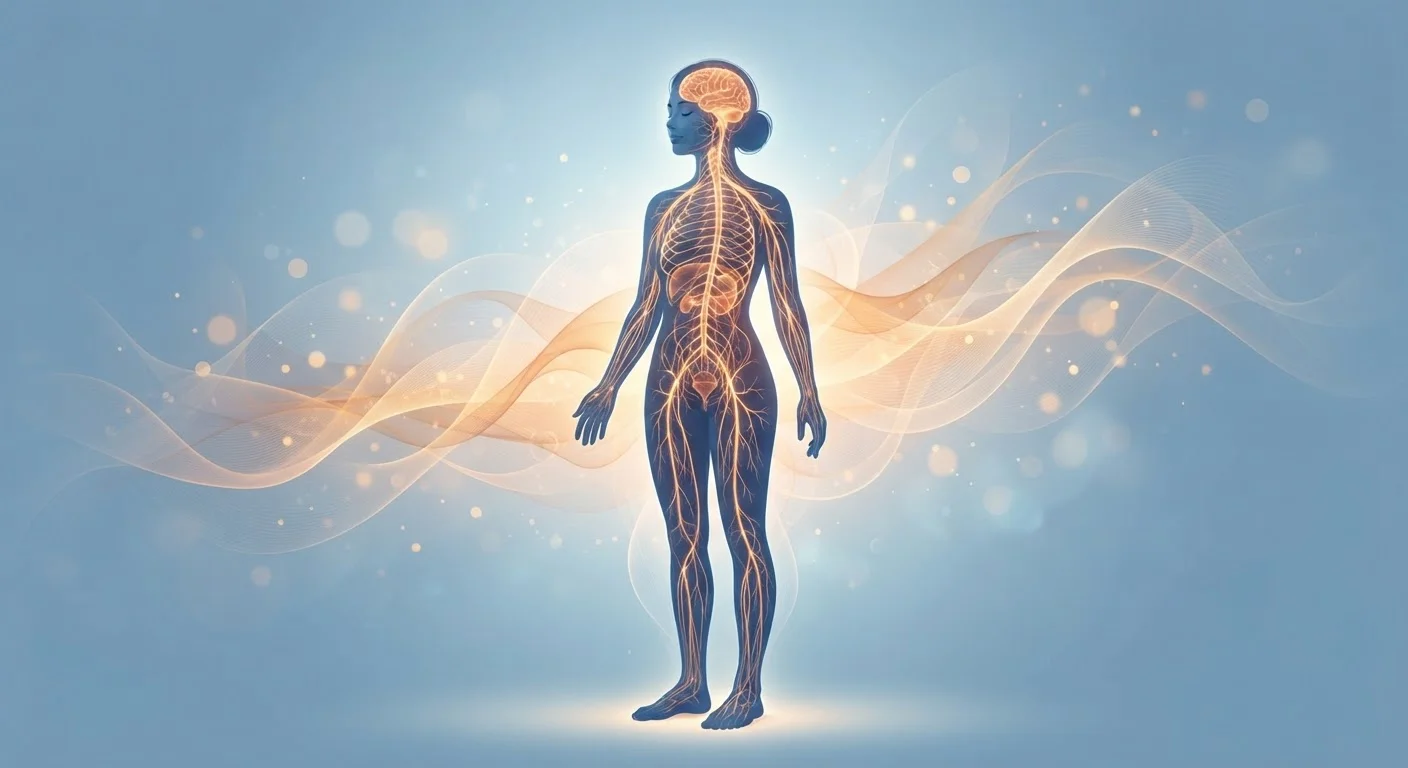
From Threat to Physical Reaction: The First Few Seconds
Imagine you're driving and a car suddenly swerves into your lane. Before you've consciously thought anything, your body is already responding. Your heart pounds, your breathing quickens, your muscles tense — all in under a second. This is your stress response in action, and it begins in a small, almond-shaped structure in your brain called the amygdala.
The amygdala functions like an alarm system. It scans incoming sensory information for anything that resembles danger, and when it detects a potential threat — real or perceived — it sends an emergency signal to the hypothalamus, which acts as the brain's command center. The hypothalamus then activates the sympathetic nervous system, the branch of your nervous system responsible for mobilizing energy in a crisis.
Within moments, your adrenal glands (located just above your kidneys) flood your bloodstream with two key hormones: adrenaline (epinephrine) and, shortly after, cortisol. These chemical messengers trigger a cascade of changes — faster heartbeat, dilated pupils, slowed digestion, heightened alertness — all designed to help you either confront a threat or escape it quickly.
What Stress Hormones Actually Do to Your Body
The physical symptoms of feeling overwhelmed aren't random — each one serves a purpose rooted in survival physiology.
- Rapid heartbeat: Your heart pumps faster to deliver oxygen-rich blood to large muscle groups so you can move quickly.
- Shallow, fast breathing: Your airways widen and breathing speeds up to bring in more oxygen.
- Muscle tension: Muscles prime themselves for quick action — which is why stress often feels physically tight or heavy.
- Digestive slowdown: Blood flow is redirected away from the gut toward the limbs, which is why stress can cause nausea, stomach upset, or a loss of appetite.
- Heightened senses: Pupils dilate and the brain sharpens attention to the perceived threat, narrowing your focus.
Cortisol's role extends slightly longer than adrenaline's initial surge. It helps sustain energy availability by raising blood sugar and temporarily suppressing functions — like immune activity and digestion — that aren't immediately essential to surviving the threat. For a deep dive into how cortisol affects physical recovery, see our guide to cortisol and physical recovery.
77%
Americans reporting physical symptoms of stress
According to the American Psychological Association's Stress in America survey, a large majority of U.S. adults experience physical symptoms they associate with stress.
~90 sec
Time for initial adrenaline surge to peak
Research on the autonomic nervous system suggests the initial adrenaline-driven stress response peaks within roughly 90 seconds of the triggering stimulus.
15–30 min
Typical cortisol elevation after acute stress
Studies measuring cortisol in saliva show that after a brief acute stressor, cortisol levels typically remain elevated for 15 to 30 minutes before beginning to decline.
The Recovery System: Coming Back to Calm
The stress response has a counterpart — the parasympathetic nervous system, sometimes called "rest and digest." Once the perceived threat passes, this system gradually brings your body back to baseline: heart rate slows, breathing deepens, digestion resumes, and cortisol levels drop.
For most people, this recovery happens naturally after a short-term stressor. The problem is that modern life often doesn't give the system space to fully recover. Work emails, financial pressure, relationship tension, and news cycles can keep the stress response partially activated for hours or days at a time.
Activate Recovery With Your Breath
One of the fastest, most evidence-supported ways to engage the parasympathetic nervous system is extended exhale breathing — inhaling for a count of 4 and exhaling for a count of 6 or more. This pattern signals safety to your brain and can measurably lower heart rate within a few breath cycles. You can practice this anywhere, at any time, without any equipment.
Over time, this sustained activation — sometimes called chronic stress — begins to affect the body in more lasting ways, influencing inflammation, cardiovascular health, and even how our cells age. You can explore how this plays out at the cellular level in our article on chronic stress and accelerated aging.
Understanding this isn't meant to alarm you — it's meant to make the case for taking everyday stress seriously and building habits that support genuine recovery. For a broader look at what prolonged stress does to physical health, see our explainer on stress and physical health.
This article is for general informational and educational purposes only and is not a substitute for professional medical advice. Always consult a qualified healthcare provider about symptoms or health concerns specific to you.