
Why Carbohydrates Matter for Physical Activity
Carbohydrates are not just an energy source — they are the primary fuel your muscles rely on during moderate and higher-intensity movement. When you eat carbohydrates, your body converts them into glucose, which circulates in the blood or gets stored in muscles and the liver as glycogen. During exercise, stored glycogen is drawn down to keep muscles working efficiently.
This matters especially if you're doing activities like brisk walking, cycling, swimming laps, or a group fitness class. These fall into what's broadly classified as moderate-intensity exercise, and at these levels your body leans heavily on carbohydrates for fuel. To understand why, it helps to know how your body's two energy systems — aerobic and anaerobic — use different fuels at different intensities. See our practical explainer on aerobic vs. anaerobic exercise for a clear breakdown of those differences.
For everyday exercisers who aren't training for competitive events, the carbohydrate conversation is less about precision and more about making consistently good food choices that support energy and recovery over time.
Best Practices for Carbohydrates Around Exercise
The following practices reflect general nutrition guidance for adults engaged in regular moderate physical activity. They are not personal prescriptions — if you have specific health conditions or unique athletic goals, consult a registered dietitian or your healthcare provider.
Prioritize whole food carbohydrate sources over refined alternatives.
Whole food carbohydrates — such as oats, whole grain bread, beans, fruit, and starchy vegetables — provide fiber, vitamins, and minerals alongside energy. Refined carbohydrates have often been stripped of these nutrients during processing, offering energy with fewer additional benefits. For more on what distinguishes these types, see our article on simple vs. complex carbs.
Eat a carbohydrate-containing meal or snack before exercise lasting more than 45–60 minutes.
Starting exercise with adequate glycogen stores helps maintain energy output and delays fatigue. For shorter sessions, most people have sufficient stored glycogen from their previous meals. Pre-exercise eating is more relevant when activity duration increases or when you're working out in a fasted state.
Include carbohydrates in your post-exercise meal to support glycogen replenishment.
After exercise, your muscles are primed to absorb glucose and begin restoring glycogen. Pairing carbohydrates with protein in the hours after activity supports both recovery and muscle repair. This window matters most after more demanding sessions, not light daily activity.
Match your carbohydrate intake to your actual activity level — not just general guidelines.
Carbohydrate needs are not fixed — they scale with how much you move and how intensely. Someone doing 30 minutes of light walking most days has different energy demands than someone doing 60-minute aerobic sessions five days a week. Understanding the spectrum between light and moderate activity can help you gauge roughly where your needs fall.
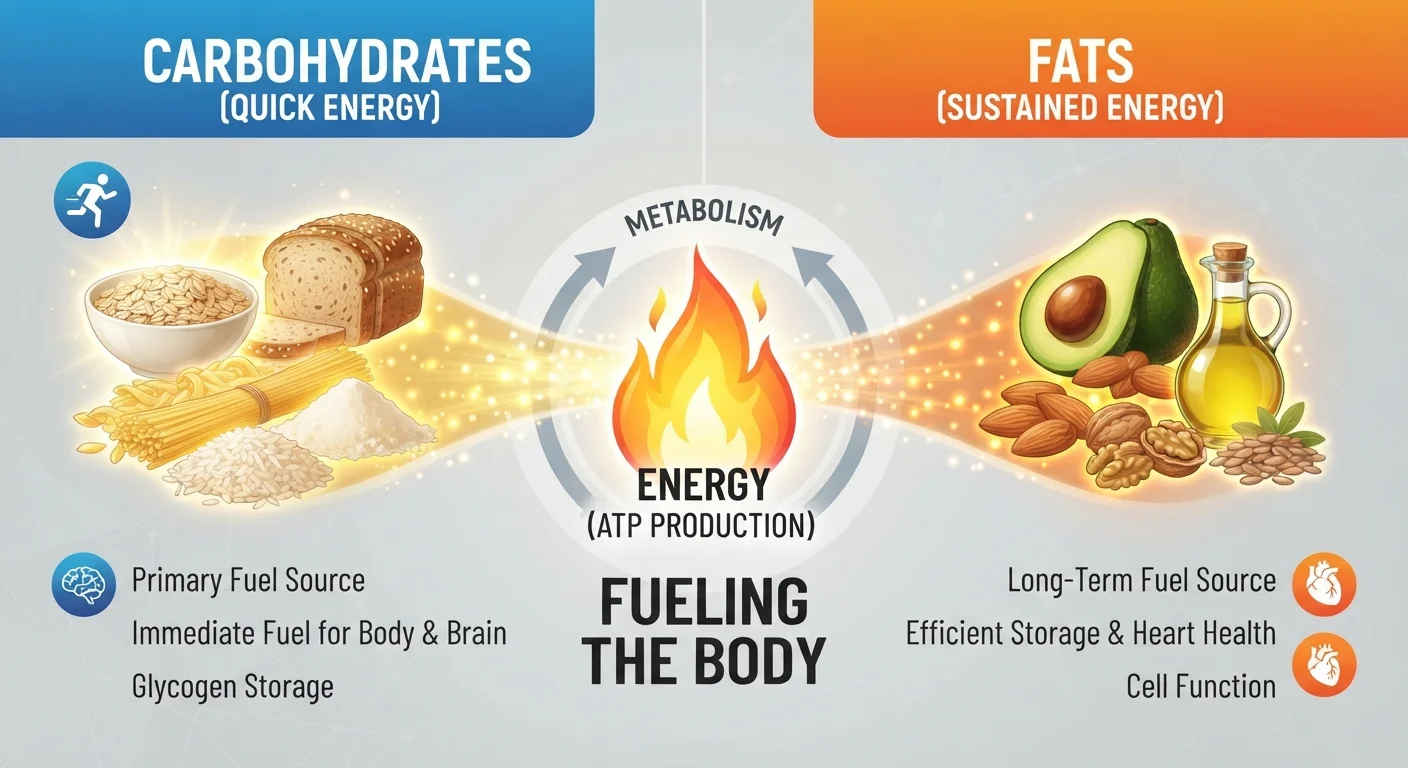
Understand that carbohydrates and fats work together as fuel, not against each other.
Your body doesn't rely on carbohydrates exclusively during all activity. At lower intensities, fat contributes meaningfully to energy production. The fuel mix shifts based on exercise intensity and duration. Understanding how your body chooses between carbohydrates and fats removes the false framing that one macronutrient must be avoided for the other to work.
Quick Actions You Can Take This Week
You don't need an elaborate plan to start eating in a way that better supports your activity level. These simple steps can make a meaningful difference.
This article is for general informational and educational purposes only and is not a substitute for medical or nutritional advice from a qualified professional.