What Makes a Protein 'Complete' or 'Incomplete'?
Protein is made up of smaller units called amino acids. Of the roughly 20 amino acids the body uses, nine are considered essential — meaning your body cannot synthesize them on its own and must obtain them through food. These nine are: histidine, isoleucine, leucine, lysine, methionine, phenylalanine, threonine, tryptophan, and valine.
A complete protein is any food that contains all nine essential amino acids in amounts adequate to support the body's needs. A protein is labeled incomplete when it is missing or has very low levels of one or more of those nine essential amino acids — referred to as a limiting amino acid.
This distinction matters because each essential amino acid plays a distinct role: leucine, isoleucine, and valine support muscle repair; tryptophan is a precursor to serotonin; lysine assists calcium absorption and collagen synthesis. A consistent shortfall in any one can, over time, affect body functions that depend on it.
| Criterion | Complete Proteins | Incomplete Proteins |
|---|---|---|
| Essential amino acids | All 9 present in sufficient amounts | Missing or low in 1 or more |
| Primary food sources | Meat, fish, eggs, dairy, soy, quinoa | Beans, lentils, grains, nuts, seeds |
| Plant-based options | Quinoa, soy, buckwheat, amaranth | Most plant foods |
| Nutritional versatility | High protein density, fewer extras | Often rich in fiber, vitamins, minerals |
| Dietary strategy needed | None — meets needs from one source | Pair complementary foods across the day |
| Suitable for plant-based diets | Yes, via plant complete sources | Yes, with thoughtful food combining |
Common Food Sources of Each Type
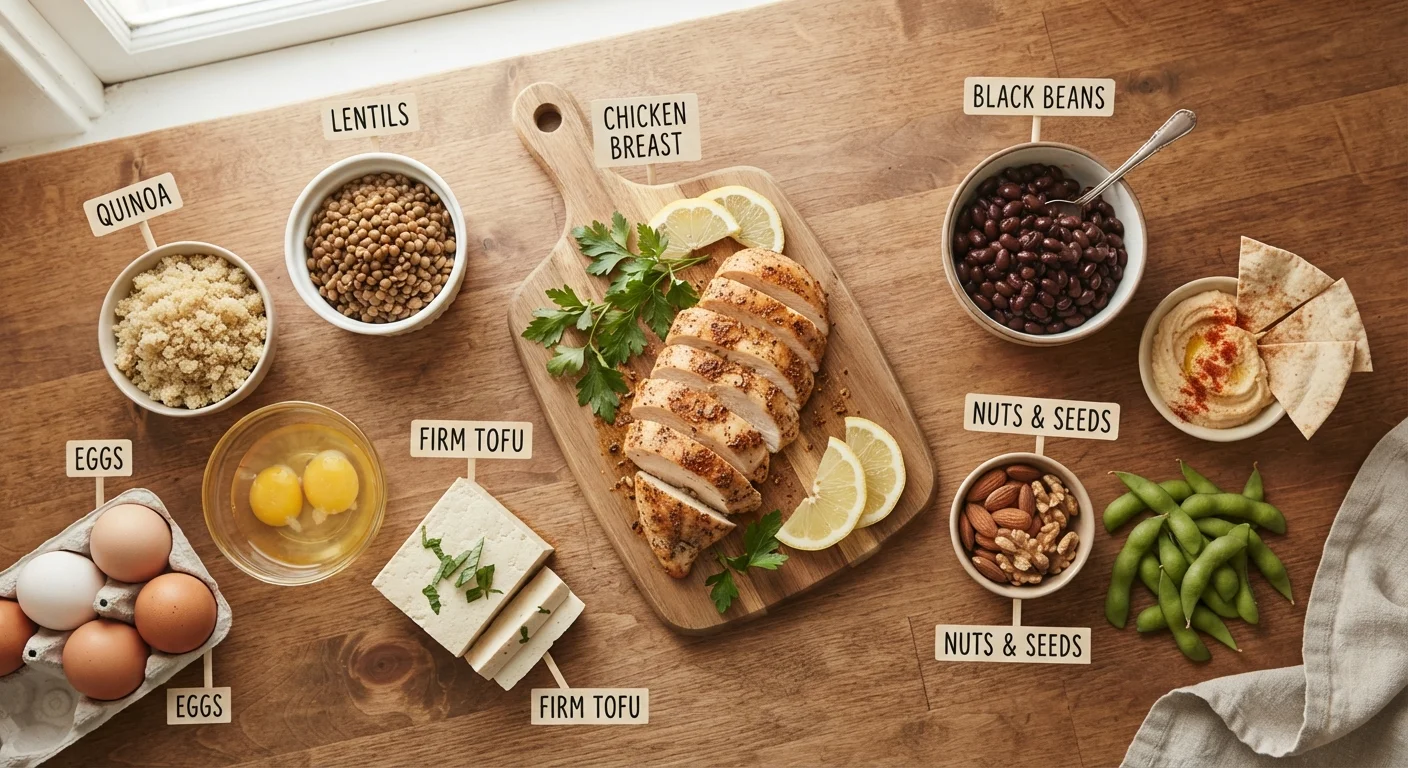
Complete protein sources are found predominantly in animal-based foods. Eggs, chicken breast, salmon, beef, dairy products such as Greek yogurt and cottage cheese, and whey all qualify. Among plant foods, a handful stand out as complete: quinoa, soy (edamame, tofu, tempeh), buckwheat, and amaranth each provide all nine essential amino acids.
Incomplete protein sources make up the majority of the plant kingdom. Legumes (beans, lentils, chickpeas), most grains (rice, oats, wheat), nuts, seeds, and vegetables all fall into this category. That does not make them nutritionally inferior — many are also rich in fiber, vitamins, minerals, and antioxidants that animal proteins lack.
Understanding how protein needs change across life stages can help you decide how much emphasis to place on complete versus complementary protein combinations at different points in life.
9
Essential amino acids required from food
The National Institutes of Health identifies nine amino acids as essential because the human body cannot synthesize them independently.
~70%
U.S. protein intake from animal sources
USDA dietary data indicates that the majority of protein consumed by Americans comes from animal-based foods, which are predominantly complete proteins.
2x
Lysine difference: legumes vs. grains
Legumes generally contain roughly twice the lysine of most grains, illustrating why these two food groups complement each other effectively.
Complementary Proteins: How Incomplete Sources Work Together
One of the most practical strategies for plant-based eaters is pairing complementary proteins — two or more incomplete protein foods whose amino acid profiles fill in each other's gaps. Classic combinations include:
- Rice and beans — rice is low in lysine but adequate in methionine; beans are the reverse.
- Peanut butter on whole-grain bread — legume protein pairs with grain protein to round out the amino acid profile.
- Hummus and pita — chickpeas and wheat complement each other similarly.
Importantly, current nutrition guidance no longer requires these pairings to happen at every single meal. Research suggests that as long as a variety of protein sources are consumed across the day, the body can pool amino acids effectively. Still, building meals around complementary combinations is a reliable habit that naturally supports adequate intake.
This article is for general informational and educational purposes only and is not a substitute for personalized medical or dietary advice. Consult a qualified healthcare professional or registered dietitian for guidance specific to your health needs.