How Your Body Chooses a Fuel Source
Your body is not locked into burning just one macronutrient at a time. Under most everyday conditions, it draws energy from a blend of carbohydrates and fats simultaneously — a concept researchers call the respiratory exchange ratio, which reflects the shifting proportion of each fuel being oxidized. What drives that ratio? Several interconnected factors.
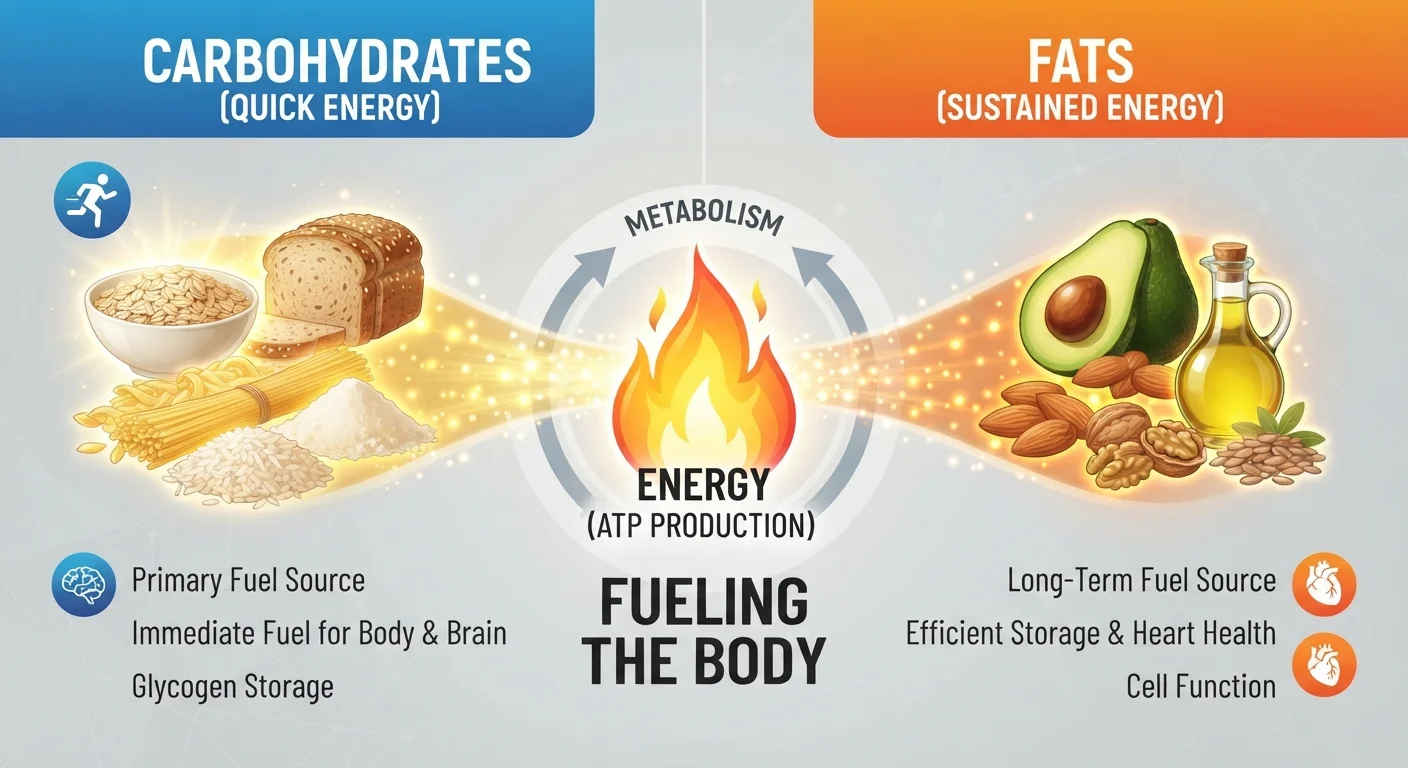
The most influential is exercise intensity. When you push harder — running faster, lifting heavier, climbing stairs quickly — your muscles demand energy faster than fat oxidation alone can supply it. Carbohydrates, stored as glycogen in muscles and the liver, break down rapidly into glucose and feed into a metabolic pathway called glycolysis, generating ATP (your cells' energy currency) at speed. Fat metabolism is more oxygen-intensive and slower, making it the dominant fuel at rest or during moderate-paced movement.
Insulin also plays a key coordinating role. After a carbohydrate-containing meal, rising blood glucose triggers an insulin response. Insulin promotes glucose uptake into cells and, when energy needs are met, signals the body to prioritize glucose as fuel and reduce fat breakdown. Between meals or in a fasted state, insulin levels fall and fat mobilization from adipose (stored fat) tissue increases. For more on how all three macronutrients interact, see our macronutrients overview.
| Criterion | Carbohydrates as Fuel | Fats as Fuel |
|---|---|---|
| Energy yield per gram | 4 calories/gram | 9 calories/gram |
| Speed of energy release | Fast (via glycolysis) | Slower (via beta-oxidation) |
| Primary storage form | Glycogen (liver & muscle) | Triglycerides (adipose tissue) |
| Storage capacity in the body | Limited (~400–500g glycogen) | Very large (varies by individual) |
| Best exercise intensity match | Moderate to high intensity | Low to moderate intensity |
| Brain fuel under normal diet | Primary fuel (glucose) | Minimal directly; ketones in low-carb states |
| Insulin response triggered | Yes — raises blood glucose | Minimal under most conditions |
What Changes When Carbs Are Low or Fat Is High
Diet composition meaningfully shifts the body's fuel-burning ratio over time, though it doesn't flip a single switch. When carbohydrate intake is consistently low — as in very low-carb or ketogenic eating patterns — glycogen stores remain reduced and insulin stays lower on average. In response, the body upregulates fat oxidation and the liver begins producing ketones, which can fuel the brain and other tissues when glucose supply is limited. This metabolic shift takes days to weeks to become established and varies considerably by individual.
Conversely, a higher-carbohydrate diet keeps glycogen stores well-stocked and sustains higher rates of glucose oxidation during activity. This is particularly relevant for people engaged in moderate-to-high-intensity exercise, where glycogen availability directly affects performance capacity. Carbohydrate intake and physical activity have a well-documented relationship that everyday exercisers can put to practical use.
It's worth noting that even on a low-carb diet, the body does not become entirely carbohydrate-free — it can synthesize glucose from certain amino acids and glycerol through a process called gluconeogenesis. Likewise, even on a high-carb diet, fat continues to be used for fuel, particularly during lower-intensity periods and sleep.
This article is for informational purposes only and is not a substitute for advice from a qualified healthcare or nutrition professional. Individual nutritional needs vary; consult a registered dietitian or your healthcare provider for personalized guidance.