How Potassium and Sodium Govern Fluid in Your Body
Every cell in your body maintains a careful boundary between fluid inside and outside its walls. Potassium and sodium are the primary minerals — called electrolytes — that manage this boundary. Potassium is concentrated inside cells, while sodium dominates the fluid outside them. This arrangement isn't accidental: it's maintained by a molecular pump in every cell membrane that actively moves sodium out and pulls potassium in.
When sodium levels in the bloodstream rise — often from dietary intake — the body retains water to dilute it, increasing blood volume. Greater blood volume means the heart pumps harder, which pushes blood pressure up. Potassium helps counteract this by signaling the kidneys to excrete more sodium through urine, reducing fluid retention and easing pressure on blood vessel walls.
This push-pull relationship is why nutrition researchers and public health bodies focus not just on sodium in isolation, but on the ratio of potassium to sodium in the overall diet.
| Criterion | Potassium | Sodium |
|---|---|---|
| Primary location in body | Inside cells (intracellular) | Outside cells (extracellular) |
| Effect on blood pressure | Tends to lower it | Tends to raise it at high intake |
| Effect on fluid retention | Promotes sodium and water excretion | Promotes water retention |
| Typical U.S. dietary status | Underconsumed | Overconsumed |
| Main food sources | Fruits, vegetables, legumes, dairy | Processed foods, restaurant meals, cured meats |
| USDA adequate intake (adults) | 2,600–3,400 mg/day | Limit of 2,300 mg/day |
| Essential function | Cell voltage, muscle contraction, nerve signals | Fluid volume, nerve impulses, muscle function |
What the Research Shows About Dietary Imbalance
The USDA Dietary Guidelines identify sodium as a nutrient of concern for overconsumption and potassium as a nutrient of concern for underconsumption — a combination that describes the typical American diet. Most U.S. adults consume well above the recommended sodium limit while falling short of the adequate intake for potassium.
~3,400 mg
Average daily sodium intake for U.S. adults
The CDC estimates average U.S. adult sodium consumption is roughly 3,400 mg per day — nearly 50% above the 2,300 mg daily limit recommended in the Dietary Guidelines for Americans.
< 2%
U.S. adults meeting potassium adequate intake
According to USDA dietary intake data, fewer than 2% of American adults meet the adequate intake level for potassium from food sources alone.
~5 mmHg
Average systolic blood pressure reduction
Research reviewed by the NIH suggests that increasing dietary potassium is associated with an average reduction in systolic blood pressure of approximately 3–5 mmHg in adults with elevated levels.
A large body of research, including studies cited by the National Institutes of Health, associates higher dietary potassium with lower blood pressure, particularly in people who also consume high amounts of sodium. The DASH (Dietary Approaches to Stop Hypertension) eating pattern, which emphasizes fruits, vegetables, and low-fat dairy, achieves blood pressure benefits largely by shifting this electrolyte ratio in a favorable direction.
It is worth noting that genetics, kidney function, physical activity, and overall dietary pattern all influence how a given individual responds to electrolyte intake. General research findings describe population-level patterns, not guaranteed personal outcomes.
Finding Potassium and Sodium in Everyday Foods
Potassium is found across a wide range of whole, minimally processed foods. Strong sources include:
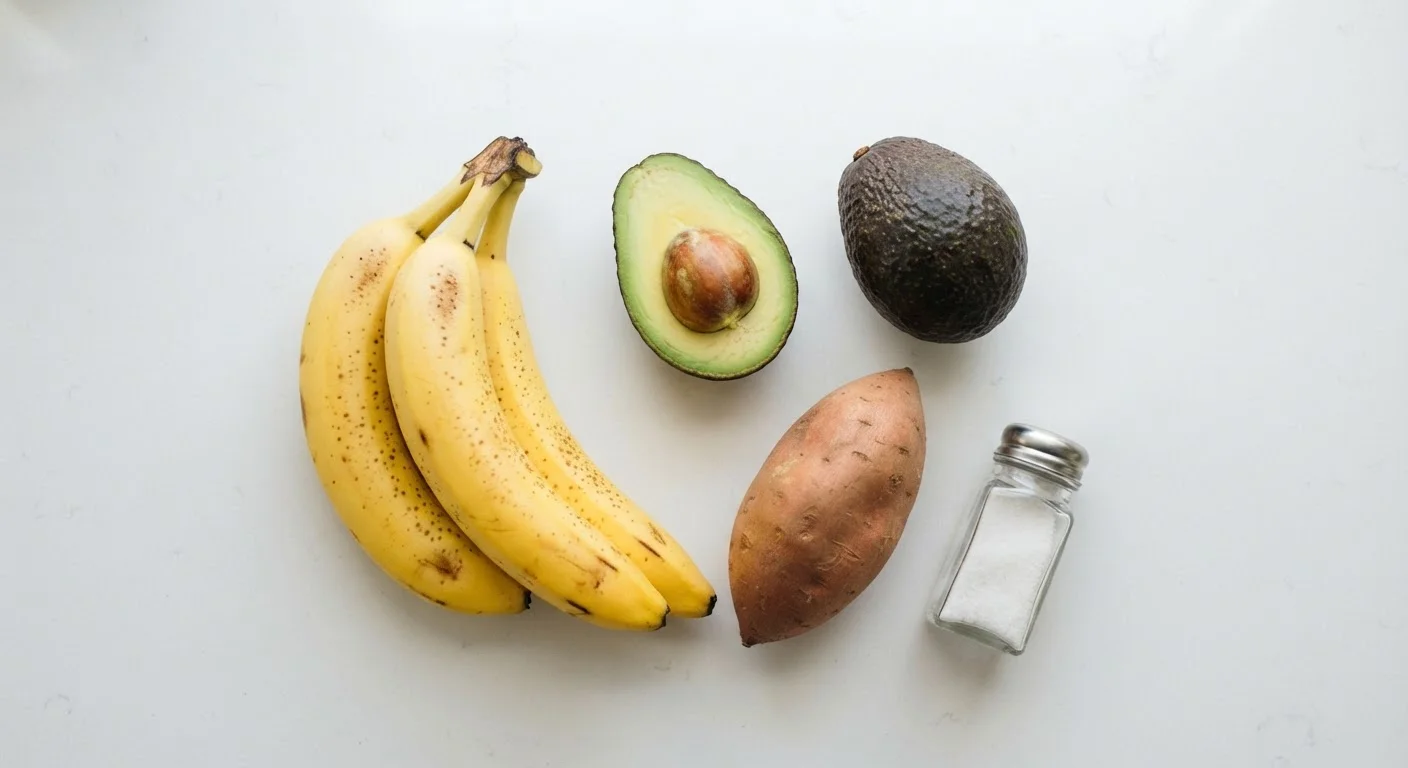
- Vegetables: sweet potato, spinach, Swiss chard, beet greens, broccoli
- Legumes: white beans, lentils, kidney beans
- Fruits: avocado, banana, dried apricots, prunes, orange juice
- Dairy: plain yogurt and milk
- Fish: salmon, halibut, tuna
Sodium, by contrast, enters the diet primarily through processed and restaurant foods — not the salt shaker. Bread, cured meats, canned soups, cheese, and fast food account for a substantial portion of average U.S. sodium intake, even when food doesn't taste overtly salty.
A practical approach is to build meals around potassium-dense whole foods while reading nutrition labels to choose lower-sodium packaged options. Small, consistent shifts — a handful of beans added to a dish, a banana instead of a processed snack — contribute meaningfully to the overall dietary ratio over time.
This article provides general nutrition education and is not a substitute for personalized medical advice. If you have a health condition affecting your kidneys, heart, or blood pressure, or if you take medications that affect electrolyte balance, consult a qualified healthcare provider before making significant dietary changes.