Vitamin C's Role Goes Well Beyond Immunity
Ask most people what vitamin C does and you'll hear one answer: it fights colds. While immune support is one function, it's only part of the story. Vitamin C — also known as ascorbic acid — is a water-soluble vitamin that participates in dozens of essential biological processes, from building structural proteins to helping your body absorb key minerals.
Understanding vitamin C's full range of functions helps you make better sense of why getting enough of it consistently, through food, genuinely matters to everyday health. It also helps cut through the noise of exaggerated supplement marketing claims.
Myth
Taking vitamin C supplements will prevent you from getting a cold.
Fact
Vitamin C does not prevent colds in the general population, though regular supplementation may modestly reduce cold duration.
Large-scale reviews, including analyses published through the Cochrane Collaboration, have consistently found that taking vitamin C supplements does not reduce how often most people get colds. However, in people under extreme physical stress — such as marathon runners or military personnel in harsh conditions — regular supplementation showed some preventive benefit. For the average person, vitamin C may shorten a cold's duration by roughly half a day, but it won't stop you from getting sick.
Myth
Vitamin C is only important for your immune system.
Fact
Vitamin C is essential for collagen synthesis, iron absorption, and antioxidant protection — all independent of immune function.
The immune connection is real but narrow. Vitamin C supports white blood cell function and skin barrier integrity. But its role in producing collagen — a structural protein found throughout the body — is equally fundamental. It also chemically converts non-heme iron into a more absorbable form, making it critically important for people relying on plant-based iron sources. These are distinct, well-established mechanisms that operate regardless of whether you're fighting an infection.
Myth
More vitamin C is always better — megadoses are harmless.
Fact
Very high doses of vitamin C can cause digestive side effects and, in some cases, contribute to kidney stone formation.
Because vitamin C is water-soluble, the body excretes what it doesn't need — which has led to the popular belief that taking large amounts is risk-free. In reality, doses above 2,000 mg per day (the tolerable upper intake level established by the NIH) can cause diarrhea, nausea, and abdominal cramps. High supplemental doses may also increase urinary oxalate, which is a risk factor for kidney stones in susceptible individuals. There is no established benefit to megadosing for healthy adults eating a varied diet.
Myth
You need to eat citrus every day to get enough vitamin C.
Fact
Many common vegetables and non-citrus fruits provide as much or more vitamin C per serving than oranges.
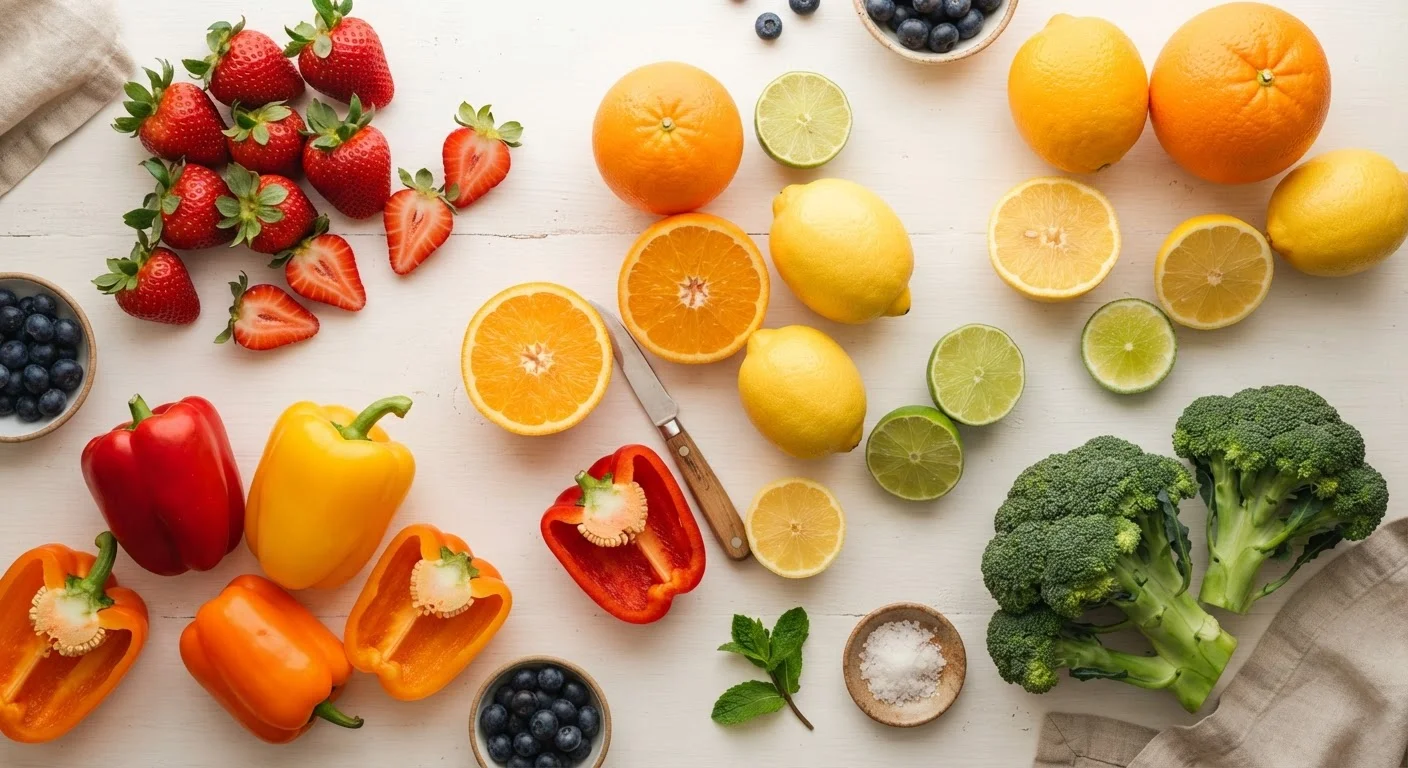
Red bell peppers, broccoli, Brussels sprouts, strawberries, kiwi, and guava are all excellent vitamin C sources. A half-cup of raw red bell pepper delivers more than 95 mg of vitamin C — more than the full adult RDA — compared to roughly 70 mg in a medium orange. People who don't enjoy citrus have no shortage of options for meeting their daily needs through ordinary, affordable produce.
Collagen, Iron, and the Functions You Didn't Know About
Two of vitamin C's most important roles have nothing to do with your immune system directly.
Collagen production: Vitamin C is essential for synthesizing collagen, the protein that forms the structural backbone of skin, tendons, ligaments, blood vessels, and cartilage. Without adequate vitamin C, the body cannot properly produce or maintain collagen. This is why severe deficiency leads to scurvy — a condition marked by fragile skin, slow wound healing, and joint pain. You don't need to reach deficiency levels for tissue repair to be subtly affected.
Iron absorption: Vitamin C converts non-heme iron — the type found in plant foods like lentils, spinach, and fortified grains — into a form the body absorbs more efficiently. Pairing a vitamin C-rich food with an iron-rich plant food at the same meal is a straightforward, evidence-backed dietary strategy, particularly relevant for people following vegetarian or vegan diets.
Antioxidant activity: Vitamin C neutralizes free radicals, unstable molecules that can damage cells over time. This antioxidant capacity is linked to broader cellular protection, though it's important to note that this does not translate into specific disease prevention guarantees.
90 mg
Daily vitamin C recommended for adult men
According to the National Institutes of Health Office of Dietary Supplements, the RDA is 90 mg for men and 75 mg for women.
~2×
Iron absorption boost with vitamin C pairing
Research indicates that consuming vitamin C alongside non-heme iron sources can significantly increase iron uptake from plant-based foods.
2,000 mg
Tolerable upper intake level for adults
The NIH Office of Dietary Supplements sets this as the daily threshold above which adverse effects such as gastrointestinal distress become more likely.
Food First: Where to Find Vitamin C in Your Diet
Oranges are the food most associated with vitamin C, but they're far from the richest source. Bell peppers — especially red bell peppers — contain roughly three times the vitamin C of an orange per serving. Other excellent sources include:
- Strawberries and kiwi
- Broccoli and Brussels sprouts
- Tomatoes and tomato juice
- Guava and papaya
- Fortified juices and cereals
The recommended dietary allowance (RDA) set by the National Institutes of Health is 75 mg per day for adult women and 90 mg per day for adult men. A single medium orange provides roughly 70 mg. A half-cup of raw red bell pepper provides over 95 mg. Most people who eat a varied diet with regular fruits and vegetables meet these targets without supplements.
Vitamin C is heat-sensitive, so cooking can reduce the content in vegetables. Steaming or microwaving tends to preserve more than boiling.
This article is for informational purposes only and does not constitute medical advice. Speak with a qualified healthcare professional before making significant changes to your diet or supplement routine.