
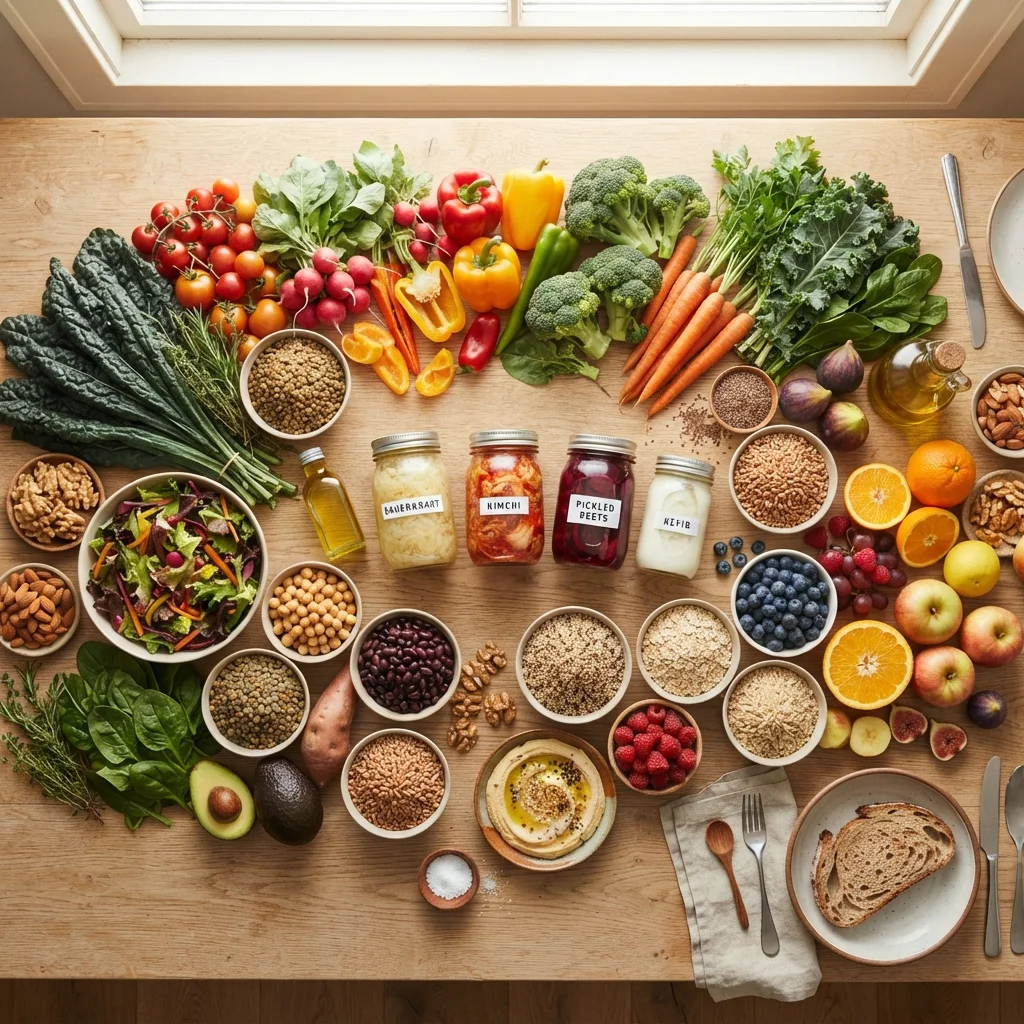
Why Daily Patterns Matter More Than Single Foods
Wellness culture tends to spotlight individual ingredients — a berry, a root, a seed — as gut-health solutions. The scientific evidence tells a different story. What consistently shapes your gut microbiome is the cumulative pattern of what you eat day after day, not a single dietary hero.
Large-scale observational studies, including the American Gut Project involving thousands of participants, found that the number of distinct plant species consumed weekly was a stronger predictor of microbiome diversity than any individual food choice. Participants who ate more than 30 different plant types per week had measurably richer microbial communities than those who ate 10 or fewer.
This matters practically: a varied, plant-forward diet built around everyday foods is more supported by evidence than cycling through trending superfoods. For a broader framework connecting gut health to other preventive habits, see our science-backed daily habits guide.
Dietary Fiber: The Core Driver of Microbial Diversity
Beneficial gut bacteria primarily survive by fermenting dietary fiber — carbohydrates that the human digestive system cannot break down on its own. This fermentation process produces short-chain fatty acids (SCFAs) such as butyrate, acetate, and propionate. SCFAs nourish the cells lining the colon, help regulate inflammation, and support immune signaling.
Not all fibers behave the same way. Soluble fiber (found in oats, legumes, and apples) forms a gel-like substance that feeds certain bacterial populations. Insoluble fiber (abundant in whole grains and vegetables) adds bulk and supports gut motility. Resistant starch — present in cooked-and-cooled potatoes, underripe bananas, and legumes — acts as a particularly potent prebiotic, selectively feeding beneficial bacterial strains.
The average American consumes roughly 15 grams of fiber per day, well below the Dietary Guidelines for Americans recommendation of 22–34 grams depending on age and sex. Closing that gap through whole foods — not necessarily supplements — is one of the most evidence-grounded moves available. Explore how fiber fits into sustainable eating at the Balanced Eating hub.
15g
Average daily fiber intake for Americans
The Dietary Guidelines for Americans recommend 22–34 grams per day depending on age and sex, meaning most adults fall significantly short.
30+
Plant types per week linked to microbiome diversity
Data from the American Gut Project found participants eating more than 30 distinct plant foods weekly had richer microbial communities than those eating 10 or fewer.
~70%
Of immune cells located in or near the gut
This estimate, widely cited in immunology literature, underscores why gut microbiome health is considered foundational to immune system function.
Fermented Foods and Microbial Diversity
Fermented foods — yogurt, kefir, kimchi, sauerkraut, miso, tempeh, and kombucha — contain live microorganisms that may influence the gut environment. A 2021 randomized controlled trial published in Cell (Sonnenburg and Gardner, Stanford) found that a high-fermented-food diet increased microbiome diversity and reduced markers of immune activation in healthy adults, showing stronger effects than a high-fiber diet alone in that study population.
It is worth being precise about what this means. Fermented foods are a promising component of a gut-supportive diet, but they are not a replacement for fiber-rich plant foods, nor are results guaranteed for every individual. The microbial strains in fermented foods may not permanently colonize the gut; they appear to exert transient but measurable effects during regular consumption.
For context on related digestive health topics, including what the evidence does and does not show about intestinal permeability, see our breakdown of leaky gut evidence.
What Undermines Gut Microbial Balance
Just as certain dietary patterns support microbial diversity, others are consistently associated with reducing it. Diets high in ultra-processed foods — characterized by low fiber, high added sugars, refined starches, and various additives — have been linked in multiple studies to lower microbial diversity and shifts toward less beneficial bacterial populations.
Excess added sugar, in particular, has been shown to preferentially feed certain bacterial strains associated with inflammation. Artificial sweeteners remain an area of active research; some animal studies raise questions about their microbiome effects, but human evidence is still limited and inconsistent.
Antibiotic use is a well-established disruptor of gut microbial communities, sometimes causing shifts that persist for months. This is a clinically necessary reality when antibiotics are genuinely required — not a reason to avoid them — but it underscores why protective dietary habits matter as a baseline. The Immune and Gut Health hub covers the relationship between microbial balance and immune function in more depth.
If you notice persistent changes in digestion, consult a healthcare provider. Our guide to interpreting digestive signals can help you recognize when symptoms may warrant professional evaluation.
This article is for general informational and educational purposes only and does not constitute medical advice. Always consult a qualified healthcare professional before making significant changes to your diet, especially if you have an existing digestive or chronic health condition.