What 'Leaky Gut' Actually Means — and What It Doesn't
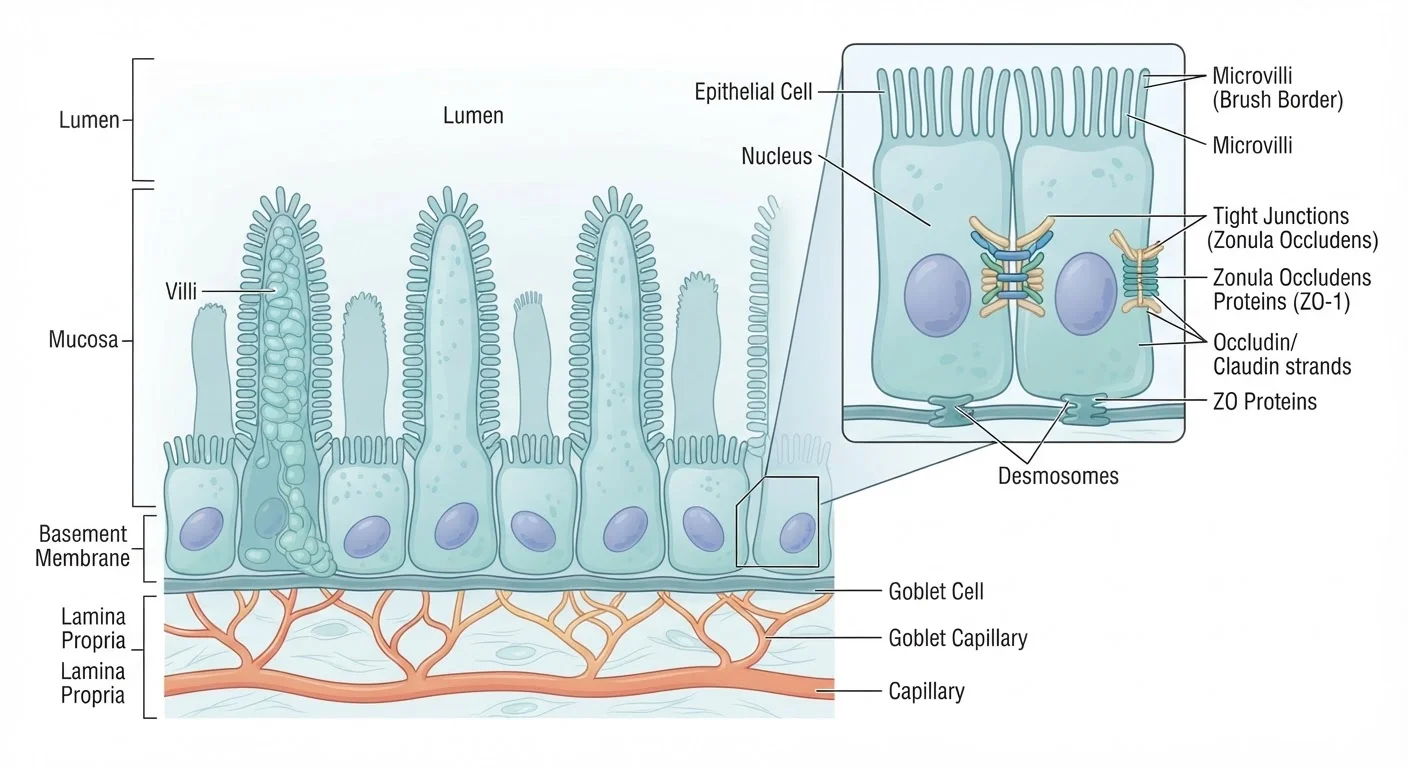
The term leaky gut refers to a condition researchers formally call increased intestinal permeability. The gut lining is a single layer of epithelial cells held together by protein structures called tight junctions. These junctions act as gatekeepers, allowing nutrients to pass into the bloodstream while blocking bacteria, toxins, and undigested food particles. When those junctions loosen, permeability increases — meaning substances that normally stay inside the gut can translocate elsewhere.
This is a real, measurable phenomenon studied in peer-reviewed gastroenterology research. What it is not, however, is a discrete syndrome or diagnosis recognized by mainstream medical bodies such as the American Gastroenterological Association. The wellness industry has attached the label "leaky gut syndrome" to an enormous range of symptoms — from fatigue to autoimmune flares — frequently beyond what the evidence supports. Understanding that distinction matters enormously for making informed health decisions. For a grounded glossary of related terms, see Key Terms in Gut and Immune Health.
Myths vs. Facts: Separating Evidence From Hype
Below, we address the most widely circulated claims about leaky gut, grounding each correction in what clinical research and gastroenterology guidelines actually say.
Myth
Leaky gut syndrome is a diagnosable medical condition that explains a wide range of chronic symptoms.
Fact
Increased intestinal permeability is a real physiological finding, but 'leaky gut syndrome' is not a recognized clinical diagnosis in mainstream medicine.
Peer-reviewed research confirms that tight junction dysfunction occurs in measurable ways in specific conditions — celiac disease, inflammatory bowel disease (IBD), and critical illness among them. But attributing broad, nonspecific symptoms like fatigue, brain fog, or joint pain to a singular "leaky gut syndrome" conflates a biological mechanism with an unvalidated diagnostic category. Gastroenterologists assess gut permeability as a feature of established conditions, not as a standalone disease. Seeking diagnosis from a board-certified provider for persistent symptoms is always the appropriate first step.
Myth
Anyone with digestive discomfort likely has leaky gut, and fixing it will resolve their symptoms.
Fact
Digestive symptoms have many possible causes; most do not involve abnormal intestinal permeability, and testing for permeability is not routine clinical practice.
Common complaints such as bloating, gas, or irregular bowel movements are more commonly linked to conditions like irritable bowel syndrome (IBS), food intolerances, or small intestinal bacterial overgrowth (SIBO) — none of which are synonymous with increased permeability. A thorough clinical evaluation is the only reliable way to identify what is driving a person's digestive symptoms. Self-diagnosing leaky gut and pursuing unproven treatments can delay identification of the actual underlying issue.
Myth
Specific supplements — collagen, glutamine, or probiotics — are proven to 'seal' a leaky gut.
Fact
Some nutrients show preliminary promise in animal or small human studies, but no supplement has been clinically validated to treat or reverse intestinal permeability in healthy adults.
Glutamine, an amino acid, has shown some benefit in maintaining gut barrier integrity in critically ill patients receiving clinical nutrition support — a very different context from a healthy adult taking supplements. Probiotic research is promising but highly strain-specific and not yet translated into universal clinical guidelines. Collagen supplements lack robust human trials demonstrating gut barrier repair. Supplement marketing routinely overstates this early-stage research. Spending money on unvalidated products can also crowd out evidence-based interventions. As with popular longevity claims, the gap between marketing and evidence is often wide.
Myth
Leaky gut directly causes autoimmune diseases.
Fact
Research shows associations between increased intestinal permeability and some autoimmune conditions, but causation has not been established.
Scientists have observed elevated intestinal permeability in people with type 1 diabetes, rheumatoid arthritis, and celiac disease. This has led to the hypothesis that gut barrier dysfunction may contribute to immune dysregulation. However, association is not causation — it remains unclear whether permeability changes precede and drive autoimmune disease, or whether they are a consequence of the inflammatory state that accompanies it. This is an active and important area of immunology research, and the distinction matters for how patients and providers should interpret findings.
Myth
Gluten causes leaky gut in everyone, not just people with celiac disease.
Fact
In people with celiac disease, gluten unambiguously damages the gut lining. In those without celiac disease or non-celiac gluten sensitivity, the evidence is far less clear.
Research does show that a protein called zonulin — a regulator of tight junctions — is transiently elevated in response to gliadin (a gluten component) in the gut of some individuals. But whether this transient increase constitutes clinically meaningful permeability in people without celiac disease is debated among gastroenterologists. Widespread avoidance of gluten based on leaky gut fears is not supported by current evidence for the general population, and eliminating food groups unnecessarily can introduce nutritional risks. Anyone suspecting celiac disease should be tested by a clinician before adopting a gluten-free diet, as elimination changes the accuracy of diagnostic tests.
What Genuinely Influences Gut Barrier Function
Several lifestyle and medical factors have credible, peer-reviewed evidence linking them to changes in intestinal permeability. Chronic heavy alcohol use disrupts tight junctions and promotes bacterial translocation — a mechanism studied extensively in the context of alcoholic liver disease. Nonsteroidal anti-inflammatory drugs (NSAIDs) like ibuprofen, when used frequently, are associated with increased gut permeability in clinical trials. Psychological stress activates neuroendocrine pathways that can alter mucosal barrier function, though the magnitude in healthy adults remains an active area of research.
Diet also plays a role, but a more nuanced one than wellness marketing suggests. High intake of ultra-processed foods and low dietary fiber are associated with less favorable microbiome composition and weaker gut barrier support — but no single food "heals" or "destroys" the gut lining overnight. See how everyday eating patterns influence gut health for a research-grounded overview.
~1%
U.S. population with confirmed celiac disease
The National Institute of Diabetes and Digestive and Kidney Diseases estimates celiac disease affects approximately 1 in 100 people in the U.S., making it a major cause of clinically established gut barrier disruption.
70%
Of immune cells located in gut-associated tissue
Research in immunology consistently shows the majority of the body's immune activity is concentrated in gut-associated lymphoid tissue, underscoring why gut barrier integrity matters for overall immune function.
This article is for general health education only and does not constitute medical advice. Always consult a licensed healthcare provider for personal health concerns or before beginning any supplement or dietary protocol.