What DOMS Actually Is — and Why It Happens
Delayed onset muscle soreness (DOMS) is a well-characterized physiological response to unaccustomed or high-intensity exercise, particularly movements with a significant eccentric (muscle-lengthening) component — think the descent in a squat, the lowering phase of a bicep curl, or running downhill. The result is microscopic disruption of muscle fiber architecture and surrounding connective tissue, which triggers a localized inflammatory response as the body begins repair.
This inflammation involves the release of signaling molecules called cytokines, increased blood flow to the area, and sensitization of nearby pain receptors (nociceptors) — which explains why even light touch or movement can feel uncomfortable during peak soreness. The process is fundamentally reparative: the same damage-and-repair cycle, repeated with progressive overload over time, is central to how muscles grow stronger and more resilient.
Myth
Lactic acid buildup causes the soreness you feel a day or two after hard exercise.
Fact
Lactic acid is cleared from muscles within about an hour of finishing exercise. DOMS is caused by a separate process involving microscopic muscle damage and subsequent inflammation.
The lactic acid myth has persisted for decades, but the timeline alone refutes it. Blood lactate returns to resting levels well within an hour post-exercise, yet DOMS typically doesn't peak until 24–72 hours later. The actual mechanism involves eccentric contractions — the lengthening phase of movement — creating microscopic tears in muscle fibers. The inflammatory repair cascade that follows, including cytokine signaling and fluid accumulation in muscle tissue, is what produces the characteristic ache. Understanding this matters because it points recovery strategies toward managing inflammation and tissue repair rather than chasing lactate clearance.
Myth
If you're sore, it means you had a good workout; if you're not sore, you didn't work hard enough.
Fact
Soreness reflects muscle novelty and mechanical stress, not training quality. Consistent training reduces DOMS even as adaptation and strength gains continue.
DOMS is most pronounced when muscles encounter unfamiliar movement patterns or loads — not necessarily the most effective training stimuli. Experienced exercisers often experience minimal soreness from sessions that still drive meaningful adaptation. Conversely, a new exerciser can be severely sore from a modest workout that doesn't optimally stimulate hypertrophy. Research consistently shows that muscle protein synthesis and strength improvements occur independent of soreness levels. Chasing soreness as a proxy for progress can actually lead to overtraining or poor exercise selection. See what soreness actually signals for a deeper look at this distinction.
Myth
Stretching before or after exercise prevents delayed onset muscle soreness.
Fact
Multiple systematic reviews have found that static stretching — before or after exercise — does not meaningfully reduce DOMS onset or severity.
Stretching has genuine benefits for flexibility and range of motion, but evidence that it prevents DOMS is weak. A 2011 Cochrane review and subsequent research found no clinically meaningful reduction in post-exercise soreness attributable to pre- or post-exercise stretching. The mechanical damage driving DOMS occurs during the contraction itself, and static stretching does not alter the inflammatory repair process that follows. Stretching remains a valuable element of a training program — just not for the reason most people assume.
Myth
You should rest completely and avoid all movement until soreness fully resolves.
Fact
Light, low-intensity movement — often called active recovery — can modestly reduce perceived soreness and improve blood flow without impeding repair.
Complete sedentary rest is rarely the optimal strategy for managing DOMS. Low-intensity activity such as walking, light cycling, or gentle swimming increases local circulation, which supports nutrient delivery and metabolic waste clearance in affected tissue. Studies comparing active recovery to passive rest generally show that the active group reports lower perceived soreness without measurable impairment of muscle repair markers. That said, the effect size is modest, and intensity matters — the activity must remain genuinely low-load to avoid compounding the initial damage. For a thorough examination of what true rest does physiologically, see the case for passive recovery.
Myth
Cold water immersion (ice baths) is the gold-standard cure for muscle soreness.
Fact
Cold water immersion can reduce perceived soreness, but evidence shows it may also blunt some long-term strength and hypertrophy adaptations when used chronically.
Cold water immersion has reasonably strong short-term evidence for reducing subjective soreness — likely by attenuating inflammation and reducing nerve conduction velocity in affected tissue. However, research published in journals including the Journal of Physiology suggests that the same inflammatory response it suppresses also plays a role in signaling muscle adaptation. Regular post-exercise cold immersion may, over time, reduce hypertrophic and strength gains compared to passive recovery. The practical takeaway: cold immersion may be appropriate for athletes prioritizing rapid between-session recovery (e.g., in tournament play) but is likely less ideal when long-term adaptation is the primary goal.
What the Evidence Actually Supports for Recovery
No intervention has been shown to fully prevent or eliminate DOMS — any claim to the contrary should be viewed skeptically. What the research does support are strategies that modulate the perceived severity and duration of soreness without undermining the underlying adaptive process.
Overusing NSAIDs for Soreness Has Trade-offs
Non-steroidal anti-inflammatory drugs (NSAIDs) like ibuprofen are sometimes used to manage DOMS discomfort. While they can reduce pain, some research suggests routine NSAID use after exercise may interfere with muscle protein synthesis and the adaptive inflammatory response. Occasional, situational use is a different consideration than habitual post-workout dosing. Always follow dosage guidelines and consult a healthcare provider if you are using NSAIDs regularly or have underlying health conditions.
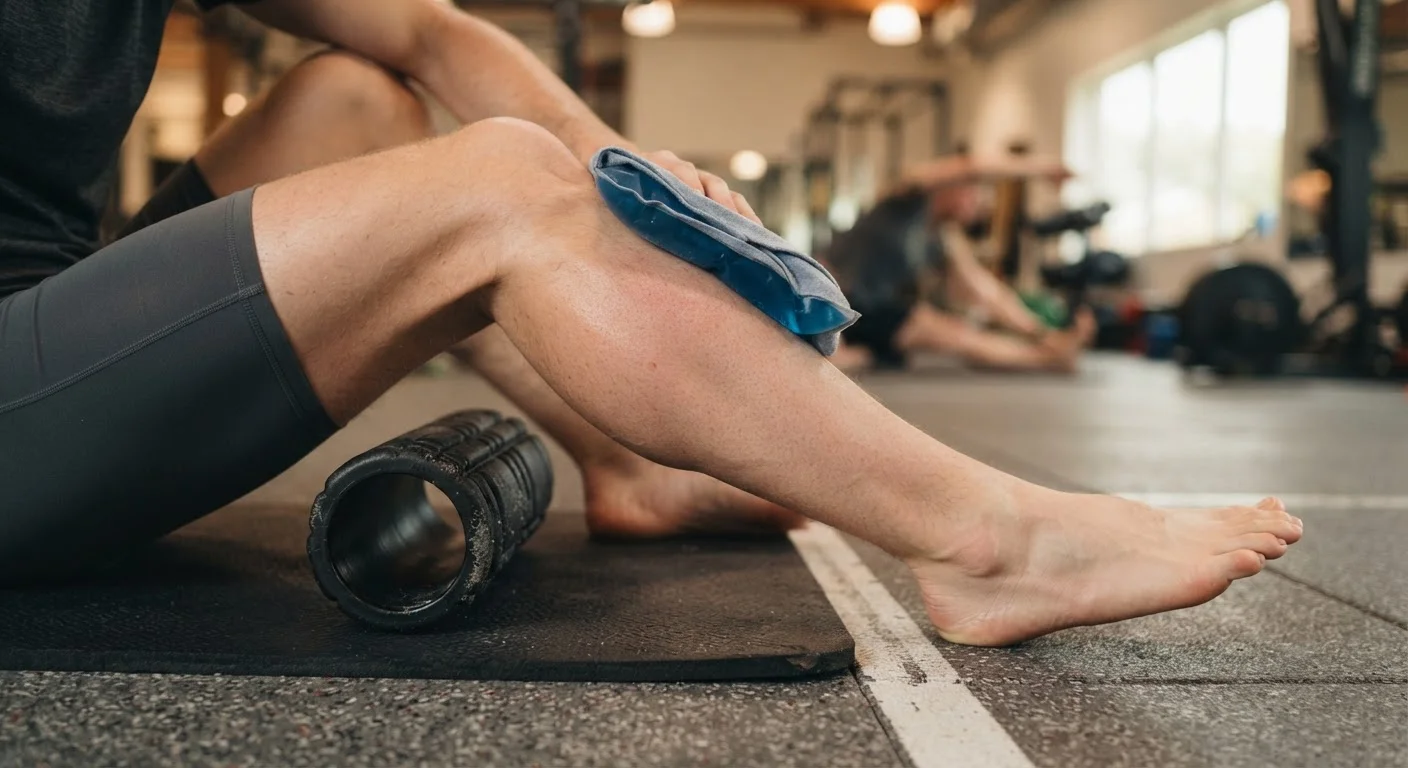
Light active recovery and cold water immersion have the most consistent evidence behind them for reducing subjective soreness in the short term. Massage and foam rolling also show modest effects on perceived pain, likely through neurological mechanisms rather than direct effects on tissue repair. Nutritional strategies — particularly adequate protein intake and, to a lesser extent, tart cherry juice (which contains natural anti-inflammatory compounds) — have emerging support but are not definitive replacements for rest and progressive training.
Timing your broader nutrition and hydration strategies in relation to exercise is a separate but related topic. The evidence on post-workout recovery windows is often misrepresented — for a grounded look at what timing actually matters, see what the research says about recovery windows.
Ultimately, the most reliable long-term solution to DOMS is progressive, consistent training. The repeated bout effect — a well-documented phenomenon in exercise science — means the same workout produces significantly less soreness after a muscle has adapted to it. This adaptation occurs within a few repetitions of the novel stimulus, even without soreness reduction strategies.
This article is for general informational and educational purposes only and does not constitute medical advice. If you experience severe, worsening, or unusual pain following exercise, consult a qualified healthcare professional.