What Sleep Architecture Means — and Why It Changes
Sleep is not a uniform state of unconsciousness. Each night unfolds as a series of recurring cycles — typically four to six — moving through distinct stages of light sleep, deep slow-wave sleep (SWS), and REM sleep. The proportion, timing, and depth of these stages constitute what researchers call sleep architecture. For a thorough breakdown of how each stage functions, see our guide to sleep cycles and stages.
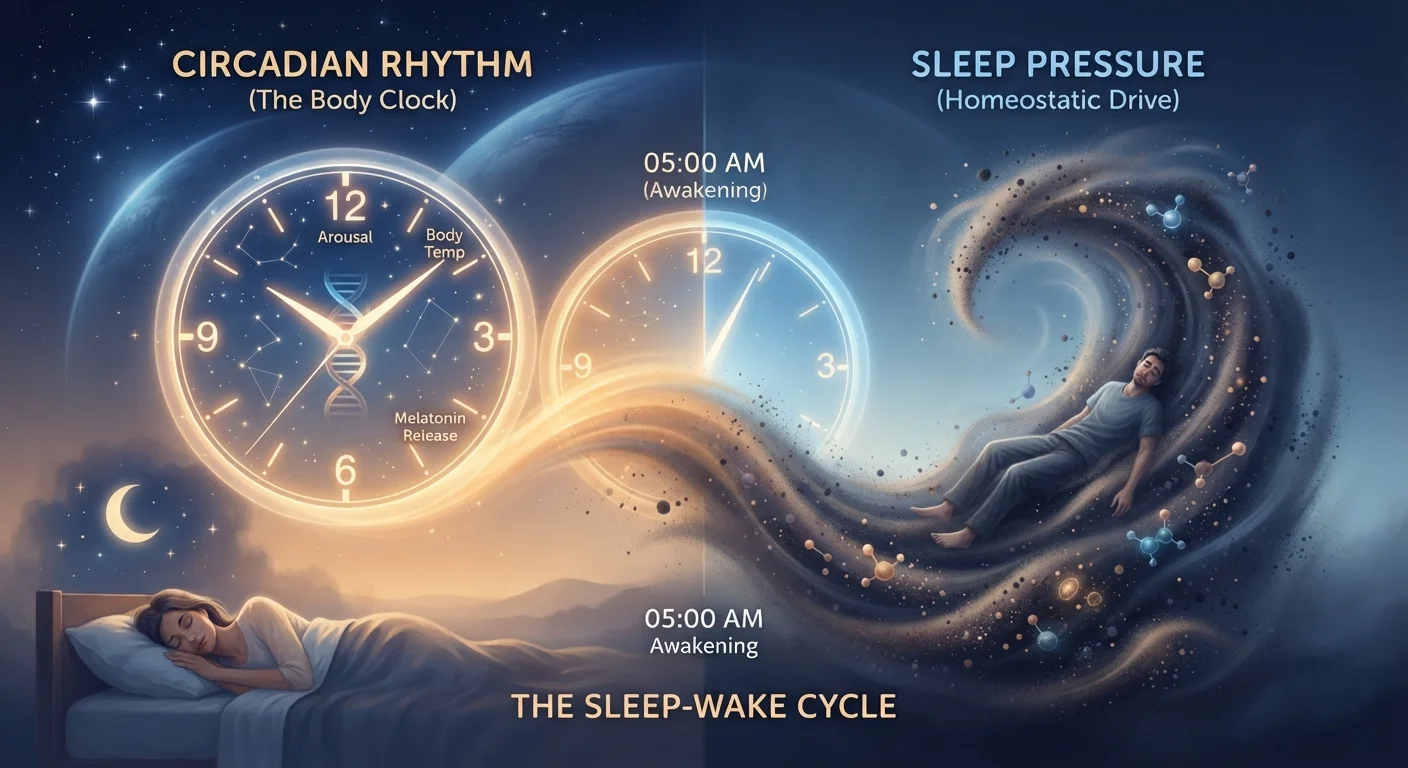
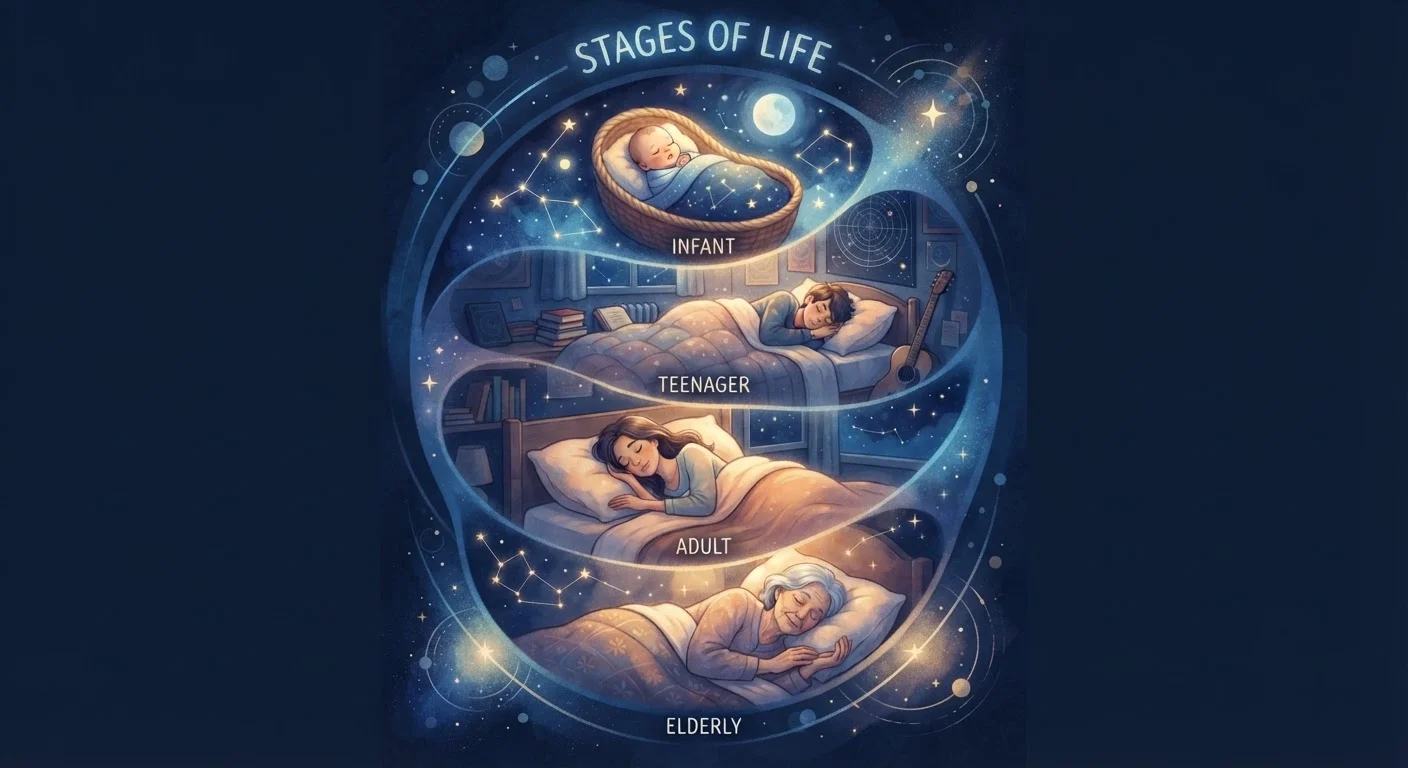
Sleep architecture is not fixed. It is governed by biological forces — including circadian rhythm maturation, hormonal output, and neurological development — that shift continuously across a lifetime. Understanding these shifts can help people recognize what is normal at each life stage and what genuinely warrants professional attention.
| Newborn sleep need | 14–17 hours per day (National Sleep Foundation guidelines) |
| REM share in newborns | ~50% of total sleep (Established sleep science literature) |
| Adult sleep need | 7–9 hours per night (American Academy of Sleep Medicine consensus) |
| Slow-wave sleep decline | Begins in early adulthood, accelerates after 60 (Ohayon et al., meta-analysis of normative sleep data) |
| Adolescent circadian delay | ~2 hours later than pre-pubescence (Carskadon et al., circadian research) |
| Typical sleep cycle length | ~90 minutes (Standard polysomnographic reference) |
Infancy Through Early Childhood: The High-REM Years
Newborns sleep up to 17 hours per day, and a remarkably large share — roughly 50% of total sleep — is spent in active sleep, the developmental precursor to REM. This is not incidental. REM sleep is associated with synaptic consolidation and neural circuit formation, processes happening at extraordinary speed in a developing brain.
By the toddler years, total sleep need drops toward 11–14 hours, and the characteristic polyphasic pattern (multiple naps distributed across the day) gradually consolidates into a biphasic and eventually monophasic rhythm. Slow-wave sleep — the stage linked to physical growth and immune function — is proportionally high throughout early childhood, consistent with the intense tissue growth occurring during these years. The circadian system itself matures over the first several months of life, which is why predictable sleep-wake timing is largely absent in newborns.
Adolescence: The Biological Shift Toward Eveningness
Puberty triggers a well-documented shift in circadian timing: the biological clock delays by roughly two hours relative to pre-pubescent settings. This is not a behavioral choice. Research tracking melatonin onset in adolescents consistently shows later secretion times compared to younger children and most adults — an effect that appears to be driven by hormonal and neurological changes rather than screen exposure or social habits alone.
The consequence is a genuine mismatch between biology and early school start times, contributing to chronic sleep restriction in many teens. Total slow-wave sleep remains high in early adolescence but begins a gradual lifetime decline that continues into old age. If you are curious about how an individual's internal timing preference — or chronotype — shapes these patterns, our article on why some people are genuinely wired to stay up late explains the underlying biology.
Adulthood and Midlife: Stable Architecture Under Pressure
Healthy young adults typically need seven to nine hours of sleep per night. Sleep cycles run approximately 90 minutes each, with slow-wave sleep concentrated in the first half of the night and REM sleep becoming progressively longer in the second half. This architecture supports memory consolidation, metabolic regulation, and emotional processing in tandem.
Through the twenties and thirties, architecture is relatively stable, though slow-wave sleep continues its slow decline. By midlife, many adults notice lighter, more fragmented sleep — a pattern that reflects genuine changes in sleep regulatory systems, not simply lifestyle stress. Sleep is also closely tied to body composition and hormonal regulation; our article on how muscle and fat shift with age touches on how these systems interact.
This article provides general health education and is not a substitute for personalized medical advice. If you have concerns about your sleep quality, consult a qualified healthcare professional.
Older Adulthood: Fragmentation, Earlier Timing, and Less Deep Sleep
Adults over 60 experience some of the most significant architectural changes of the entire lifespan. Slow-wave sleep can drop by as much as 80% compared to young adulthood in some studies, though substantial individual variation exists. REM sleep also decreases somewhat, and sleep becomes more fragmented — characterized by more frequent brief awakenings throughout the night.
The circadian clock shifts earlier (an advanced phase), causing many older adults to feel sleepy earlier in the evening and wake earlier in the morning. This is a biological shift, not simply a consequence of retirement schedules. Sleep efficiency — the percentage of time in bed actually spent asleep — declines, while the time needed to fall asleep tends to increase.
These changes have downstream effects on recovery. For a detailed look at how restoration needs evolve in later decades, see our companion article on recovery across the lifespan. Practical sleep habits remain important at every age; the Sleep Habits hub offers evidence-aligned behavioral strategies applicable across life stages.