The Biology Behind Your Sleep Preference
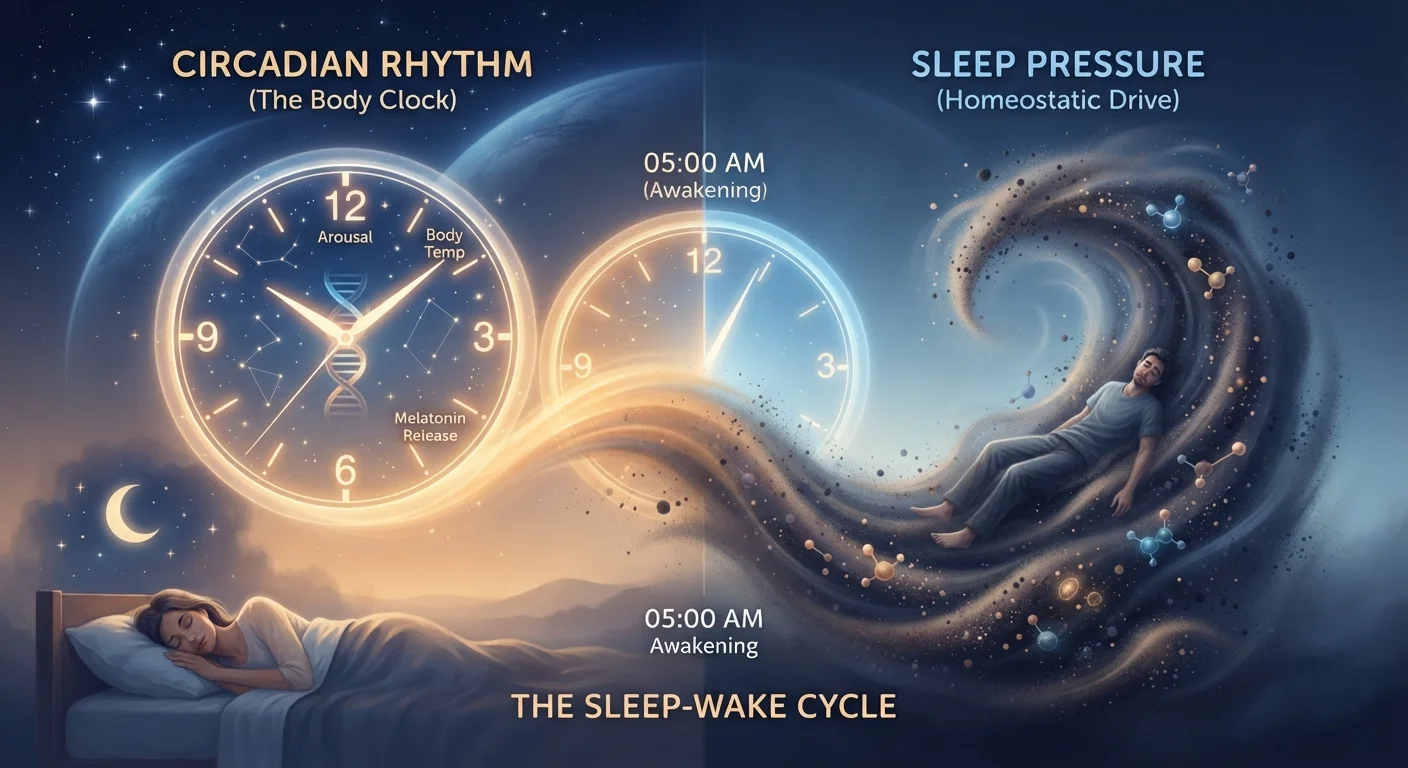
When someone says they're a natural night owl, they're describing more than a preference — they're referencing a real biological difference in how their circadian system is timed. The circadian clock is a molecular feedback loop involving several core clock genes, including PER1, PER2, CLOCK, and BMAL1. Variations in these genes influence when your brain signals the release of melatonin, the hormone that promotes sleep onset, and when it ramps up cortisol to encourage waking.
A landmark genome-wide association study published in Nature Communications (Jones et al., 2019) identified over 350 genetic loci associated with morning or evening preference — confirming that chronotype has a substantial heritable component. This doesn't mean environment plays no role, but it does mean the baseline is set, in part, before you ever develop a routine.
Understanding your body clock provides important context here: the circadian system isn't just about sleepiness. It also governs body temperature rhythms, digestive timing, immune function, and hormone secretion — which is why misaligning your schedule with your biology can ripple outward into multiple systems.
The Spectrum of Chronotypes — and How Age Reshapes It
Most people think of chronotypes as a binary — morning person or night person — but the distribution is actually a bell curve. Roughly 25–30% of people fall toward the clear morning or clear evening poles, while the majority land somewhere in the intermediate range. Researchers sometimes use a four-category model (morning, intermediate morning, intermediate evening, evening) for greater precision.
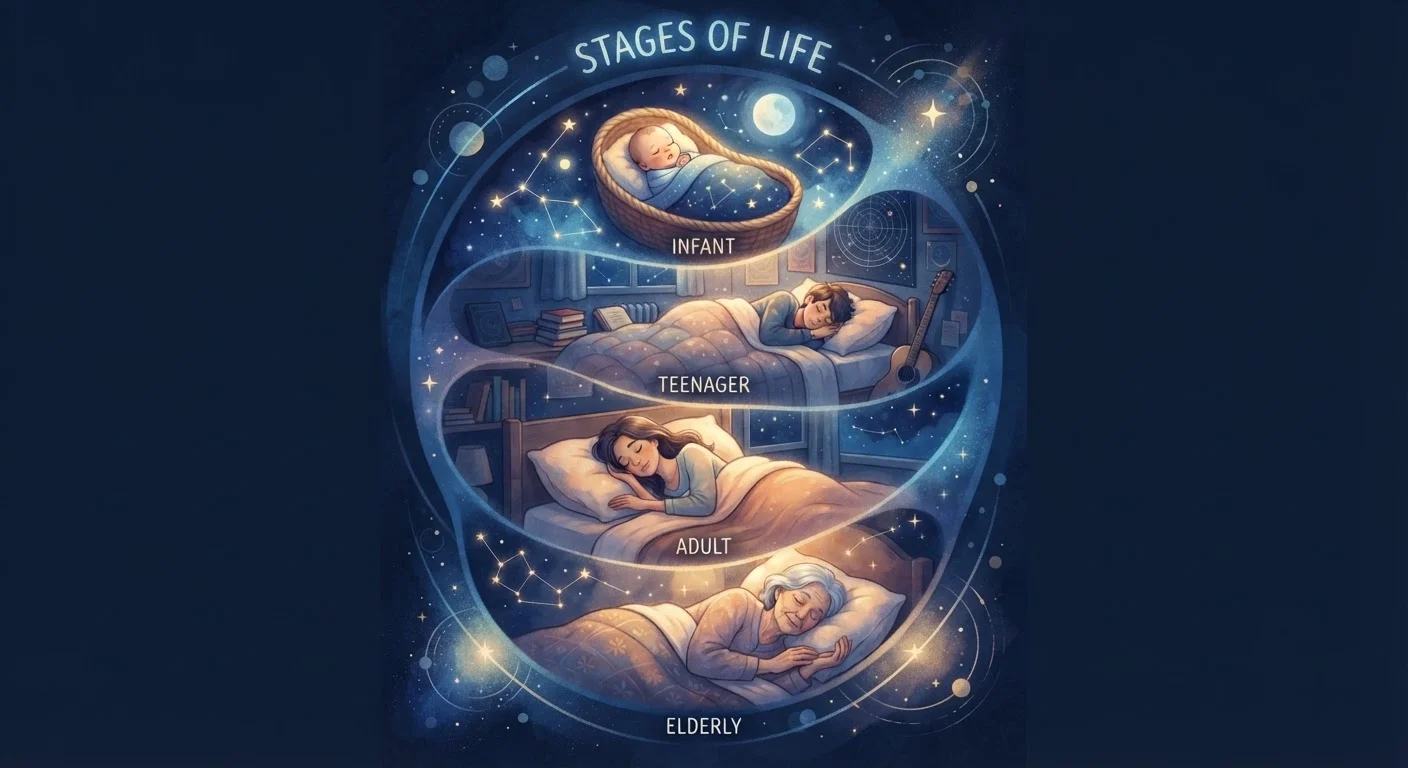
Age is one of the most powerful modulators of chronotype. As detailed in research on how sleep architecture shifts across a lifetime, adolescents undergo a well-documented phase delay — a biologically driven push toward later sleep and wake times that typically peaks in the late teens and early twenties. This isn't laziness; it reflects changes in both circadian gene expression and the timing of melatonin onset during puberty. After the mid-twenties, most people gradually shift earlier again, a trend that continues through older adulthood.
350+
Genetic loci linked to morning/evening preference
A 2019 genome-wide association study published in Nature Communications identified over 350 genetic variants associated with chronotype across hundreds of thousands of participants.
~2 hrs
Peak phase delay during adolescence
Chronobiological research shows adolescent circadian timing shifts approximately two hours later compared to childhood, driven by biological changes during puberty.
~40%
Adults reporting moderate to high social jetlag
Research by Till Roenneberg and colleagues suggests a substantial proportion of working adults experience meaningful misalignment between biological sleep timing and social schedules.
Sex differences also emerge after puberty: males tend to show a more pronounced evening preference during adolescence and young adulthood, while females shift earlier at a younger age. These patterns converge more closely after age 50, suggesting a hormonal component to the trajectory.
Social Jetlag: When Society and Biology Clash
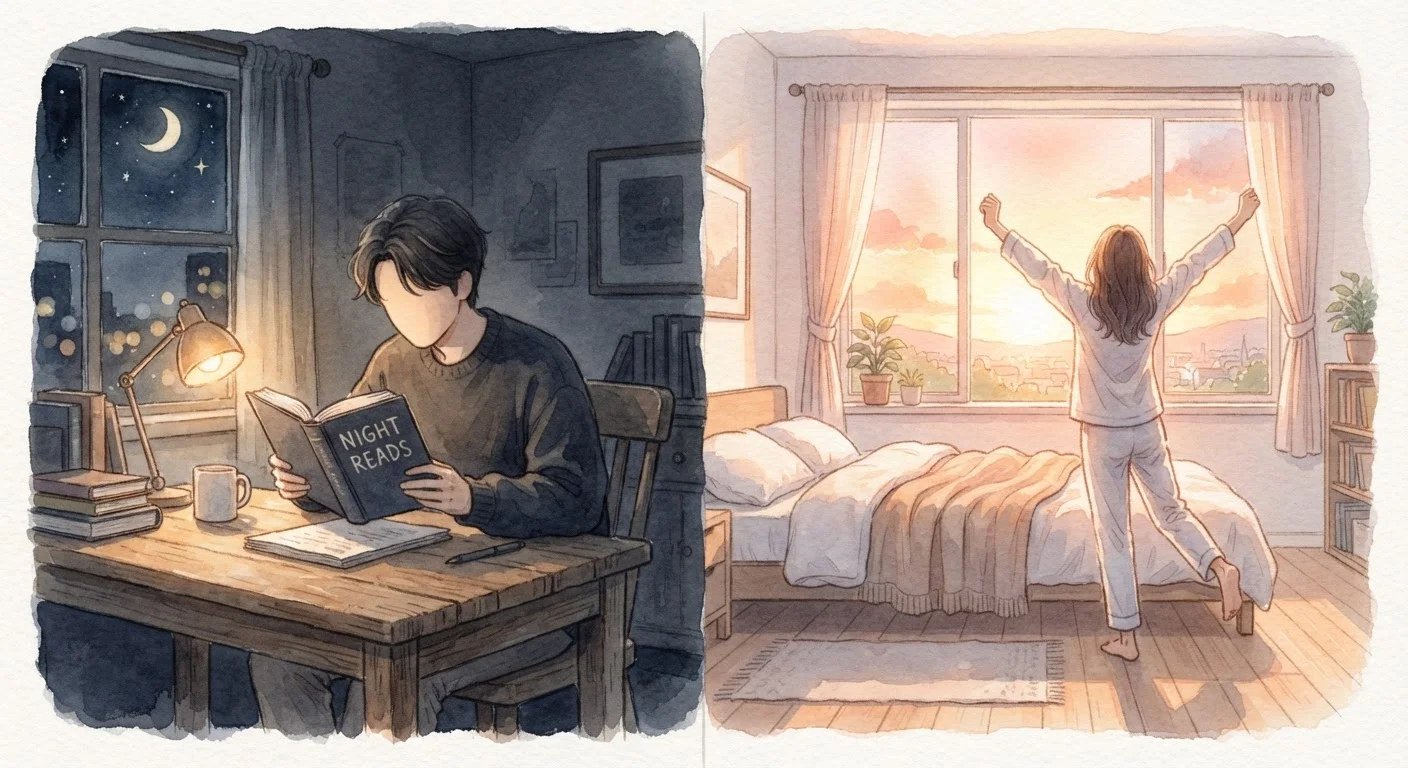
The term social jetlag — coined by chronobiologist Till Roenneberg — describes the chronic misalignment between a person's biological sleep timing and the schedule imposed by work, school, or social obligations. A confirmed night owl who must wake at 6 a.m. for a 9-to-5 job is essentially crossing time zones every weekday without traveling anywhere.
The consequences are measurable. Research published in Current Biology has linked greater degrees of social jetlag to higher rates of obesity, metabolic disruption, cardiovascular risk markers, and depressive symptoms — independent of total sleep duration. In other words, it's not just about how many hours you sleep, but whether you're sleeping at the right time for your biology.
“Social jetlag — the discrepancy between biological and social clocks — is a widespread disruption in industrialized societies, and its consequences for health deserve far more attention than they currently receive.”
— Till Roenneberg, Chronobiologist, Ludwig Maximilian University of Munich; developer of the Munich ChronoType Questionnaire
This connects to why chronotype also shapes mood and cognitive performance across the day. Mood fluctuations throughout the day are partly circadian in origin — a night owl forced into an early schedule may show cognitive deficits and lower mood not because they slept too little, but because they're operating in the wrong phase of their biological cycle.
What You Can — and Can't — Do About Your Chronotype
Given the genetic foundation of chronotype, dramatic self-reprogramming is not realistic for most people. However, the circadian clock is sensitive to external cues — known as zeitgebers (German for "time-givers") — with light being by far the most potent.
Morning bright light exposure (ideally natural sunlight within an hour of waking) suppresses residual melatonin and advances the circadian phase, which can help evening types shift their sleep window earlier by one to two hours over several weeks. Conversely, avoiding bright and blue-spectrum light in the two hours before bed reduces the circadian-delaying signal that screens and overhead lighting commonly deliver. How morning and evening light differently shape sleep covers these mechanisms in greater detail.
Consistent sleep and wake times — even on weekends — reduce social jetlag by keeping your biological clock anchored. Physical activity, meal timing, and social interactions are secondary zeitgebers that can provide modest additional support for circadian alignment.
For people whose chronotype misalignment is severe enough to impair functioning — a condition sometimes classified as Delayed Sleep-Wake Phase Disorder (DSWPD) — evidence-based clinical interventions exist, including structured light therapy protocols and chronotherapy. These should be pursued under the guidance of a sleep specialist or physician, not attempted independently.
This article is for general informational purposes only and does not constitute medical advice. If sleep timing or quality is significantly affecting your health or daily functioning, please consult a qualified healthcare professional.