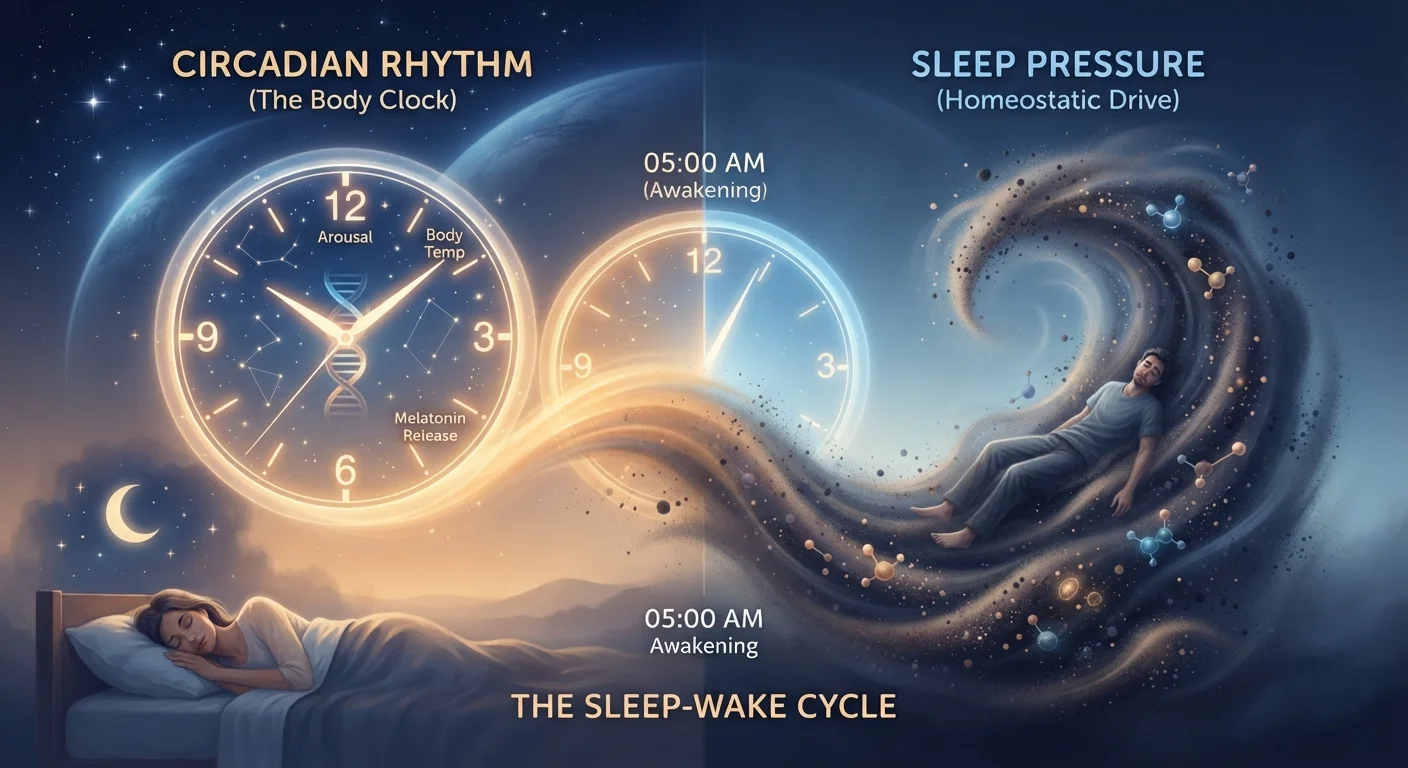

Why Weekend Sleep-Ins Feel So Good — and Why That's Misleading
After five days of alarm clocks and early meetings, Saturday morning's extra hours in bed feel like a genuine reset. That sensation isn't entirely wrong — extra sleep does reduce subjective sleepiness and can temporarily sharpen reaction time. But feeling better and being fully recovered are not the same thing, and the gap between those two states is where most weekend sleep myths take root.
Sleep debt — the cumulative shortfall between the sleep your body needs and the sleep it actually gets — is a real physiological phenomenon. Research published in journals such as Sleep and Current Biology has shown that the cognitive impairments from sustained short sleep don't simply evaporate after one or two extended nights. Some performance deficits, particularly in sustained attention and working memory, can persist well into a recovery week even after subjects report feeling alert again.
Understanding the distinction between perceived recovery and measured recovery is the foundation for evaluating the myths below. For a broader look at how common sleep beliefs hold up to scrutiny, see sleep rules researchers actually dispute.
Common Myths — and What the Evidence Actually Shows
The following myth-and-fact pairs address the most persistent misconceptions about weekend sleep, grounded in peer-reviewed sleep science and clinical consensus.
Myth
You can fully 'pay back' a week of short sleep by sleeping in on the weekend.
Fact
Weekend recovery sleep reduces sleepiness but does not fully reverse all cognitive and metabolic consequences of chronic sleep debt.
Studies tracking participants through extended sleep restriction followed by recovery sleep find that while mood and self-reported alertness rebound fairly quickly, objective measures — reaction time, sustained attention, and certain metabolic markers — lag behind. A widely cited study in Current Biology (2019) found that participants who caught up on sleep over the weekend still showed disrupted metabolic function and weight-related changes compared to those who maintained consistent sleep schedules. Full recovery of some neurological functions may require more recovery nights than a single weekend provides.
Myth
Sleeping in on weekends is harmless as long as you feel rested afterward.
Fact
Regularly shifting your sleep schedule between weekdays and weekends creates 'social jetlag,' which is linked to increased risks for metabolic and cardiovascular health concerns.
Social jetlag — a term coined by chronobiologist Till Roenneberg — describes the misalignment between your body's internal clock and your social schedule. Even a one- to two-hour shift in sleep timing across the week has been associated in epidemiological research with elevated markers of cardiovascular risk, poorer mood, and greater fatigue during the workweek. The body's circadian system regulates far more than sleep timing; it coordinates hormone release, immune function, and glucose metabolism, all of which can be disrupted by an irregular schedule. See widely believed sleep myths for more on how circadian misalignment affects health.
Myth
More sleep is always better, so an extra two or three hours on weekends is a net positive.
Fact
Sleeping significantly beyond your habitual duration — especially past 9–10 hours regularly — is associated with poorer health outcomes, and excessive weekend sleep can worsen Monday fatigue.
Epidemiological data consistently show a U-shaped relationship between sleep duration and health outcomes: both very short and very long sleep are associated with elevated risks. Consistently sleeping well over nine hours is linked with increased risk for cardiovascular disease and depression, though researchers note this may partly reflect underlying illness rather than cause. More immediately practical: overshooting your normal wake time by two-plus hours on weekends delays your circadian phase, making Sunday night harder to fall asleep and Monday morning more difficult — sometimes called the 'Monday morning effect.' For a full picture of what sleep extremes signal, see short sleep vs. long sleep.
Myth
If you slept poorly all week but feel fine after the weekend, your body has fully recovered.
Fact
Subjective feelings of recovery often outpace objective cognitive recovery; people commonly underestimate their own impairment after sleep debt.
This is one of the more counterintuitive findings in sleep science: as sleep debt accumulates, people's ability to accurately assess their own impairment declines. Research from the laboratory of David Dinges at the University of Pennsylvania demonstrated that chronically sleep-restricted individuals rated themselves as only mildly sleepy even while performing significantly below baseline on objective tasks. The same blind spot applies to recovery: after a weekend of extra sleep, subjective alertness can return to normal before neurobehavioral performance fully catches up. Trusting how you feel alone is an unreliable indicator of true recovery.
Myth
Teenagers and young adults who sleep in on weekends are just being lazy.
Fact
Adolescents undergo a genuine biological shift toward later sleep timing, meaning standard school schedules often impose chronic sleep restriction that weekend sleep partially compensates for.
Puberty triggers a circadian phase delay — a well-documented biological shift that makes it genuinely harder for adolescents to fall asleep before 11 p.m. and to wake early. When school start times require 6–7 a.m. wake-ups, many teenagers accumulate significant sleep debt during the week. Their weekend sleep-ins are partly a biological correction, not a character flaw. Major medical organizations, including the American Academy of Pediatrics, have called for later school start times specifically on the basis of this sleep science. The behavior still carries some social jetlag risk, but the root cause is a structural schedule mismatch, not willful laziness.
For a deeper comparison of two popular short-term fixes, the article napping vs. sleeping in walks through how each strategy affects sleep drive and mood after a rough night.
Building a Sleep Routine That Actually Works
The evidence points in a consistent direction: regularity matters more than weekend volume. Anchoring your wake time — even on weekends — within about an hour of your weekday schedule helps stabilize your circadian rhythm, reduces social jetlag, and makes falling asleep on Sunday night far easier.
If weekday sleep is genuinely short due to work or caregiving demands, a targeted short nap (generally under 30 minutes) earlier in the day tends to reduce sleep pressure with less circadian disruption than sleeping two-plus hours past your normal wake time. Evening habits that undermine restful sleep are often the more addressable lever — reducing screen exposure, managing caffeine timing, and winding down consistently can reclaim meaningful sleep minutes on weekday nights.
If you find yourself consistently needing large amounts of weekend recovery sleep, that pattern is worth discussing with a healthcare provider. It may signal an underlying sleep disorder, insufficient sleep opportunity during the week, or other health factors that deserve professional evaluation — not just a longer Saturday morning.
This article is for general informational and educational purposes only and is not a substitute for professional medical advice, diagnosis, or treatment. Always consult a qualified healthcare provider with questions about your sleep or health.