Why Sleep and Immunity Are Inseparable
For decades, scientists have observed that sick people sleep more and that sleep-deprived people get sick more often. What was once considered a simple association is now understood to reflect a deeply integrated biological relationship. The immune system is not a passive bystander during sleep — it is actively working, and sleep provides the conditions it needs to function well.
Research published in peer-reviewed journals including Sleep and PLOS ONE has established that even a single night of restricted sleep reduces circulating natural killer cells — immune cells that target virus-infected and abnormal cells. Repeated short sleep compounds these effects, eroding baseline immune competence over time. For a broader look at how daily patterns affect immune resilience, see everyday habits that quietly weaken immune function.
~3×
Higher cold risk with under 7 hours sleep
A controlled exposure study published in Sleep (2015) found participants sleeping fewer than six hours were about four times more likely to develop a cold than those sleeping seven or more hours.
<50%
Antibody response in sleep-deprived vaccine recipients
Research has shown that individuals sleeping under six hours before and after vaccination produced less than half the antibody levels compared to well-rested participants.
7–9 hrs
Recommended adult sleep for immune health
Major sleep medicine organizations, including the American Academy of Sleep Medicine, recommend seven to nine hours of nightly sleep for most adults.
The Molecular Machinery: Cytokines and Immune Memory
At the heart of the sleep-immunity connection are cytokines — small signaling proteins that coordinate immune responses and also regulate sleep architecture. Key cytokines including interleukin-1β (IL-1β) and tumor necrosis factor-α (TNF-α) peak during slow-wave sleep, the deepest stage of non-REM sleep. These same molecules promote the deeper, restorative sleep stages in a self-reinforcing loop.
Sleep also plays a documented role in immunological memory — the immune system's ability to recognize and respond rapidly to pathogens it has encountered before. Research has shown that sleep in the hours following vaccination significantly enhances the antibody response. A widely cited study found that participants who slept fewer than six hours the night before receiving an influenza vaccine generated less than half the antibody titer of those who slept seven or more hours. This mechanism likely explains why sleep-deprived populations show reduced vaccine efficacy in real-world settings.
For a detailed examination of what unfolds at the cellular level overnight, see what happens inside your body overnight.
Circadian Timing and Immune Regulation
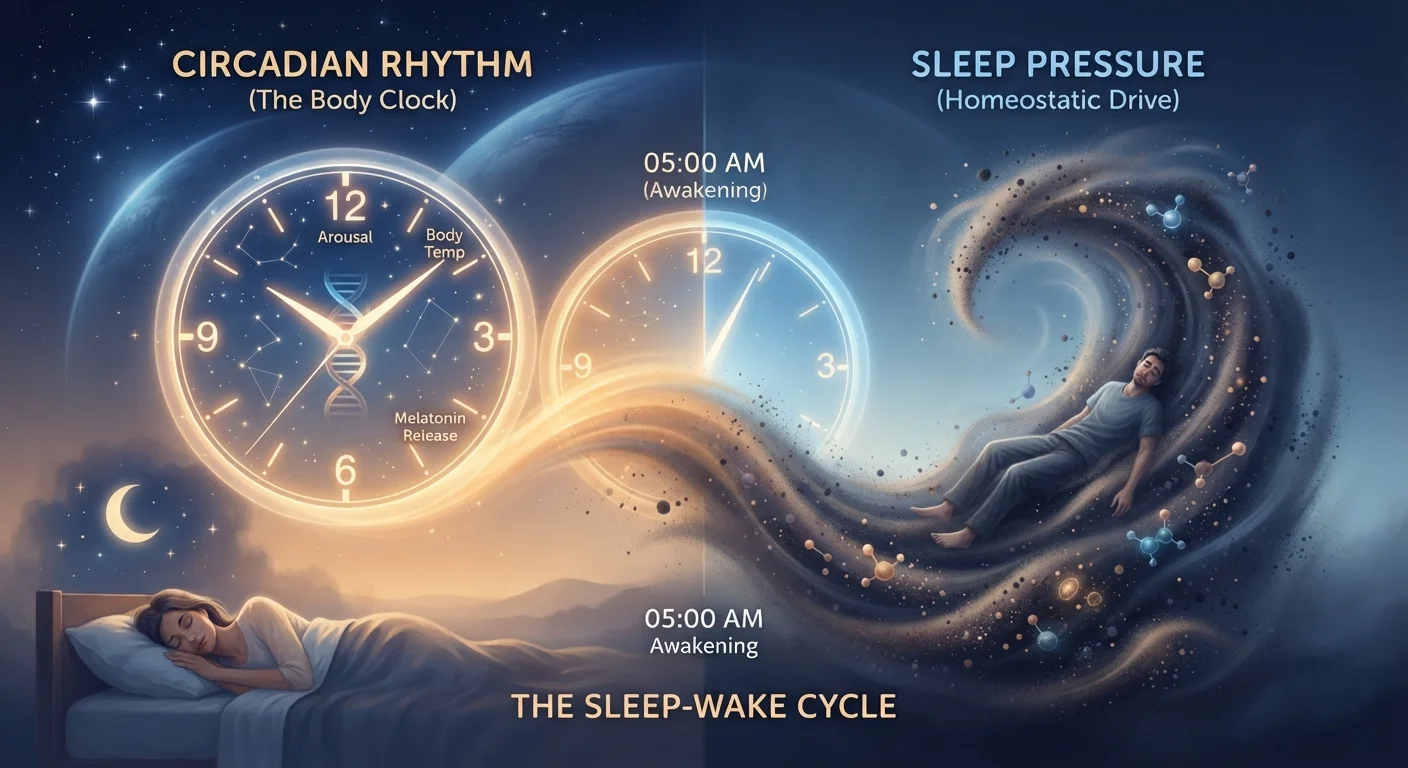
The immune system does not operate on a flat, constant schedule — it follows a circadian rhythm, the roughly 24-hour internal clock that governs nearly every biological process. Immune cell activity, cytokine secretion, and inflammatory responses all vary predictably across the day-night cycle. Disrupting this rhythm — through shift work, chronic irregular sleep schedules, or jet lag — measurably impairs immune function independent of total sleep duration.
This is why sleep consistency matters as much as sleep quantity. Going to bed and waking at irregular times desynchronizes the circadian clock from immune processes, reducing the efficiency of immune surveillance even when total hours are adequate. For a deeper look at this angle, sleep consistency and long-term disease prevention is worth exploring.
Support Immune Function Through Sleep Consistency
Aim to go to bed and wake at the same time each day, even on weekends. A consistent sleep schedule reinforces your circadian rhythm, which helps synchronize immune cell activity to its natural daily pattern. Even a one-to-two hour shift on weekends — sometimes called 'social jet lag' — can measurably disrupt this synchronization over time.
What This Means in Everyday Terms
The science points to a practical reality: protecting sleep is a legitimate health behavior with immune consequences, not merely a lifestyle preference. Adults consistently sleeping fewer than seven hours face elevated risks of respiratory infections, slower recovery from illness, and reduced protection from vaccines — outcomes documented in controlled studies, not just observational data.
Sleep's reach extends beyond immunity as well. Research links inadequate sleep to disrupted metabolic regulation and heightened stress responses. For context on those related mechanisms, see sleep, stress, and metabolic health. Similarly, sleep's role in emotional resilience underscores that immune function is just one of many systems that depend on consistent, quality rest.
This article is for general informational purposes only and does not constitute medical advice. If you have concerns about your immune health, sleep quality, or overall wellness, consult a qualified healthcare professional.