What the Research Actually Says
The term "movement snacking" is relatively new, but the underlying science builds on decades of research into sedentary behavior and the independent effects of physical activity bouts. A growing body of evidence suggests that accumulating movement in short increments can generate meaningful physiological effects — not just as a consolation prize for those who can't make it to the gym, but as a distinct and valuable health behavior.
One consistent finding across multiple studies is that breaking up prolonged sitting — even with very brief movement — blunts the metabolic disruption caused by long sedentary periods. Research published in exercise physiology journals has documented that short walks or light activity after meals are associated with more stable blood glucose levels compared to remaining seated. For people concerned about metabolic health, this is particularly relevant. See how movement fits into a broader prevention framework in our science-backed guide to healthy daily habits.
~30%
Variation in daily calorie burn from NEAT alone
Research in exercise physiology suggests non-exercise activity thermogenesis can vary by roughly 2,000 calories per day between individuals with sedentary versus active lifestyles, according to work by Dr. James Levine at the Mayo Clinic.
Every 30 min
Recommended sedentary break frequency
The American Heart Association and other public health bodies have highlighted interrupting sitting every 30 minutes as a practical target for reducing the health risks associated with prolonged sedentary time.
1–3 min
Minimum bout length showing metabolic effects
Emerging research on "micro-bouts" of physical activity suggests even one to three minutes of brisk movement can produce measurable improvements in post-meal blood glucose response.
The Physiology of Brief Bouts
When you move — even for a minute or two — your muscles contract and demand energy. This triggers a cascade of responses: heart rate rises modestly, blood flow increases, and enzymes involved in fat and glucose metabolism become more active. These responses don't require a long warm-up or sustained effort to begin. Even light-intensity movement initiates measurable changes at the cellular level.
Non-exercise activity thermogenesis (NEAT) — the calories burned through all movement that isn't formal exercise — varies dramatically between individuals and can account for a surprisingly large portion of daily energy expenditure. People with naturally active daily habits, regardless of gym attendance, tend to have higher NEAT levels. Movement snacking is essentially a deliberate effort to increase NEAT.
Repeated brief bouts also appear to support vascular health. Short walks have been associated with improvements in blood pressure and arterial flexibility in some research contexts. While no single snack produces dramatic results, the cumulative effect of consistent, distributed movement throughout the week adds up in ways that passive rest does not.
“The evidence is becoming increasingly clear that it's not just how much you exercise, but how often you break up the time you spend sitting. Small, frequent movements throughout the day matter more than many people realize.”
— Dr. Emmanuel Stamatakis, Professor of Physical Activity, Lifestyle, and Population Health, University of Sydney
Making It Part of Your Day
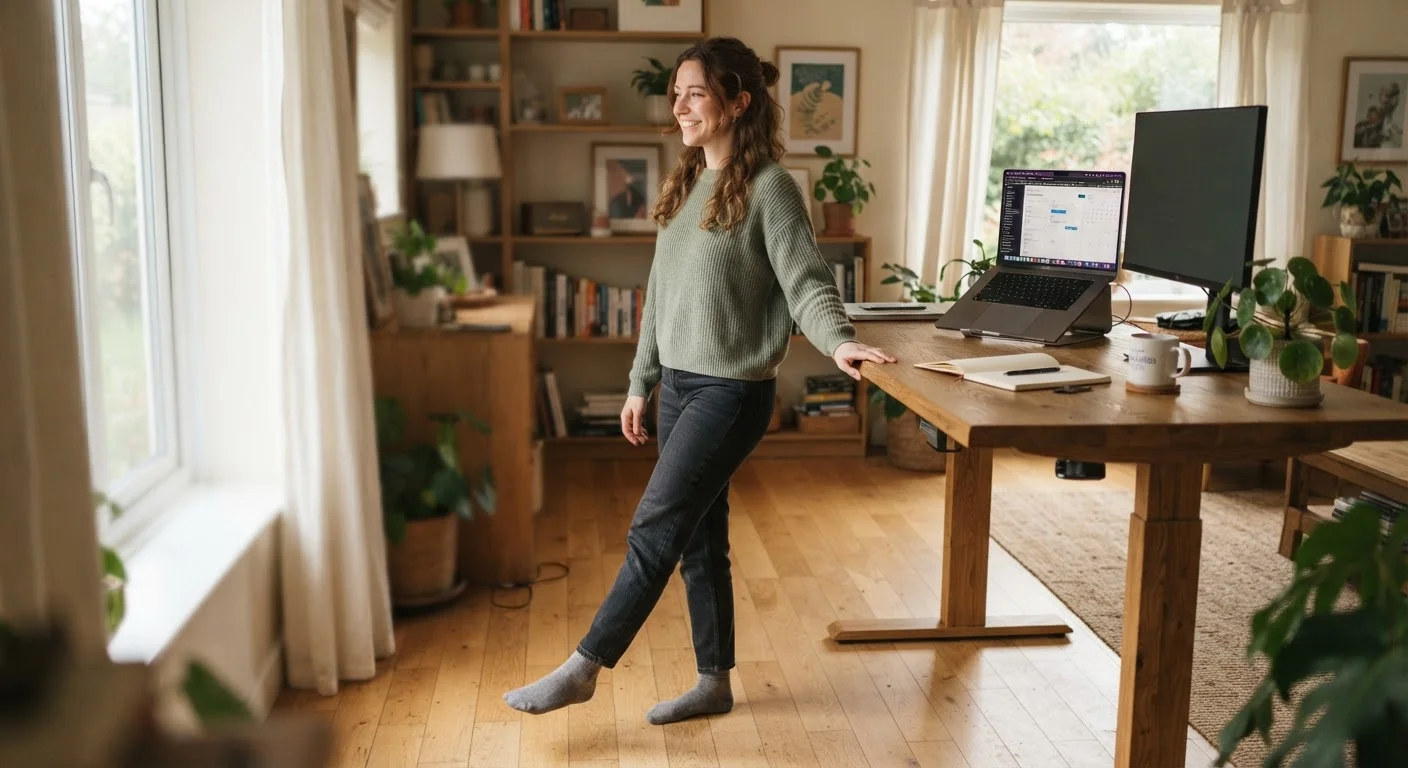
One of the biggest advantages of movement snacking is its low barrier to entry. It doesn't require equipment, a gym membership, or a dedicated time block. The practical challenge is remembering to do it and building reliable cues into your existing routines.
Common strategies include:
- Habit stacking: Pairing a movement snack with an existing habit — doing calf raises while making coffee, or a short walk immediately after lunch.
- Time-based reminders: Setting a phone or watch alert every 45 to 60 minutes as a prompt to stand and move briefly.
- Environmental design: Placing a resistance band near your desk, or choosing to use stairs as a default rather than an option.
- Reframing transitions: Treating the time between tasks or meetings as an opportunity to move rather than scroll.
For a deeper look at how to build these patterns into lasting habits, explore our guide on building active habits that last. And if you're unsure how much incidental movement your current day actually contains, the daily lifestyle audit is a useful starting point.
Movement snacking works well alongside — not instead of — structured exercise. Think of it as adding nutritional value to an already healthy diet. Speaking of which, the concept mirrors what researchers have observed about eating behavior: small, intentional choices distributed across the day tend to support better outcomes than single large efforts. Explore that parallel in our article on snacking with intention.
For those focused on longevity and healthy aging, frequent low-intensity movement throughout the day is one of the habits most consistently associated with functional independence later in life. Our article on daily movement habits that support healthy aging covers this in more depth.
This article is for general informational and educational purposes only and is not a substitute for professional medical advice. Consult a qualified healthcare provider before making changes to your physical activity routine, especially if you have any health conditions.