What 'Intentional' Snacking Actually Means
The word snack covers a wide range of behaviors — from a small handful of almonds between meetings to a full second dinner consumed in front of a screen. What separates helpful snacking from counterproductive snacking is less about the food itself and more about the reason you're eating and the awareness you bring to the moment.
Intentional snacking starts with a simple check-in: Am I actually hungry, or am I bored, stressed, tired, or triggered by habit? Research on eating behavior consistently distinguishes between hunger-driven eating — regulated by physiological signals — and hedonic eating, which is driven by reward, emotion, or environmental cues. Neither is inherently wrong, but conflating the two makes it harder to notice patterns that aren't serving you.
This matters because snacking in the U.S. is widespread. According to dietary survey data from the National Health and Nutrition Examination Survey, a substantial majority of American adults report consuming at least one snack daily, and snacks contribute meaningfully to total daily energy intake. That scale makes it worth thinking about — not with anxiety, but with curiosity.
For a broader look at sustainable food patterns that accommodate snacking naturally, see the case for flexible eating.
When Snacking Works in Your Favor
There are real, evidence-supported situations where eating between meals supports better overall nutrition.
Bridges genuine hunger between widely spaced meals
When meals are four to six or more hours apart, a small snack can prevent the extreme hunger that often leads to faster, less mindful eating at the next meal.
Supports more stable energy throughout the day
A snack combining protein and fiber can moderate natural dips in blood glucose between meals, helping to sustain concentration and mood without a sharp energy crash.
Offers a practical way to meet nutritional gaps
For people who struggle to get enough fruits, vegetables, dairy, or protein through three meals alone, snacks can meaningfully close that gap — if chosen with some care.
Can support higher energy needs in active individuals
People with physically demanding jobs or consistent exercise routines often have caloric and protein needs that are difficult to meet in three meals; snacks provide a natural solution.
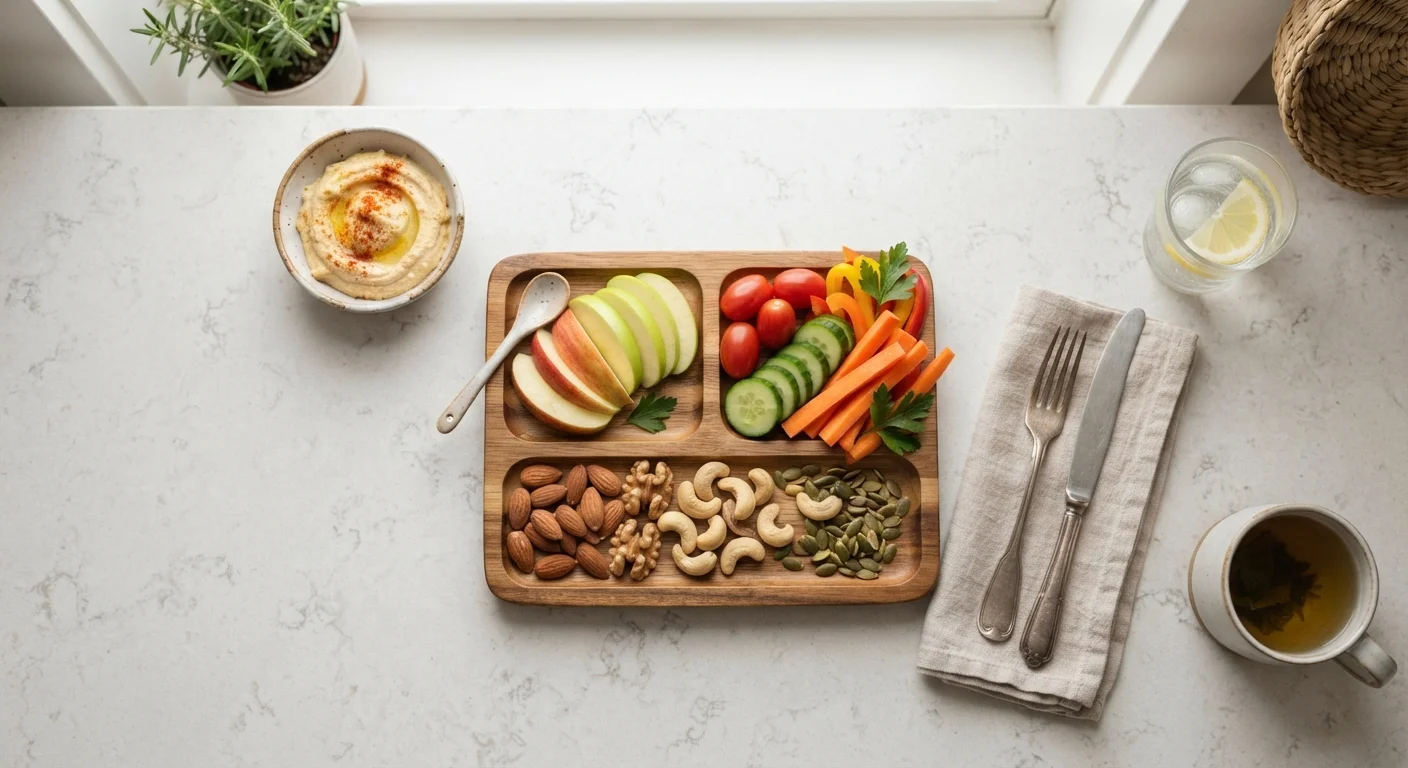
Protein- and fiber-rich snacks — think Greek yogurt, a small apple with nut butter, or raw vegetables with hummus — tend to produce a more sustained sense of fullness than refined carbohydrates alone. This can make it easier to arrive at the next meal without being ravenously hungry, which often leads to faster eating and larger portions.
For people with longer gaps between meals due to work schedules, caregiving demands, or irregular routines, a well-chosen snack can also help maintain concentration and mood. Blood glucose naturally dips several hours after eating; a small snack with protein and fiber can moderate that dip without causing a sharp spike-and-crash cycle.
When Snacking Works Against You
The same behavior that steadies one person's energy can quietly undermine another's eating pattern. Understanding the downsides helps you recognize them without judgment.
Often driven by emotion or habit rather than hunger
Stress, boredom, and routine triggers frequently prompt eating that isn't connected to physical hunger, making it easy to consume extra calories without meaningful nutritional benefit.
Can blunt appetite for more nutritious planned meals
Snacking too close to mealtimes tends to reduce hunger at meals, which can lead to underrating nutrient-dense foods in favor of what was already eaten between meals.
Many common snack foods are highly processed
Packaged snack products are frequently high in sodium, added sugars, and refined starches, meaning the snacking habit — even when hunger-driven — may not add nutritional value.
Distracted snacking undermines awareness of intake
Eating while watching screens or working reduces sensory engagement with food, which research links to underestimating how much was consumed and reduced feelings of satisfaction.
Environmental availability drives overconsumption
Having highly palatable snacks visible and within reach increases eating frequency independent of hunger, a pattern that can accumulate over time in ways that go unnoticed.
One of the most common snacking pitfalls isn't what people eat — it's that they're not actually hungry when they eat it. Emotional eating, habit-driven eating, and distracted eating (scrolling while snacking, for example) all reduce awareness of how much has been consumed. Over time, this can make it harder to recognize genuine hunger and fullness signals.
Environment plays a bigger role than most people realize. Research on food cue reactivity shows that the mere presence of visible, accessible snack foods increases consumption regardless of hunger level — a phenomenon sometimes called "availability eating." This doesn't mean snacks need to disappear from your home, but it's a useful insight for arranging your kitchen. You might also find it interesting to compare snacking to movement snacking, a strategy of brief, frequent activity breaks that some research suggests carries its own set of benefits.
How to Make Snacking Work for You
A Note on Special Populations
Snacking guidance looks different for children, older adults, people managing diabetes or blood sugar conditions, and those who are pregnant or breastfeeding. These groups often have distinct energy, nutrient timing, or blood glucose management needs that general guidance doesn't fully address. If you fall into any of these categories, a registered dietitian or your healthcare provider can offer personalized recommendations tailored to your situation.
A few practical shifts can move snacking from a mindless habit to a genuinely supportive one — without adding rigid rules or calorie counting.
- Check in before eating. A brief pause to assess hunger (not just appetite or craving) is one of the simplest, most effective practices.
- Choose composition over restriction. Pairing a carbohydrate source with protein or healthy fat tends to produce more lasting satisfaction than either alone.
- Reduce distraction. Eating while focused on a screen consistently leads to underestimating intake. Even a few minutes of undistracted eating improves awareness.
- Think about timing. Snacking very close to a planned meal often undermines appetite for that meal. A gap of at least 90 minutes to two hours generally allows hunger to reset.
Snacking doesn't need its own rigid framework — it fits naturally within the kind of balanced eating patterns that nutrition research consistently supports. The goal isn't perfect snacking. It's eating in ways that feel grounded and sustainable over time.
This article is for general informational and educational purposes only and does not constitute medical or dietary advice. If you have specific health concerns, nutritional needs, or a medical condition, please consult a qualified healthcare professional.