
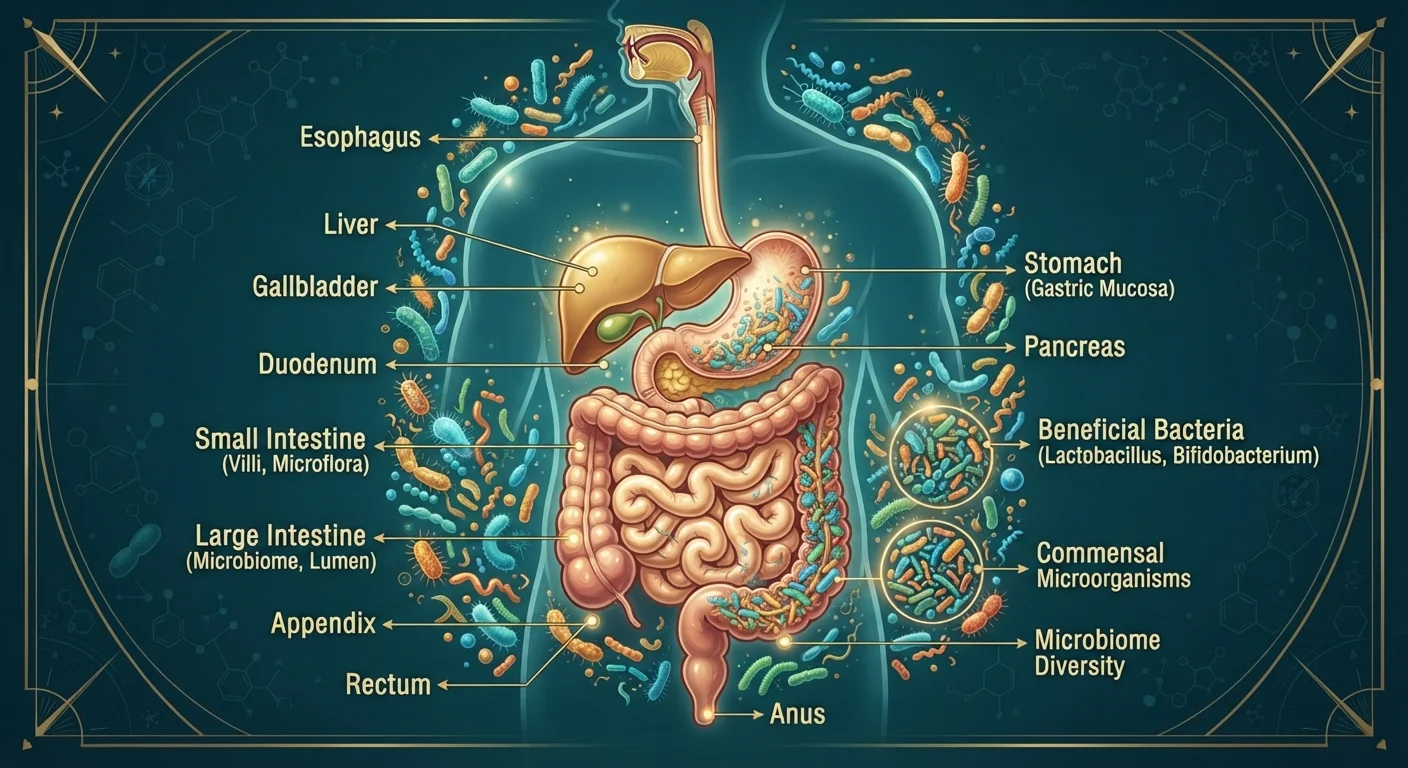
How the Aging Gut Microbiome Differs
The trillions of microorganisms in your gut don't stay static across your lifetime. While the microbiome established in early adulthood tends to be relatively stable, meaningful shifts begin to emerge in later decades. Studies comparing older and younger adults consistently find that individuals over 65 tend to have reduced microbial diversity — fewer distinct bacterial species occupying the gut — alongside changes in which bacterial groups predominate.
For deeper context on how these shifts unfold from infancy through old age, see Gut Health Across Life Stages. Key patterns researchers observe in older adults include a decrease in beneficial short-chain fatty acid–producing bacteria (such as certain Firmicutes species) and a relative increase in pro-inflammatory microbes. These aren't universal — individual variation is substantial — but the general trajectory is well-documented.
Contributing factors include shifts in diet quality, reduced physical activity, increased medication use (particularly antibiotics and proton pump inhibitors), and changes in gut motility and immune function that naturally accompany aging.
The Gut-Inflammation Connection: What Inflammaging Means
One of the most significant ways the aging microbiome affects long-term health is through its relationship with systemic inflammation. Researchers use the term inflammaging to describe the chronic, low-grade inflammatory state that builds with age and is associated with conditions including cardiovascular disease, type 2 diabetes, and cognitive decline.
~70%
Of immune cells located in the gut
Research estimates that approximately 70% of the body's immune cells reside in the gut-associated lymphoid tissue, underscoring the gut's central role in immune regulation.
100+
Trillion microorganisms in the human gut
Current estimates suggest the gut harbors over 100 trillion microbial cells from thousands of species, forming one of the body's most complex ecosystems.
25–40%
Reduction in gut microbial diversity with age
Multiple studies have observed that adults over 65 may experience a meaningful reduction in gut microbial diversity compared to younger adults, though individual variation is substantial.
The gut microbiome sits at the center of this dynamic. A less diverse microbial community produces fewer of the anti-inflammatory short-chain fatty acids — such as butyrate — that help maintain the gut's protective lining. When that lining becomes more permeable, bacterial byproducts can enter circulation and trigger immune responses that contribute to systemic inflammation. Understanding this mechanism is part of why researchers studying the gut-immune axis consider microbiome health foundational to aging well.
Diet as a Primary Lever for Gut Health at Any Age
Among all the factors that shape the gut microbiome, diet is the most modifiable. What you eat day to day — not occasional additions of trendy foods — appears to have the most sustained influence on microbial composition. As detailed in Gut Health Basics, consistent dietary patterns matter far more than isolated choices.
Prioritize Variety in Plant Foods
Research suggests that eating a wider variety of plant-based foods — rather than large amounts of a single type — is associated with greater gut microbial diversity. Aiming for a broad range of vegetables, fruits, legumes, and whole grains across the week may be more beneficial than focusing on any single 'superfood.' Speak with a registered dietitian if you need guidance tailored to your health needs.
Fiber is particularly well-supported by research. Diverse plant-based fibers act as prebiotics — fuel for beneficial gut bacteria — and their fermentation produces the butyrate and other short-chain fatty acids associated with gut barrier integrity and immune regulation. Dietary fiber's broader role in gut and immune health encompasses far more than basic digestion. Fermented foods provide live microorganisms that some studies associate with increased microbiome diversity, though individual responses vary. Limiting ultra-processed foods, which are low in fiber and associated with reduced microbial diversity, is also consistently highlighted in the literature.
This article is for general informational purposes only and does not constitute medical advice. Always consult a qualified healthcare professional before making significant changes to your diet, supplement use, or health routine.
What the Research Means for Healthy Aging Decisions
The science linking gut microbiome health to longevity is compelling, but it's worth understanding its current limits. Most human studies are observational — they identify associations between microbiome diversity and health outcomes, but establishing direct causation remains an active area of investigation. As outlined in The Science of Longevity, the factors driving long, healthy lives are multifactorial and deeply interconnected.
What the consensus does support is that adopting fiber-rich dietary patterns, staying physically active, managing medication use thoughtfully with your doctor, and avoiding unnecessary antibiotic use all serve both gut health and broader health goals simultaneously. Aligning these habits with your life stage — as explored in Longevity Habits Across Every Decade — offers a practical framework for action. For those seeking to understand specific terminology used in gut health research, the gut and immune health glossary provides a useful reference.