
Two Types of Fiber, Two Distinct Jobs
Fiber is not a single nutrient — it is a diverse family of plant compounds that behave differently in the body. Understanding the two main categories helps explain why variety in plant food intake matters more than any single source.
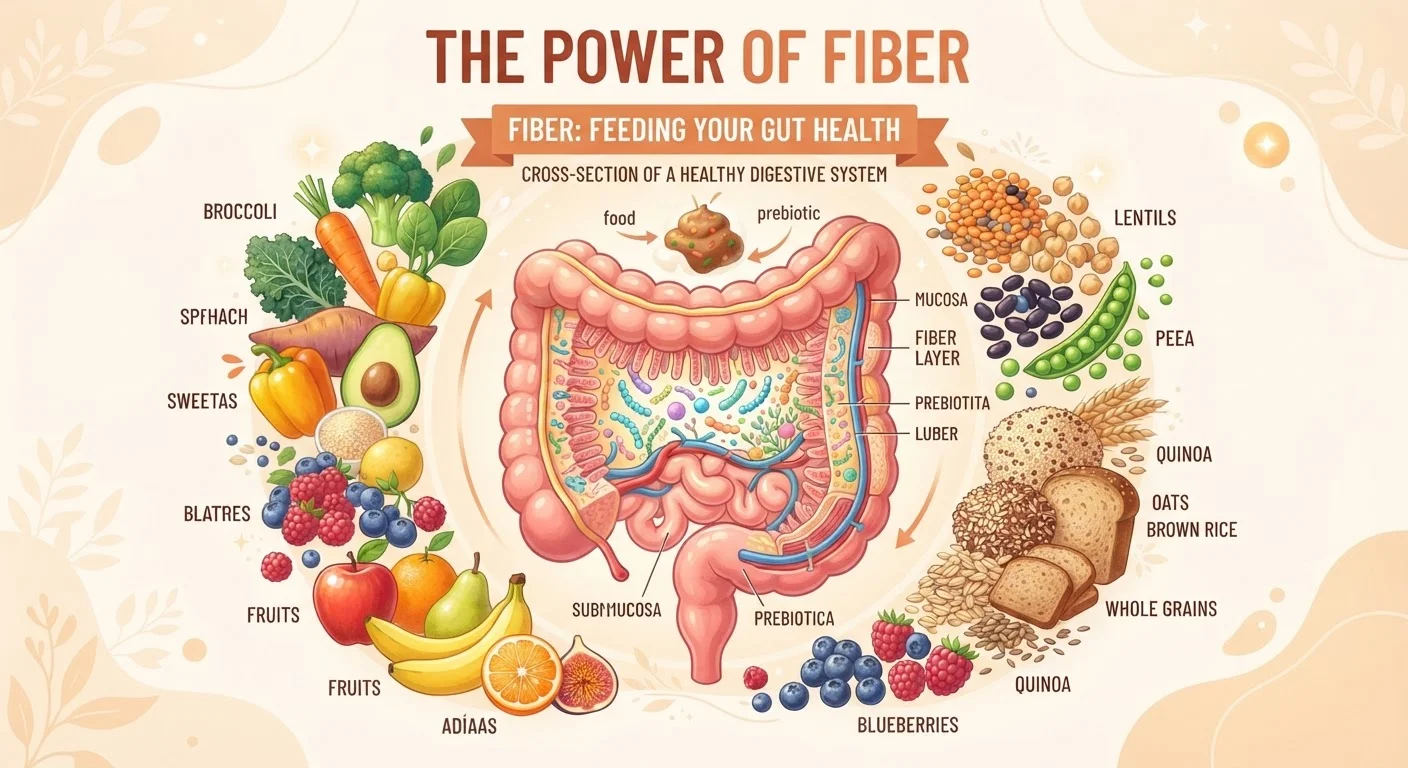
Soluble fiber dissolves in water to form a viscous gel in the intestine. This slows digestion, helps moderate blood sugar responses after meals, and supports cholesterol management. Oats, barley, apples, and legumes are well-known sources. Insoluble fiber, found in wheat bran, vegetable skins, and many whole grains, does not dissolve. It adds bulk and promotes regular movement of material through the digestive tract, reducing the time waste spends in the colon.
A third, overlapping category — prebiotic fiber — includes specific compounds like inulin and fructooligosaccharides that selectively feed beneficial bacteria. Foods such as garlic, onions, leeks, asparagus, and chicory root are particularly rich in these compounds. For a deeper look at how these interactions unfold, see our gut and immune health glossary.
How Fiber Feeds Your Microbiome
The gut microbiome — the trillions of bacteria, fungi, and other microorganisms residing in the digestive tract — depends heavily on fiber as a primary fuel source. When fiber reaches the colon undigested, resident bacteria ferment it, producing metabolites called short-chain fatty acids (SCFAs), primarily acetate, propionate, and butyrate.
Butyrate, in particular, has attracted significant research attention. It serves as the preferred energy source for colonocytes (the cells lining the colon), helps maintain the integrity of the gut barrier, and plays a role in modulating local and systemic immune responses. A compromised gut barrier — sometimes described as increased intestinal permeability — is associated with higher levels of systemic inflammation, though the clinical significance of this relationship is still being studied.
~5%
U.S. adults meeting daily fiber recommendations
According to data cited by the American Society for Nutrition, fewer than 1 in 20 American adults consistently meet recommended daily fiber intake targets.
25–38g
Recommended daily fiber intake for adults
The Dietary Guidelines for Americans recommend 25 grams per day for women and 38 grams per day for men, with adjustments based on age and caloric intake.
~70%
Of immune tissue located in or near the gut
Research on gut-associated lymphoid tissue (GALT) consistently places the majority of the body's immune infrastructure within the gastrointestinal system.
Greater diversity in fiber sources tends to support greater microbial diversity, which is generally associated with more resilient gut health. This principle underlies the recommendation to eat a wide variety of plant foods rather than relying on a single high-fiber option. Principles for building a gut-supportive eating pattern outline how to apply this in practice without an overly rigid approach.
Fiber's Connection to Immune Regulation
Roughly 70% of the body's immune tissue is located in or around the gut, a region known as gut-associated lymphoid tissue (GALT). This proximity means that what happens in the gut does not stay in the gut — microbial signals actively communicate with immune cells, shaping how the immune system responds to both pathogens and harmless substances.
SCFAs produced from fiber fermentation interact with immune receptors, influencing the production of anti-inflammatory compounds and helping regulate the balance between immune activation and tolerance. Research published in journals such as Nature and Cell Host & Microbe has highlighted these pathways, though much of the mechanistic work remains in early or animal-model stages. Translating these findings to firm clinical recommendations for humans is an active area of investigation.
What is well established is that low fiber intake is consistently linked with lower microbiome diversity and markers of chronic low-grade inflammation — both of which are recognized risk factors for conditions including type 2 diabetes, cardiovascular disease, and certain cancers. For a broader view of this relationship, explore how the gut-immune axis functions.
“The data consistently show that populations consuming more plant-based, fiber-rich diets have lower rates of inflammatory disease — and the microbiome appears to be a central mediator of that relationship.”
— Justin Sonnenburg, Professor of Microbiology and Immunology, Stanford University School of Medicine
Practical Steps to Close the Fiber Gap
National survey data from the CDC consistently show that most American adults fall well short of recommended daily fiber intake — a gap with real implications for long-term health. Closing it does not require dramatic dietary overhauls.
- Start with breakfast: Choosing oats, whole-grain toast, or adding berries to meals is one of the easiest ways to increase fiber early in the day.
- Add legumes regularly: Lentils, black beans, and chickpeas are among the most fiber-dense foods available and integrate easily into soups, salads, and grain bowls.
- Keep the skin on: The skins of apples, potatoes, and other produce are often where insoluble fiber concentrates.
- Increase gradually: Sudden large increases in fiber can cause gas and bloating. A gradual ramp-up alongside adequate water intake eases the adjustment.
Fiber and fermented foods can work synergistically — fiber feeds the bacteria that fermented foods introduce. See what the research says about fermented foods for a balanced look at that evidence. As we age, maintaining adequate fiber intake also becomes increasingly relevant to microbiome health; learn how the gut microbiome shifts with age and what that means for long-term vitality.
This article is for general informational and educational purposes only and is not a substitute for professional medical advice, diagnosis, or treatment. Always consult a qualified healthcare provider with questions about your diet, digestive health, or any medical condition.