
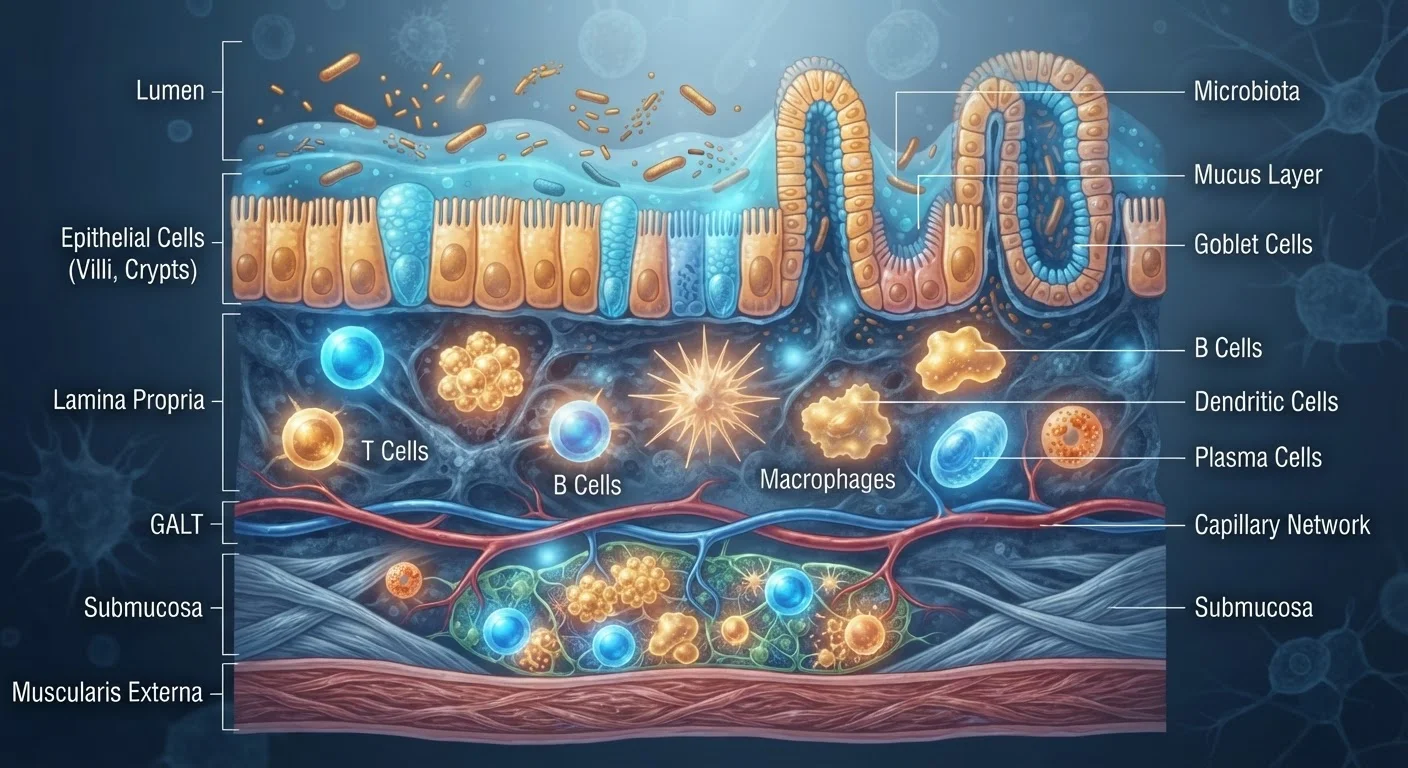
Your Gut Is an Immune Organ
Most people think of the immune system as existing in the bloodstream or lymph nodes. In reality, an estimated 70% of immune tissue resides in and around the gastrointestinal (GI) tract, in a network collectively called gut-associated lymphoid tissue (GALT). Structures like Peyer's patches — small clusters of immune cells embedded in the intestinal wall — continuously sample gut contents, flagging pathogens while tolerating food proteins and beneficial bacteria.
This makes the gut the body's most active immune interface. Every meal introduces foreign material, and the gut must rapidly decide what is a threat and what is not. That decision-making is deeply shaped by the trillions of microorganisms — bacteria, fungi, viruses, and other microbes — that make up the gut microbiome.
For a broader foundation on how immunity works beyond the gut, see our overview of immune health fundamentals.
~70%
Of immune tissue located in the gut
Estimates from gastroenterology and immunology research consistently place the majority of the body's immune tissue in and around the gastrointestinal tract.
38 trillion
Estimated microbial cells in the human gut
A widely cited 2016 estimate by Sender et al. in Cell placed the number of microbial cells in the body roughly equal to — or slightly exceeding — the number of human cells.
500–1,000+
Bacterial species in a healthy gut microbiome
Research published in Nature and other peer-reviewed journals indicates that a diverse microbiome with hundreds of species is associated with stronger immune regulation.
How the Microbiome Trains Your Immune System
The relationship between gut microbes and immune cells is not passive — it is an ongoing, dynamic conversation. Beneficial bacteria produce metabolites such as short-chain fatty acids (SCFAs), which signal immune cells to reduce unnecessary inflammation. They also help maintain the integrity of the gut epithelium, the thin cellular lining that acts as a barrier between gut contents and the bloodstream.
When microbial diversity declines — a state known as dysbiosis — this signaling breaks down. Immune cells may become either overactive (driving inflammation) or under-responsive (missing real threats). Research published in peer-reviewed immunology journals has associated dysbiosis with increased susceptibility to infections, allergies, and systemic inflammatory conditions.
Crucially, the microbiome also educates immune cells early in life about what is "self" versus "foreign," helping prevent misguided immune attacks. This is why early-life microbiome exposure — influenced by birth method, breastfeeding, and antibiotic use — is considered a significant factor in long-term immune calibration, according to NIH-supported research.
Unfamiliar with the terminology? Our gut and immune health glossary defines key terms like mucosal immunity and dysbiosis in plain language.
What Disrupts the Gut-Immune Axis
Several everyday factors can shift the microbiome toward dysbiosis, with downstream effects on immunity:
- Diet low in fiber: Dietary fiber feeds beneficial bacteria. Diets heavy in ultra-processed foods and low in plant diversity are consistently associated with reduced microbial richness in population studies.
- Antibiotic use: Antibiotics are essential medicines, but broad-spectrum courses can substantially reduce microbial diversity for weeks to months. This does not mean avoiding necessary antibiotics — it means understanding the recovery period that follows.
- Chronic stress: Stress hormones, particularly cortisol, alter gut motility and bacterial composition. See our detailed explainer on how stress and cortisol affect gut health for a deeper look.
- Poor sleep: Sleep deprivation is associated with both microbiome disruption and impaired immune response, according to research cited by the CDC and NIH.
Understanding these pathways is valuable not for alarm, but for practical prevention — because many of these factors are modifiable.
Supporting the Gut-Immune Connection Through Daily Habits
The evidence base for gut-immune health points to consistent, foundational habits rather than any single supplement or superfood. A varied diet rich in fiber from vegetables, legumes, whole grains, and fruit is among the most robustly supported strategies for maintaining microbial diversity. Fermented foods such as yogurt and kimchi introduce live cultures and have been studied for their effects on microbiome composition, though individual responses vary.
Physical activity, adequate sleep, and stress reduction also appear in the research as meaningful contributors to gut and immune resilience. None of these are dramatic interventions — which is precisely the point. The gut-immune axis is maintained through daily consistency, not periodic overhauls.
For a grounded look at which specific eating patterns the research actually supports, explore our guide on everyday eating patterns and gut health. And because the microbiome changes significantly as we age, the gut microbiome's role in healthy aging is especially relevant for adults thinking about long-term vitality.
This article is for general informational and educational purposes only and does not constitute medical advice. Always consult a qualified healthcare professional for guidance specific to your health situation.