What Each Approach Actually Is
Mindfulness has become a broad term used to describe everything from a five-minute breathing exercise to a hospital-based therapeutic program. Understanding the difference matters — especially if you're trying to decide what fits your needs.
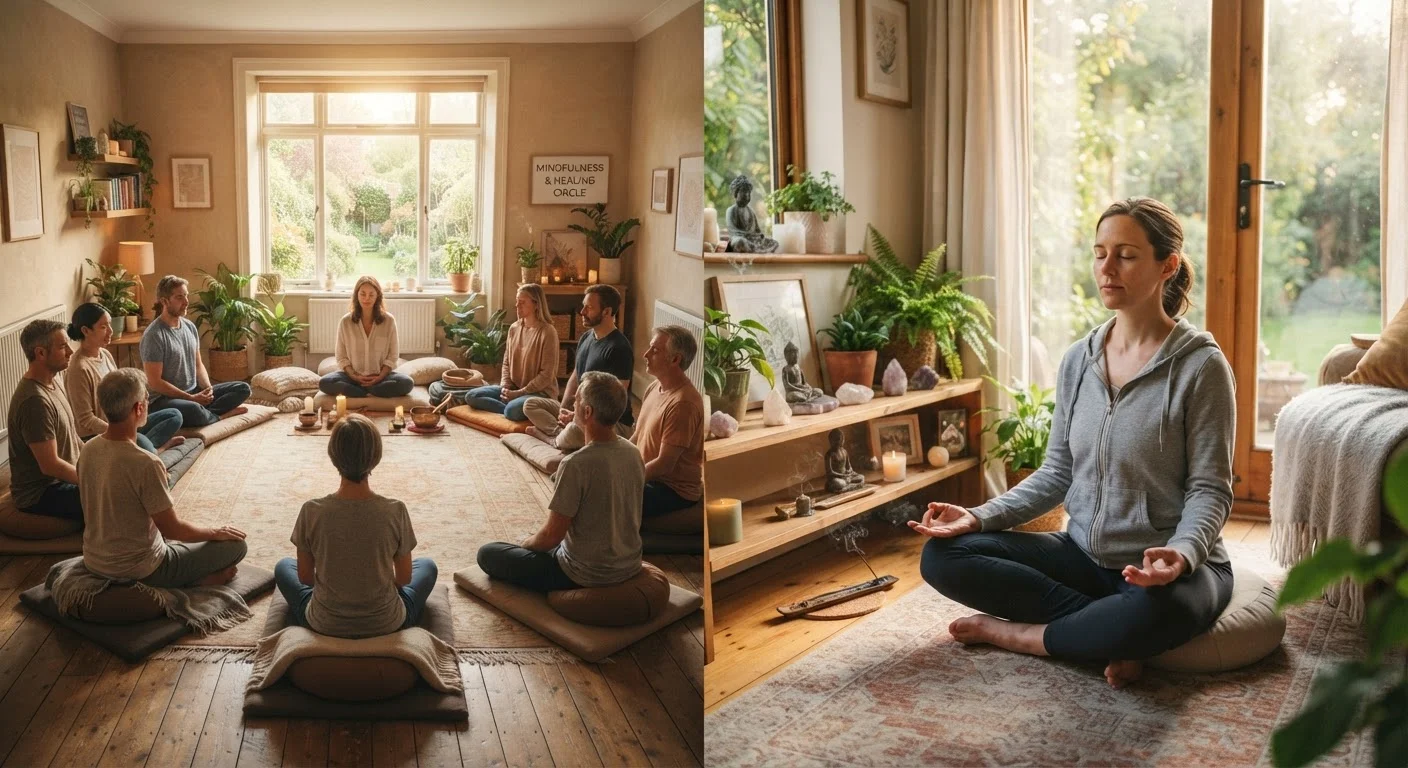
Mindfulness-Based Stress Reduction (MBSR) is a specific, standardized program developed by Dr. Jon Kabat-Zinn at the University of Massachusetts Medical School in 1979. It runs over eight weeks, with a weekly group session of roughly two to two-and-a-half hours, a full-day silent retreat, and daily home practice assignments. The curriculum combines body scan meditation, sitting meditation, gentle yoga, and group discussion. Instructors complete rigorous certification training to deliver it.
General mindfulness practice is a much looser term. It refers to any self-directed effort to cultivate present-moment awareness — whether that's a daily ten-minute guided meditation from an app, mindful breathing during a commute, or a walking meditation in a park. There's no set timeline, no required instructor, and no standardized curriculum. For a closer look at how formal and informal versions of this practice compare, see our guide to formal vs. informal mindfulness.
How They Compare: Structure, Evidence, and Access
The most meaningful differences between MBSR and general practice come down to structure, research backing, and how easy each is to access.
| Criterion | MBSR | General Mindfulness Practice |
|---|---|---|
| Structure | Standardized 8-week curriculum | Flexible, self-defined |
| Instructor | Certified MBSR teacher required | No instructor needed |
| Time commitment | ~2–2.5 hrs/week plus daily home practice | As little or as much as you choose |
| Cost | Often several hundred dollars per course | Low to no cost |
| Evidence base | Extensive peer-reviewed research | Growing but variable evidence |
| Best setting | Clinical or community health programs | Home, work, or anywhere |
| Group component | Yes — group sessions are central | Optional; typically solo |
MBSR's evidence base is substantial. Research published in journals including JAMA Internal Medicine and Psychological Medicine has found that MBSR participants report meaningful reductions in perceived stress, anxiety, and depressive symptoms. It's also been studied in the context of chronic pain and illness. General mindfulness practice has a growing body of supportive evidence too, particularly for reducing everyday stress — but the research is less uniform because the practices vary so widely between studies.
Accessibility is where general practice clearly wins. MBSR programs can cost several hundred dollars and require consistent weekly attendance, which isn't realistic for everyone. Self-directed mindfulness costs little or nothing and can fit almost any schedule. For a broader look at how mindfulness fits alongside other approaches, this comparison of stress management options puts it in helpful context.
Choosing the Right Fit — and Knowing When to Seek More Support
Neither path is universally better. The right choice depends on what you're hoping to address, your current circumstances, and how much structure you find helpful versus constraining.
If you're navigating chronic stress, persistent anxiety, or a health condition that affects your quality of life, MBSR may offer a level of depth and professional support that self-directed practice alone cannot replicate. Many hospital systems and community health centers offer MBSR programs, and some insurance plans cover them — it's worth asking a healthcare provider whether it's appropriate for your situation.
If you're simply looking to build a sustainable mindfulness habit, general practice is an excellent and well-supported starting point. This practical introduction to mindfulness for stress can help you begin without feeling overwhelmed. And if you're already practicing and want to assess whether it's actually helping, evaluating the signs that your practice is working offers a useful self-check.
It's also worth remembering that one approach doesn't exclude the other. Many people start with informal practice, discover they want more structure, and later pursue MBSR. Others complete an MBSR course and then carry those skills into a self-directed ongoing practice. You can also explore the many ways people use mindfulness to manage stress to find techniques that resonate.
This article is for informational and educational purposes only and is not a substitute for professional medical or mental health advice. If you're experiencing significant distress or a mental health condition, please consult a qualified healthcare provider.