More Than a Morning Preference
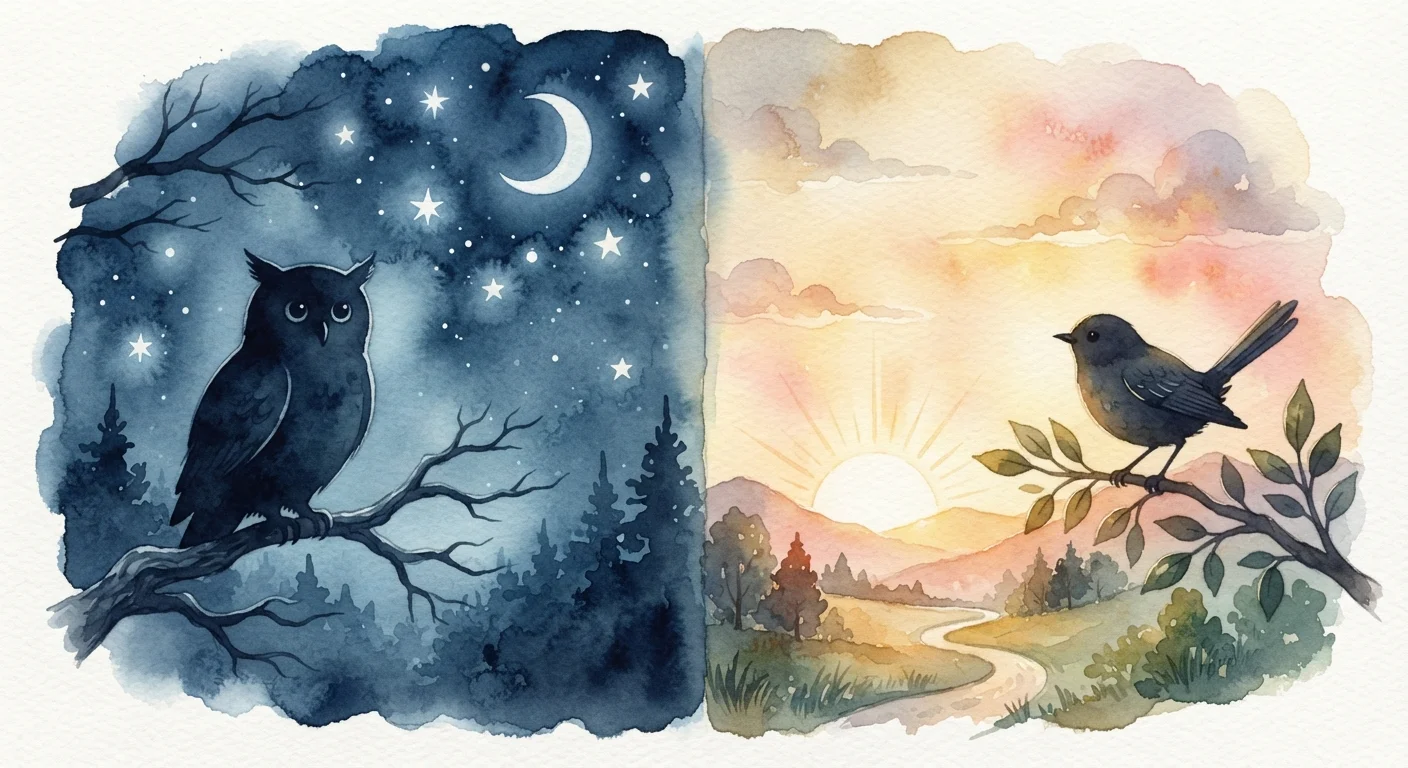
If you've ever been told to "just go to bed earlier" and found it genuinely impossible to feel sleepy at that hour, your experience has a biological basis. Chronotypes represent your body's preferred timing for sleep, wakefulness, peak performance, and even digestion — all regulated by your internal circadian clock.
This isn't about being a morning person by choice. Research consistently shows that chronotype is substantially heritable. Twin studies estimate that genetics account for roughly 50% of the variation in sleep timing between people. The rest involves environmental factors like light exposure, social schedules, and age — not simply discipline or routine.
Understanding your chronotype is one practical entry point into the broader science of sleep and why some biological patterns feel so hard to override.
The Biology Behind Your Body Clock
At the center of your chronotype is the suprachiasmatic nucleus (SCN) — a small cluster of neurons in the brain's hypothalamus that acts as your master circadian pacemaker. The SCN uses light signals from your eyes to synchronize your internal clock with the external environment, regulating the release of hormones like melatonin and cortisol that govern sleep and wakefulness.
Variants in clock genes — including PER1, PER2, and PER3 — influence how fast or slow this biological clock runs, which in turn shapes whether you naturally rise early or stay up late. A 2019 genome-wide association study published in Nature Communications identified over 350 genetic variants associated with morning or evening preference, underscoring just how complex and genetically embedded chronotype is.
Age reshapes chronotype too. Adolescents experience a well-documented biological shift toward eveningness — a delay in melatonin release that makes early school start times genuinely misaligned with teen biology. Adults tend to drift earlier again through midlife and beyond. Why your body clock matters more than your bedtime explores this timing dimension further.
~50%
Heritability of sleep timing preference
Twin studies suggest roughly half of chronotype variation between individuals is attributable to genetic factors.
350+
Genetic variants linked to chronotype
A 2019 genome-wide association study in Nature Communications identified over 350 gene variants associated with morning or evening preference.
2 hrs
Average social jetlag in adults
Research by chronobiologist Till Roenneberg suggests many adults experience roughly two hours of social jetlag on workdays compared to free days.
Social Jetlag: When Your Clock and Your Calendar Collide
When your biological sleep timing consistently conflicts with your required social schedule — work, school, family obligations — the result is what sleep researchers call social jetlag. The term, popularized by chronobiologist Till Roenneberg, describes the discrepancy between your internal clock time and your social clock time.
For a committed night owl working a 7 a.m. shift, the daily experience resembles flying from New York to London every weekday — without ever leaving home. Studies have linked chronic social jetlag to increased risks of mood disturbances, metabolic disruption, and sustained fatigue, independent of total sleep time.
This helps explain why two people logging the same number of sleep hours can feel radically different depending on whether those hours align with their chronotype. Everyday habits that quietly disrupt your sleep offers more context on the daytime behaviors that compound this misalignment.
Working With Your Chronotype, Not Against It
While you can't fully rewire your biological clock, there are evidence-informed strategies for reducing chronotype-related friction — particularly around light exposure and schedule flexibility.
- Morning light for evening types: Bright light exposure in the morning is one of the most effective ways to nudge an evening chronotype slightly earlier. Morning light vs. evening light explains how timing matters as much as intensity.
- Limit evening light: Bright screens and overhead lighting after dark delay melatonin onset. Evening habits that work against restful sleep covers common culprits worth reconsidering.
- Anchor your sleep window: Even within your chronotype, consistent sleep and wake times stabilize your circadian rhythm and improve sleep quality over time.
- Advocate for schedule flexibility: Where possible, shift your most demanding cognitive work to your personal peak alertness hours — often late morning for morning types and early evening for evening types.
Know Your Peak Hours Before Scheduling Hard Tasks
Most people have a two-to-four-hour window of peak cognitive alertness each day, which varies by chronotype. Morning types often peak in the late morning, while evening types may hit their stride in the afternoon or early evening. Scheduling demanding work — complex decisions, creative tasks, important conversations — during your natural peak can meaningfully improve performance and reduce stress.
This article is for general informational purposes only and is not a substitute for personalized medical advice. If you have concerns about your sleep patterns or suspect a sleep disorder, please consult a qualified healthcare professional.