Why Sleep Hygiene Is a Mental Wellness Issue
Sleep isn't a passive state your body falls into by default — it's an active biological process that repairs tissue, consolidates memories, and, critically for mental wellness, regulates emotional tone. When sleep is consistently shortened or fragmented, the parts of the brain responsible for managing stress and emotional reactivity become harder to regulate. Over time, poor sleep doesn't just make you tired; it makes difficult emotions feel more difficult.
Sleep hygiene refers to the collection of behavioral and environmental practices that support consistent, quality sleep. The term covers a broad spectrum, from what the research firmly supports to softer habit-based guidance. To understand where the evidence is strongest, sleep hygiene vs. sleep science offers a helpful distinction. And for those curious about what's happening inside each sleep cycle, the architecture of a night's sleep explains the biology behind why these habits matter.
The goal here is practical: a layered, buildable routine most adults can begin tonight without a major lifestyle overhaul.
This Is General Information, Not Medical Advice
The strategies in this article are educational and reflect general sleep hygiene guidance. They are not a substitute for evaluation or treatment by a qualified healthcare provider. If you're experiencing persistent insomnia, frequent nighttime waking, or significant daytime impairment, please speak with your doctor or a sleep specialist.
What You'll Need Before You Begin
No specialized equipment is required. What matters most is a genuine openness to adjusting your evenings incrementally. Before you work through the steps, a quick inventory of your current habits can be useful — identify one or two things you're already doing well and one area that consistently feels chaotic or overstimulating.
What you will need
A dedicated journal or notepad
Used for a brief brain-dump or worry-offload before bed, helping quiet mental chatter.
Blue-light-blocking settings or apps
Reduces stimulating short-wavelength light from screens during the wind-down window.
Blackout curtains or a sleep mask
Blocks ambient light that can suppress melatonin and delay sleep onset.
A basic alarm clock (non-phone)
Allows you to charge your phone outside the bedroom, reducing late-night screen temptation.
Your Environment Does Half the Work
Before your head hits the pillow, your bedroom is already shaping your sleep quality. Darkness, a cooler room temperature, and reduced noise are among the most evidence-supported environmental factors. See how temperature, light, and noise affect sleep for a deeper look at the research.
Step-by-Step: Building Your Nightly Routine
The following steps are designed to be layered, not tackled all at once. Start with Step 1 and Step 2 — they form the structural foundation everything else builds on. Add the remaining steps as earlier habits stabilize.
Don't Try to Change Everything at Once
Attempting to adopt every habit simultaneously often leads to burnout and abandonment. Research on behavior change consistently shows that small, incremental additions are more likely to stick. Pick one or two steps to start, give them two to three weeks, and build from there.
Set a consistent wake time — and protect it
Choose a wake time you can realistically hold seven days a week, including weekends. Your circadian rhythm (the internal 24-hour clock that regulates alertness and sleepiness) is strongly anchored by the time you wake up, not just when you go to bed. Sleeping in by more than an hour on weekends can shift your internal clock in a way that resembles mild jet lag — a pattern sometimes called social jet lag.
Once your wake time is stable for a week or two, an appropriate bedtime tends to become clearer. Most adults need between seven and nine hours, though individual needs vary.
Define a 30–60 minute wind-down window
Set a clear point each evening when you transition from active tasks to lower-stimulation activities. This window signals your autonomic nervous system to begin downshifting from sympathetic (alert, reactive) to parasympathetic (calm, restorative) dominance — a shift that supports the hormonal changes involved in sleep onset.
During this window, avoid work email, intense news, heated conversations, and demanding decisions. Think of it as a physiological ramp, not an on-off switch. For more on structuring this period, building a wind-down routine that fits your life offers a practical framework.
Dim lights and limit screen exposure
Light is the most powerful external cue for your circadian system. In the hour or two before bed, dimming overhead lights and switching to warmer, lower-intensity sources helps support the natural rise in melatonin that promotes drowsiness. Screens emit short-wavelength blue light that can blunt this process.
If avoiding screens entirely isn't practical, enabling night-mode settings and reducing brightness is a reasonable middle step. Equally important: some common evening habits quietly undermine sleep quality in ways that aren't immediately obvious — bright overhead lighting is one of them.
Do a brief mental offload
Racing thoughts are among the most common self-reported barriers to falling asleep. A short pre-bed writing practice — jotting down tomorrow's tasks, unresolved concerns, or a few things you noticed during the day — can help externalize mental chatter and reduce the cognitive load you carry into bed.
Research published in the journal Experimental Brain Research suggests that writing a specific to-do list before bed (rather than general worries) may help some people fall asleep faster, though more replication is needed. This practice takes roughly five minutes and has no known downsides for most people.
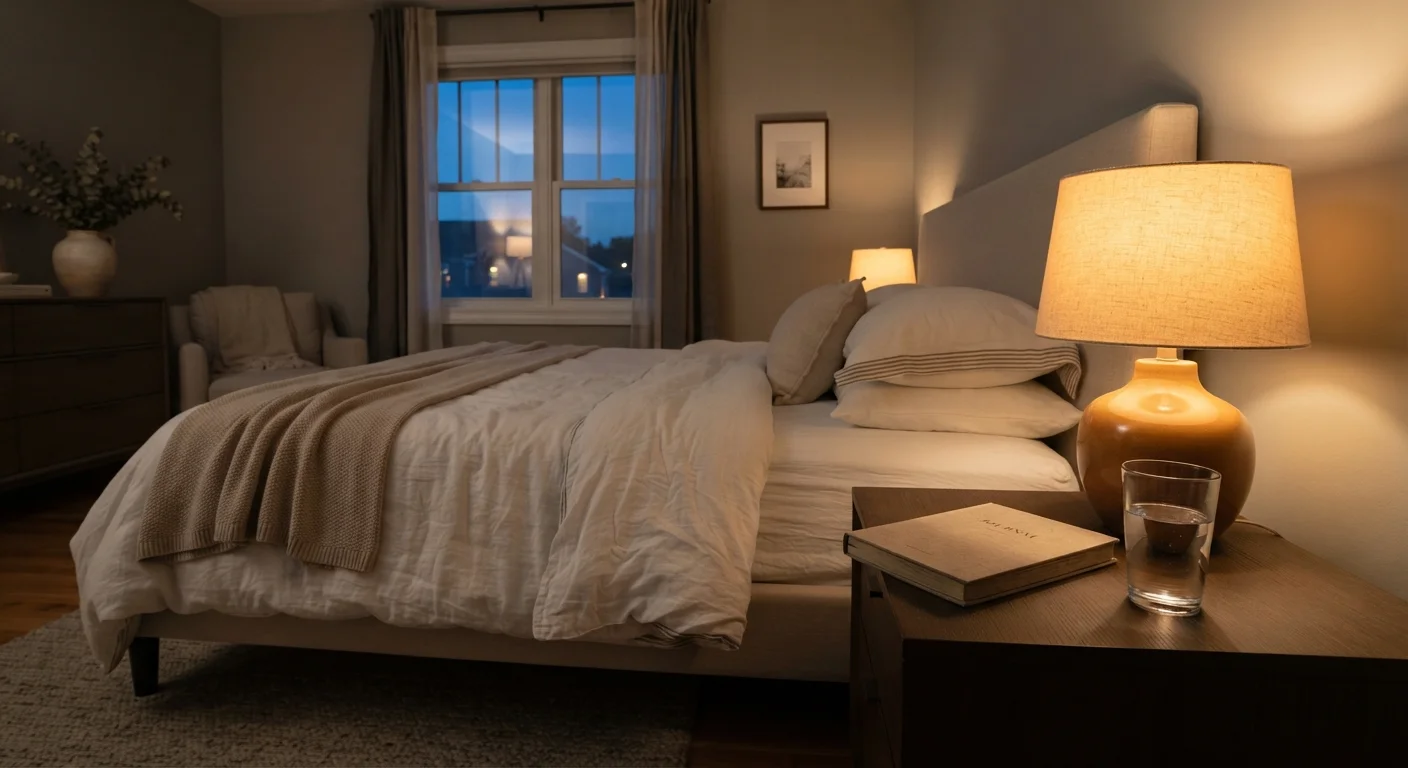
Keep your bedroom cool, dark, and quiet
Sleep specialists and researchers consistently identify the sleep environment as a major modifier of sleep architecture — the progression through light sleep, deep sleep, and REM cycles that your brain cycles through each night. A room that is slightly cooler than typical daytime comfort (broadly, somewhere in the mid-60s Fahrenheit for many people, though personal preference varies) supports the core body temperature drop associated with sleep onset.
Darkness and reduced noise complete the triad. If your bedroom has noise or light challenges, blackout curtains, earplugs, or a white-noise source are practical, low-cost adjustments. You can audit your full sleep environment using the bedroom environment checklist developed for this purpose.
Layer habits gradually and track what shifts
Lasting behavior change rarely happens in a single overhaul. Once your first one or two habits feel automatic — meaning you don't have to consciously remind yourself — add another layer. Keep a simple log: note your approximate sleep time, wake time, and a one-word quality rating each morning. Patterns often emerge within two to three weeks.
For a broader look at which sleep hygiene practices have the strongest research support, evidence-based sleep habits offers a useful reference point as you refine your approach.
Keeping the Routine Going Over Time
The most common reason sleep routines fall apart isn't lack of motivation — it's rigidity. Life disrupts schedules: travel, illness, late social events, stress. When that happens, the goal is not perfection but return. Getting back to your baseline the following night matters far more than maintaining an unbroken streak.
How your mornings start also reinforces how your nights go. Consistent morning light exposure, for instance, helps anchor your circadian clock from the other end of the day. building a morning routine that supports emotional stability outlines habits that work in concert with a strong evening practice.
For a comprehensive reference you can return to as your routine evolves, the complete guide to building lasting sleep habits covers the full landscape from understanding your individual sleep needs to refining your environment over time.
This article is for general informational and educational purposes only and does not constitute medical advice. If you have concerns about your sleep or health, please consult a qualified healthcare professional.